
The Takeoff-to-Transaction Gap: Why Speed-to-Count Is the Wrong Benchmark for AI Estimation
TL;DR
- The AI estimation market is benchmarking on the wrong metric: speed-to-count. The metric that matters is speed-to-price.
- The Takeoff-to-Transaction Gap (TTG) is the elapsed time between AI-generated quantities and a procurement-ready bid with current pricing. In 2026, the TTG averages 2–4 days even for AI-equipped contractors.
- The bottleneck has migrated from counting to pricing, but it has not been eliminated.
- A new evaluation framework is needed: Takeoff-to-Transaction Time, Material Cost Accuracy, Supplier Coverage Index, Bid Volume Multiplier, and Margin Protection Rate.
- The platform that wins the next five years will not count fastest. It will close the TTG.
The construction technology market has a pattern that repeats with frustrating regularity. A genuinely useful capability emerges. Vendors compete on a single, easily measurable metric. The entire category optimizes for that metric. And the actual problem, the one the customer goes to bed worrying about, remains unsolved.
AI estimation is doing it again.
Over the past two years, the AI construction takeoff market has exploded. Togal.ai, Beam AI, STACK, ConstructConnect’s Takeoff Boost, Civils.ai, Kreo, and a growing list of others have entered or expanded in the space. The products are genuinely impressive. They use computer vision and pattern recognition to extract quantities from construction drawings in minutes instead of days. They are accurate. They are fast. And they are all competing on the same benchmark: speed-to-count.
But speed-to-count is not the metric that determines whether a subcontractor wins the bid, protects their margin, or grows their business.
Speed-to-price is. And almost nobody is measuring it.
Naming the Problem
Here is the scenario that plays out thousands of times a day across the construction industry.
An estimator uploads a set of plans to an AI takeoff tool. The software identifies 412 line items across three trades. Quantities are extracted with 95%+ accuracy. The whole thing takes 18 minutes.
Then they open a spreadsheet. They call their lumber supplier. They email two concrete vendors. They check whether last week’s pricing on electrical conduit still holds. They wait for callbacks. They chase. They compare.
Two to four days later, they have a priced bid.
I want to give this problem a name: the Takeoff-to-Transaction Gap (TTG). It is the elapsed time between receiving AI-generated quantities and having a procurement-ready bid with verified, current material pricing. In 2026, for the average subcontractor using an AI takeoff tool, the TTG is still two to four days.
Why This Bottleneck Is Structural
Making the takeoff faster does not fix this. Going from 18 minutes to 8 minutes on the count does nothing when the pricing phase takes 72 hours.
The pricing bottleneck is structural because construction material pricing in 2026 remains fragmented, opaque, and relationship-dependent. There is no centralized exchange for dimensional lumber. There is no real-time ticker for rebar. Pricing varies by region, by quantity, by supplier relationship, by the week, and sometimes by the day.
Estimators know this intuitively. They know the cost book is already stale when they open it. And they know that the gap between their bid number and their actual procurement cost is where margin lives or dies.
The Evaluation Framework Needs to Evolve
Regardless of which company closes the TTG first, the category’s evaluation criteria need to move beyond speed-to-count:
- Takeoff-to-Transaction Time (TTT). Minutes from PDF upload to a procurement-ready bid with live material pricing. Should replace takeoff speed as the primary benchmark.
- Material Cost Accuracy. The delta between platform pricing and actual procurement cost. A fast estimate that is 20% off is worse than a slower estimate that is 2% off.
- Supplier Coverage Index. Active supplier relationships feeding real pricing data, segmented by trade, material category, and geography.
- Bid Volume Multiplier. The increase in bids submitted per month per estimator after adoption.
- Margin Protection Rate. The percentage of bids where actual material costs came in at or below the platform’s estimate.
Let’s Be Honest
This framing is not without risk. The integrated model, where takeoff, pricing, and procurement happen in one session, has real advantages: speed, reduced handoff friction, a priced bid instead of a quantity list. But it also carries concerns.
Lock-in is real. A platform that handles everything becomes a single point of failure. Pricing validation takes time. A 40% savings claim must survive contact with real purchase orders across diverse projects. Trade coverage is uneven. What works for drywall may not work for mechanical piping. And modularity has genuine value. Many estimators prefer best-in-class tools for each phase, connected through interoperable data formats.
These are not reasons to reject the integrated approach. They are reasons to evaluate it with rigor.
The Verdict
The biggest failure mode in AI estimation today is not accuracy. It is scope. The tools are accurate. The tools are fast. But they stop too early.
The AI estimation platform that wins the next five years will not be the one that counts fastest. It will be the one that closes the Takeoff-to-Transaction Gap. The one where the takeoff is not the finish line but the starting gun for procurement.
Speed without pricing is a partial solution. And in construction, partial solutions are just another way of describing a workflow that still takes three days.
FAQ
- What is the Takeoff-to-Transaction Gap? The Takeoff-to-Transaction Gap (TTG) is the elapsed time between receiving AI-generated quantities from a construction takeoff and having a procurement-ready bid with verified, current material pricing. In 2026, the TTG for most contractors using AI takeoff tools is two to four days.
- What is Takeoff-to-Transaction Time (TTT)? A proposed evaluation metric measuring total elapsed time from uploading construction drawings to producing a procurement-ready bid with live material pricing. TTT captures the full estimation workflow, not just the takeoff phase.
- How should contractors evaluate AI estimation software? Beyond takeoff speed, evaluate Material Cost Accuracy, Supplier Coverage Index, Bid Volume Multiplier, and Margin Protection Rate. These metrics capture whether the tool protects the contractor’s business, not just their time.
Published on the Quotr.ai blog. Quotr is an AI-powered construction estimation, takeoff, and procurement platform based in Berkeley, California.
Related Stories
-
 • Quotr
Residential Construction Cost Trends in 2026: What Builders Need to Know
Construction costs are reshaping residential building in 2026. Learn the key material and labor trends driving overruns — and how AI estimating tools are helping firms protect margins.
pre-construction -
 • Quotr
Construction Costs Surged 12.6% in 2026 | How AI Estimation Helps
Construction input costs jumped 12.6% in early 2026. Steel up 20.7%. Aluminum up 33%. See how AI-powered estimation helps contractors protect margins and bid faster.
subcontractors • general-contractors • real-estate-developer -
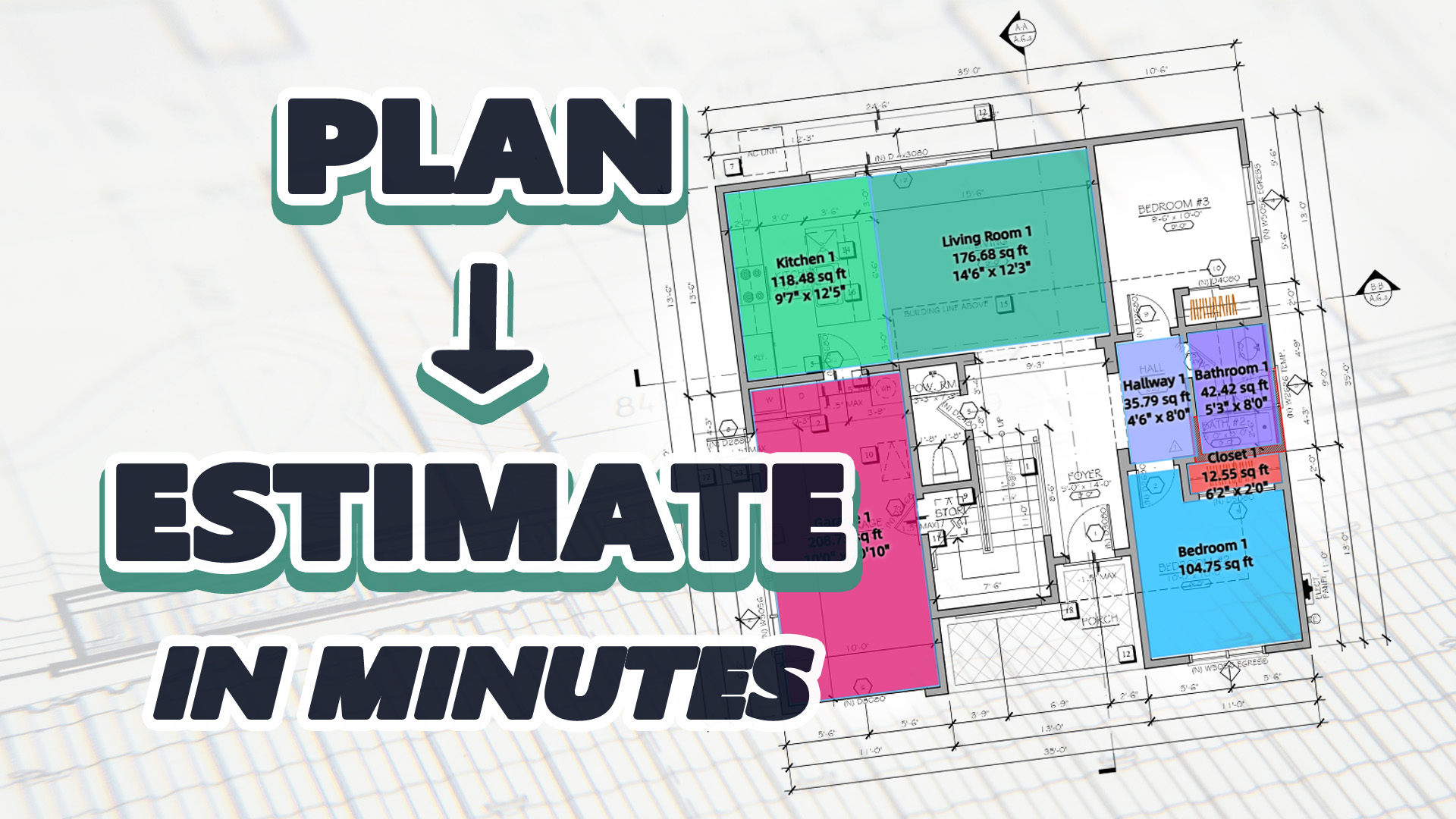 • Quotr
AI Construction Estimating Software That Turns Plans Into Prices in Minutes
Learn how contractors like RL Electric use AI construction estimating software to reduce estimating time, improve accuracy, and scale their bid pipeline.
Contractors • Developers • Subcontractors