Dallas Build Expo 2026 Recap: Key Contractor Insights & Workflow Challenges
It was an experience for Quotr.ai to be at the Dallas Build Expo 2026.
After two days at the event, the recap comes down to one thing:
Contractors are not struggling to find tools — they are struggling to make their workflows work.
Held on April 22–23, 2026 at Dallas Market Hall, the event brought together contractors, suppliers, and construction professionals across the region.
This recap focuses on what actually mattered:

- what speakers reinforced
- what contractors are dealing with today
- where workflows are breaking down
What Is the Dallas Build Expo?
The Dallas Build Expo is a regional construction trade show focused on:
- product demos and exhibitor booths
- contractor-focused seminars
- direct conversations with vendors
The 2026 event included:
- around 2,000–5,000 attendees
- over 250 exhibitors
- approximately 28–30 seminars and workshops
This is not a trend-focused conference.
It is where contractors evaluate tools and decide what actually works.
Key Takeaways from Dallas Build Expo 2026
1. Workflows Are Still Fragmented
Based on conversations with people who visited our booth #277, many contractors are already using multiple tools—but those tools are not working together.

A typical setup:
- takeoffs in one platform
- estimates in another
- spreadsheets connecting everything
The result:
- slower turnaround
- inconsistent estimates
- difficulty scaling
2. Contractors Are Evaluating, Not Exploring
From conversations at the expo, the most common questions were:
- Who are your competitors?
- How long does your software take?
- What are the limitations?
These are not early-stage questions.
Contractors already know the tools exist — they are deciding whether switching is worth it.
3. Estimating Is Breaking at the Workflow Level
One of the most relevant sessions at the event was led by Saleh Mubarak, titled “Optimize your construction cost estimates.”
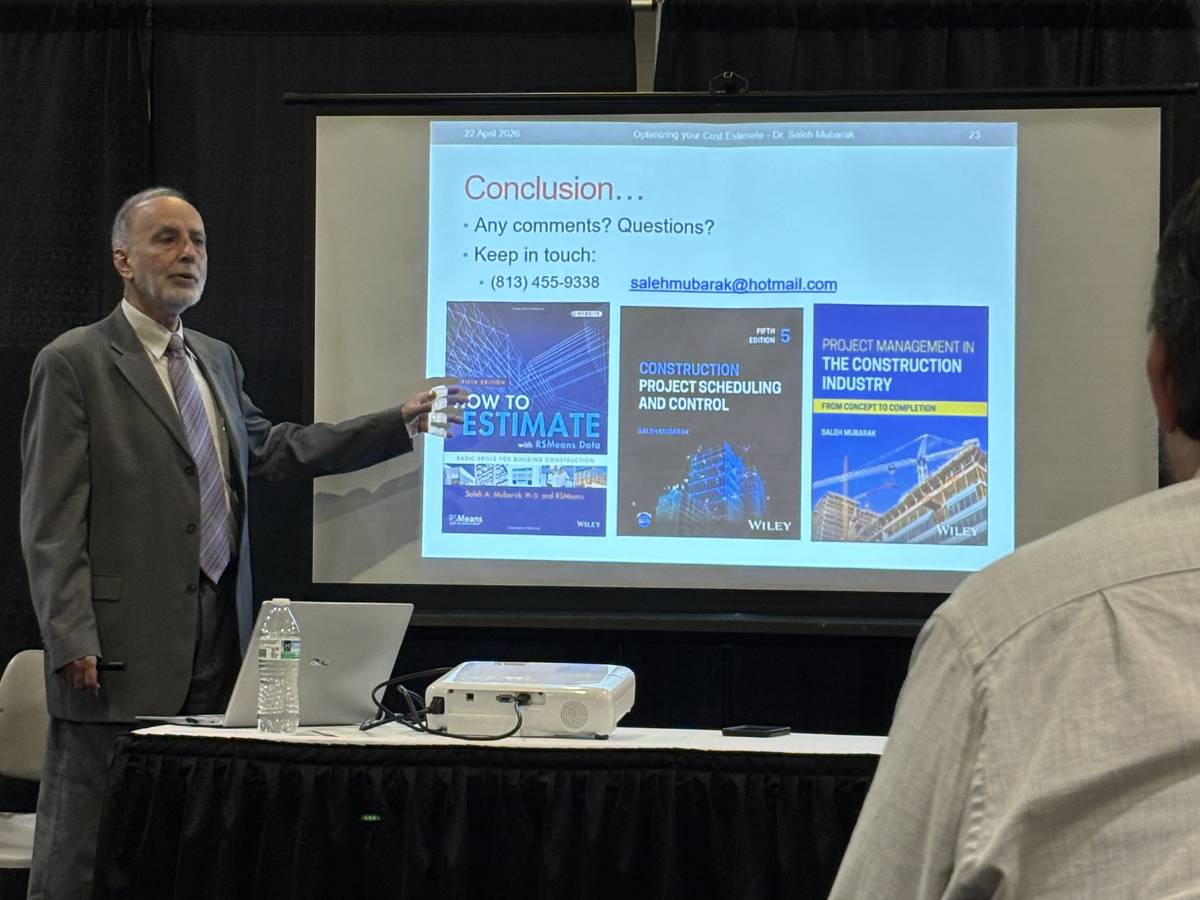
Based on the session and slides, three points stood out:
a. Estimating Requires Reliable Data
- decisions should not be based on assumptions
- incomplete data leads to risk
- accuracy depends on discipline, not speed alone
b. Cost Data Must Be Maintained
- pricing changes over time
- production rates vary
- location impacts cost
Estimating depends on how well data is structured and updated.
c. Technology Is a Requirement, Not an Option
- the pace of technology is accelerating
- staying in the same workflow is a risk
- contractors need to adapt
What This Means in Practice
These points match what contractors are already experiencing:
- estimating takes too long
- data is scattered across spreadsheets
- updates are manual and inconsistent
- workflows are difficult to scale
The issue is not knowledge.
The issue is execution.
Where Workflows Are Headed
Across both sessions and conversations, workflows are shifting toward:
- fewer tools
- faster processes
- more connected systems
Instead of separating:
- takeoff
- estimating
- pricing
The direction is moving toward a single, structured workflow.
You can explore how modern construction estimating workflows are evolving.
Where Quotr.ai Fits In
The problems highlighted at the Dallas Build Expo point to a clear gap:
estimating requires structured data and consistent workflows—but most teams are still working across disconnected tools.
Instead of managing:
- takeoffs separately
- estimates in spreadsheets
- pricing manually
Quotr.ai connects these steps into one system:
- AI-assisted takeoff
- structured cost estimation
- centralized data handling
- integrated pricing workflows
Learn how this applies to:
How This Addresses the Real Problems
| Industry Issue | What It Causes | How Quotr.ai Helps |
|---|---|---|
| Disconnected tools | Slow workflows | Single system |
| Manual updates | Inconsistent data | Structured data handling |
| Outdated pricing | Estimation errors | Centralized cost tracking |
| Time pressure | Rushed decisions | Faster turnaround |
Final Insight
The Dallas Build Expo 2026 did not reveal a lack of tools.
It revealed a gap between:
what tools can do and how workflows are actually built
Contractors already understand estimating.
The difference now is:
- how fast they can apply it
- how consistently they can maintain it
- how efficiently they can scale it
Next Steps
If your current estimating process still relies on:
- manual takeoffs
- spreadsheets
- multiple disconnected tools
it may be time to review how your workflow is structured.
Explore:
- Quotr.ai platform overview
- pricing and plans
- frequently asked questions
- construction insights and guides
Or book a walkthrough:
Schedule a demo
Published on the Quotr.ai blog. Quotr.ai is an AI-powered construction estimation, takeoff, and procurement platform based in San Francisco.