Construction Procurement Software: Cutting Material Costs in 2026
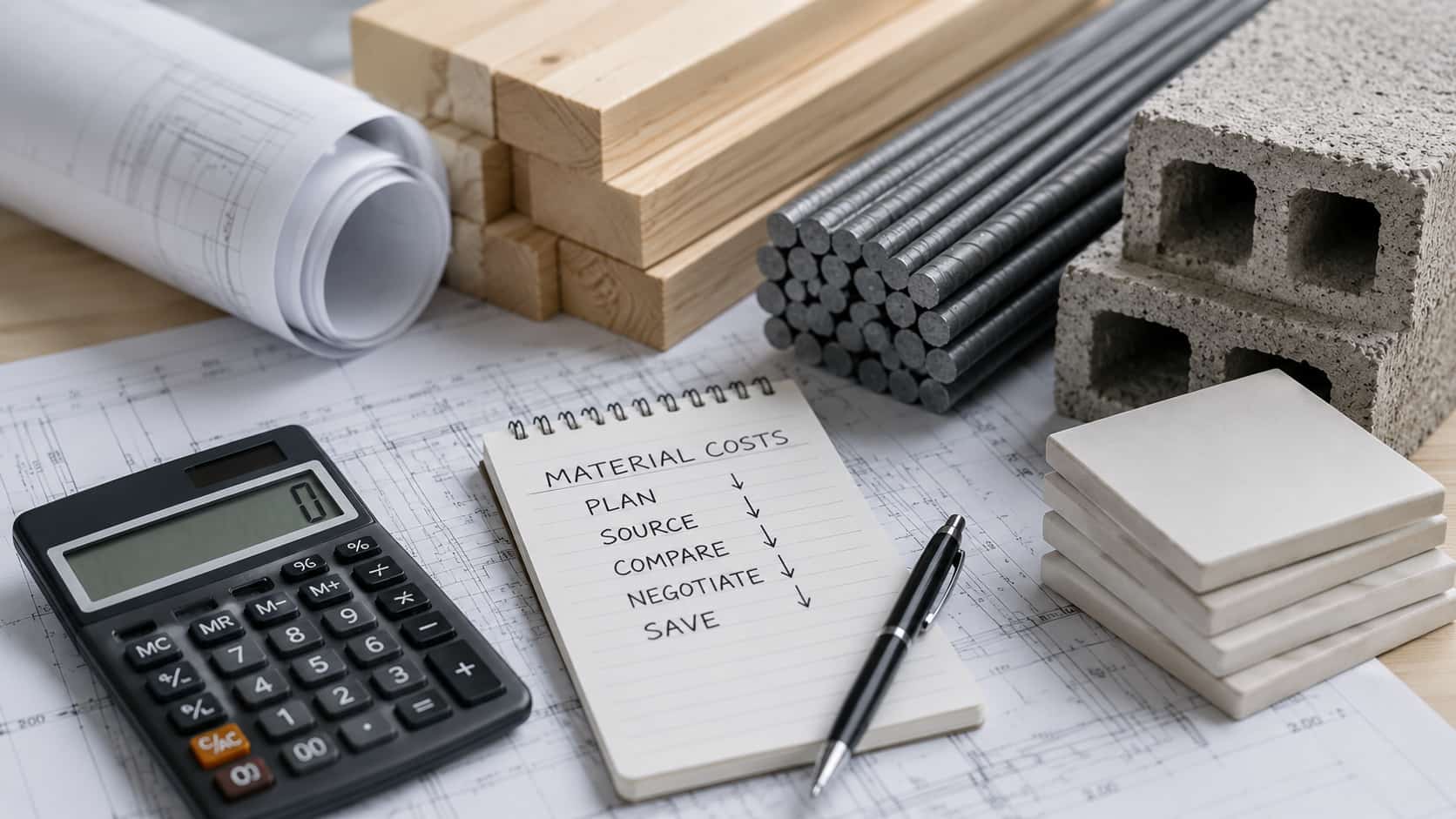
Material is where construction margin quietly disappears. Prices move week to week, the cost book is stale the moment you open it, and the gap between the number you bid and the price you actually pay at buyout is where profit lives or dies. Construction procurement software exists to close that gap — to take the quantities you’ve estimated and turn them into real supplier pricing and delivered materials without the margin leaking out along the way.
This guide explains what construction procurement software does, what to look for in 2026, and how Quotr Procurement cuts material costs by sourcing factory-direct and delivering door-to-door to your jobsite.
Key takeaways
- Procurement is where bids meet reality — volatile material prices and distributor markups are the biggest, least-controlled cost on most jobs.
- Construction procurement software manages the path from estimated quantities to delivered materials: supplier pricing, comparison, ordering, and delivery.
- The most leverage comes from better material pricing, not just faster purchase orders.
- Quotr Procurement acts as a dedicated sourcing partner — factory-direct materials, door-to-door, no distributor markup, averaging 40–55% below dealer pricing.
What construction procurement software does
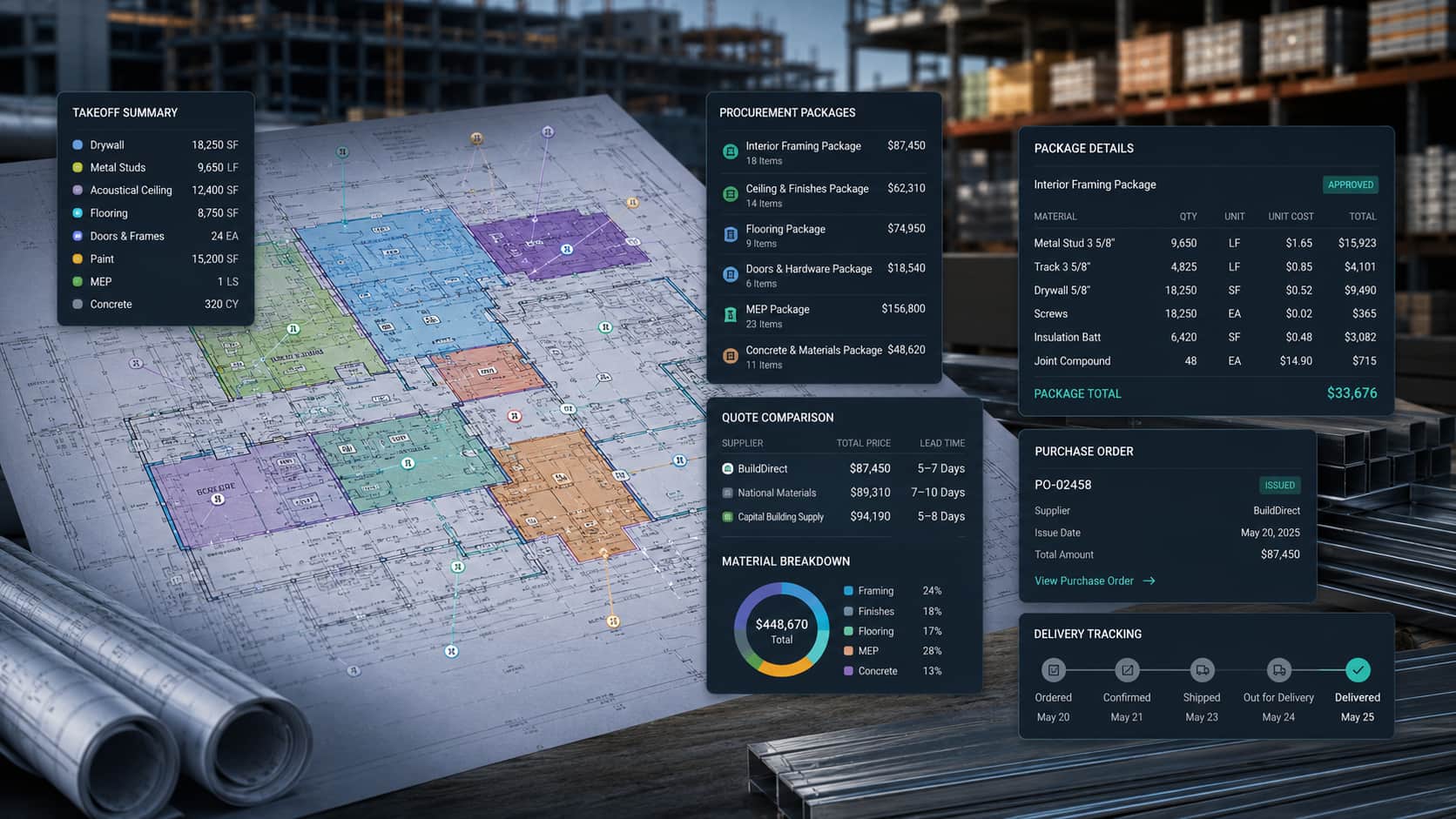
Construction procurement software manages the path from “we need these materials” to “they’re on the jobsite at the right price.” Depending on the platform, that spans:
- Supplier pricing and RFQs — getting current quotes, comparing suppliers side by side, and managing vendor relationships.
- Requisitions and purchase orders — turning estimated quantities into orders and tracking them.
- Sourcing and delivery — securing materials, logistics, and last-mile delivery to the jobsite.
- Spend control — budget-vs-actual visibility and an audit trail you can defend. The biggest gap it should close isn’t placing the PO — it’s the stretch between an accurate takeoff and a verified, current price. Material pricing in 2026 is fragmented and relationship-dependent: there’s no central exchange for lumber, no real-time ticker for rebar, and AGC data shows double-digit swings in steel, aluminum, and copper. A cost book is stale the moment you open it — so the question is how quickly and cheaply you can turn quantities into real, locked pricing.
What to look for in 2026
- Real, current pricing — live supplier quotes you can compare, not a catalog that’s months old.
- Material cost leverage — a path to better pricing on volatile, import-heavy categories, not just a place to record what you already pay.
- Your suppliers, your way — the ability to bring your own vendors and trade deals into the workflow.
- End-to-end delivery — sourcing, logistics, customs, and last-mile handled, so a low price doesn’t get eaten by freight surprises.
- Connection to the estimate — quantities that flow from takeoff into sourcing without re-keying.
Quotr Procurement: your factory-direct sourcing partner
Quotr Procurement is a procurement layer that does more than record purchases — Quotr acts as your dedicated sourcing partner. You share your drawings or specs, and Quotr sources the materials factory-direct and delivers them door-to-door to your jobsite, with no distributor markup.
One door-to-door price covers everything — factory cost, export packing, ocean freight, US customs and duties, last-mile delivery, and all certification docs (NFRC, CARB, cUPC, and more) — averaging 40–55% below Bay Area dealer pricing. It draws on a network of 220+ factories, including 30+ audited manufacturers supplying US-certified materials, across six core categories:
- Aluminum & PVC windows and doors
- Interior and entry doors, plus garage doors
- Cabinetry, vanities, and millwork
- Flooring — LVP, hardwood, and tile
- Bath and plumbing fixtures
- Glass and hardware Quotr’s team handles factory vetting and audits, sample approval, shop-drawing and spec lock, and in-factory QC before anything ships — so issues are caught at the factory, not when your crew is unboxing on site. Materials arrive certified to US standards and ready to install.
Level supplier bids before you buy — not after The fastest way to cut material costs isn’t a better negotiation; it’s a fair comparison. Bid leveling is the process of normalizing every supplier and sub quote to the same scope so you’re comparing apples to apples — same quantities, same inclusions, same exclusions. Without it, the “low” bid is often just the one that left the most out, and the overage shows up after you’ve committed.
Quotr.ai lines up supplier responses side by side against your estimate, and AI surfaces the gaps — missing line items, quantity mismatches, and pricing outliers — so you can see which quote is actually cheapest once scope is equalized. You catch the scope holes before they become change orders, and you award buyout with confidence instead of guesswork. Teams that level bids systematically routinely find single-digit-to-low-double-digit percentage savings on material spend, simply by stopping inflated or incomplete quotes from slipping through.
Everything included — one price
The reason factory-direct cuts cost isn’t just the factory price; it’s removing the layers stacked on top of it.
| What’s in the door-to-door price | What you avoid |
|---|---|
| Factory price (negotiated direct) | Showroom markup (30–60%) |
| Export packing + ocean freight | Distributor middleman margin |
| US customs clearance + import duties | Surprise freight & duty invoices |
| Final-mile delivery to your jobsite | Juggling multiple vendors |
| Certification docs (COO, test reports, certs) | Spec mismatches at delivery |
How it works
- Submit an inquiry — send drawings, a spec list, quantities, and timeline.
- Factory match — Quotr returns a door-to-door quote, typically in 3–5 business days.
- Sample review — a physical sample ships for approval before production.
- Production & QC — Quotr’s team inspects in-factory before shipment.
- US delivery — to your port or jobsite, Bay Area and coast to coast.
When it makes the biggest difference
Quotr Procurement pays off most where material cost drives the job: volatile, import-heavy categories like windows, doors, cabinetry, and flooring; multi-category packages you’d otherwise coordinate across several vendors; and repeat work — multifamily, build-to-rent, and portfolio programs where the same packages recur across buildings and units. On a recent Bay Area new-construction project, a window and door package priced at $108K door-to-door versus a $195K–$245K local market range.
Frequently asked questions
What is construction procurement software?
Construction procurement software manages buying materials for a project — supplier pricing and comparison, orders, sourcing, and delivery. The biggest value is better, current material pricing: closing the gap between an accurate takeoff and a verified price so the bid stays aligned with what you actually pay at buyout.
How does construction procurement software cut material costs?
It cuts costs by comparing real supplier quotes instead of taking the first price, keeping pricing current, and — with Quotr Procurement — sourcing factory-direct to remove distributor and showroom markups. Quotr’s door-to-door pricing averages 40–55% below Bay Area dealer pricing on covered categories.
What is door-to-door (DDP) pricing?
Door-to-door pricing is one number that covers everything: factory cost, export packing, ocean freight, US customs and duties, last-mile delivery, and certification documents. Instead of an ex-factory price plus surprise freight and duty invoices later, you see the true landed cost upfront.
Can I keep using my own suppliers?
Yes. Quotr lets you add your own suppliers and compare their quotes inside the app, so existing trade relationships and deals carry in. Factory-direct sourcing is an additional option alongside your vendors, not a replacement for them.
What materials can Quotr source factory-direct?
Six core categories: aluminum and PVC windows and doors, interior/entry and garage doors, cabinetry and millwork, flooring (LVP, hardwood, tile), and bath and plumbing fixtures — all certified to US standards (NFRC, CARB, cUPC, and more), with QC before shipment.
Does Quotr deliver outside the Bay Area?
Yes. The Bay Area is the focus, but Quotr’s door-to-door pricing delivers to any US port or jobsite, coast to coast — you provide the delivery location and it’s factored into the quote.
The bottom line
Procurement is where the bid meets reality. The contractors and developers protecting margin in 2026 aren’t just placing purchase orders faster — they’re cutting the markup stacked between the factory and the jobsite. Quotr Procurement does exactly that: factory-direct materials, door-to-door, certified and QC’d, at an average 40–55% below dealer pricing — with the option to keep using your own suppliers too.
Share your drawings or specs and get a full door-to-door quote in about 3–5 business days. Explore Quotr Procurement, or talk to our team about your next project.
Related reading
- From Takeoff to Buyout: Why Estimating Without Procurement Is Half a Tool
- The Takeoff-to-Transaction Gap
- What Is AI Construction Estimating Software?
- Tariff-Aware Estimating: Baking Material Escalation Into Every Bid
- Quotr.ai Software
References
- Associated General Contractors of America (AGC) — construction material cost data. https://www.agc.org/
- Quotr.ai — Procurement: factory-direct sourcing, door-to-door pricing, completed projects. https://quotr.ai/procurement
Published on the Quotr.ai blog. Quotr.ai is an AI-powered construction estimation, takeoff, and procurement platform based in Berkeley, California.