Tariff-Aware Estimating: How Quotr.ai Bakes Material Escalation Into Every Bid
Quick answer: what is tariff-aware estimating?
Tariff-aware estimating is the process of identifying tariff-exposed materials inside a construction estimate, applying current or expected cost escalation, validating pricing with suppliers, and carrying the right assumptions into the final bid.
In simple terms, tariff-aware estimating helps contractors answer:
- Which materials are exposed to tariffs?
- Which line items need escalation?
- Which supplier quotes are still valid?
- Which materials should be procured early?
- Which bid exclusions or escalation clauses are needed?
- Which owner assumptions are now stale?
- Which trade packages are most exposed?
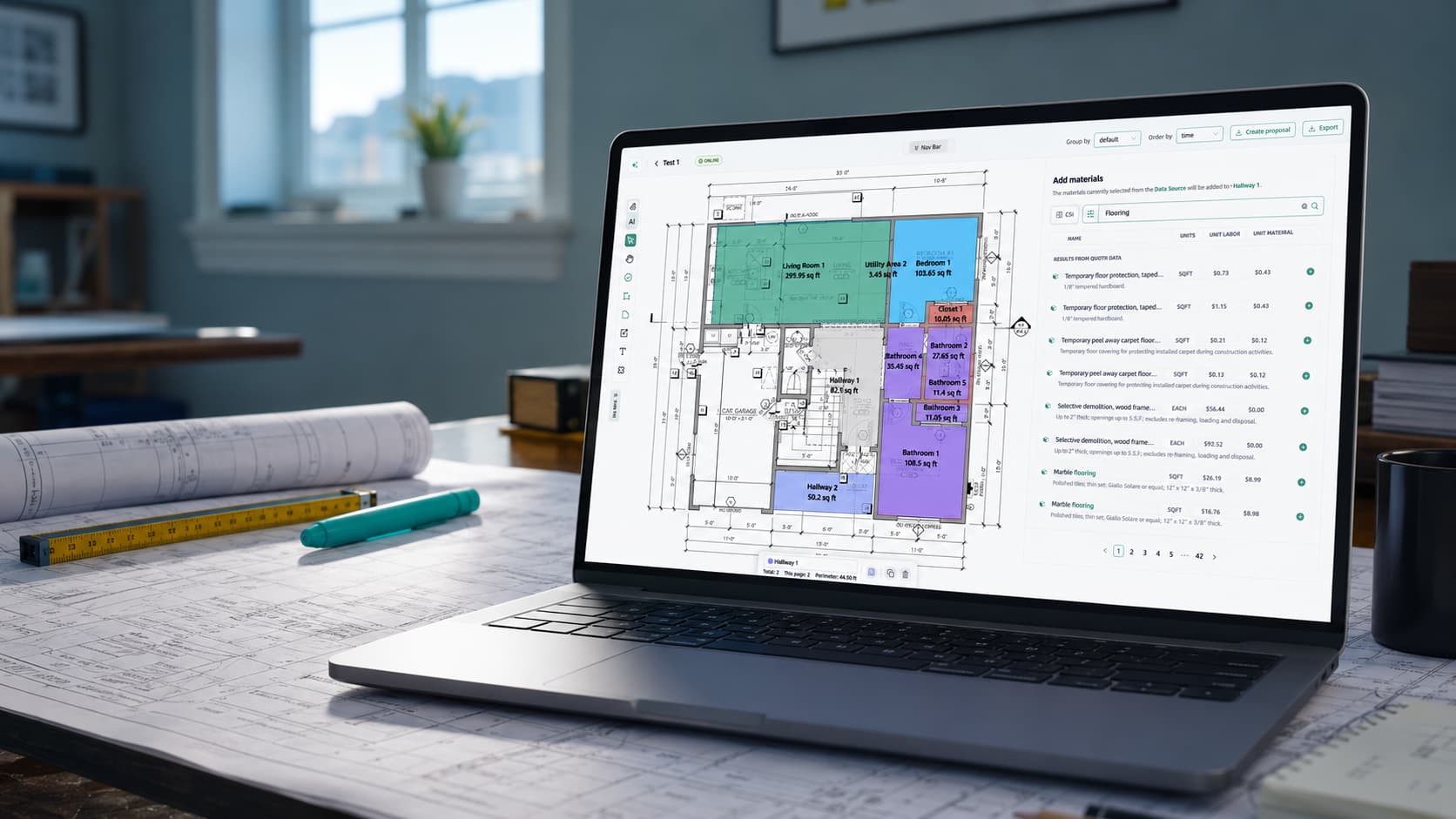
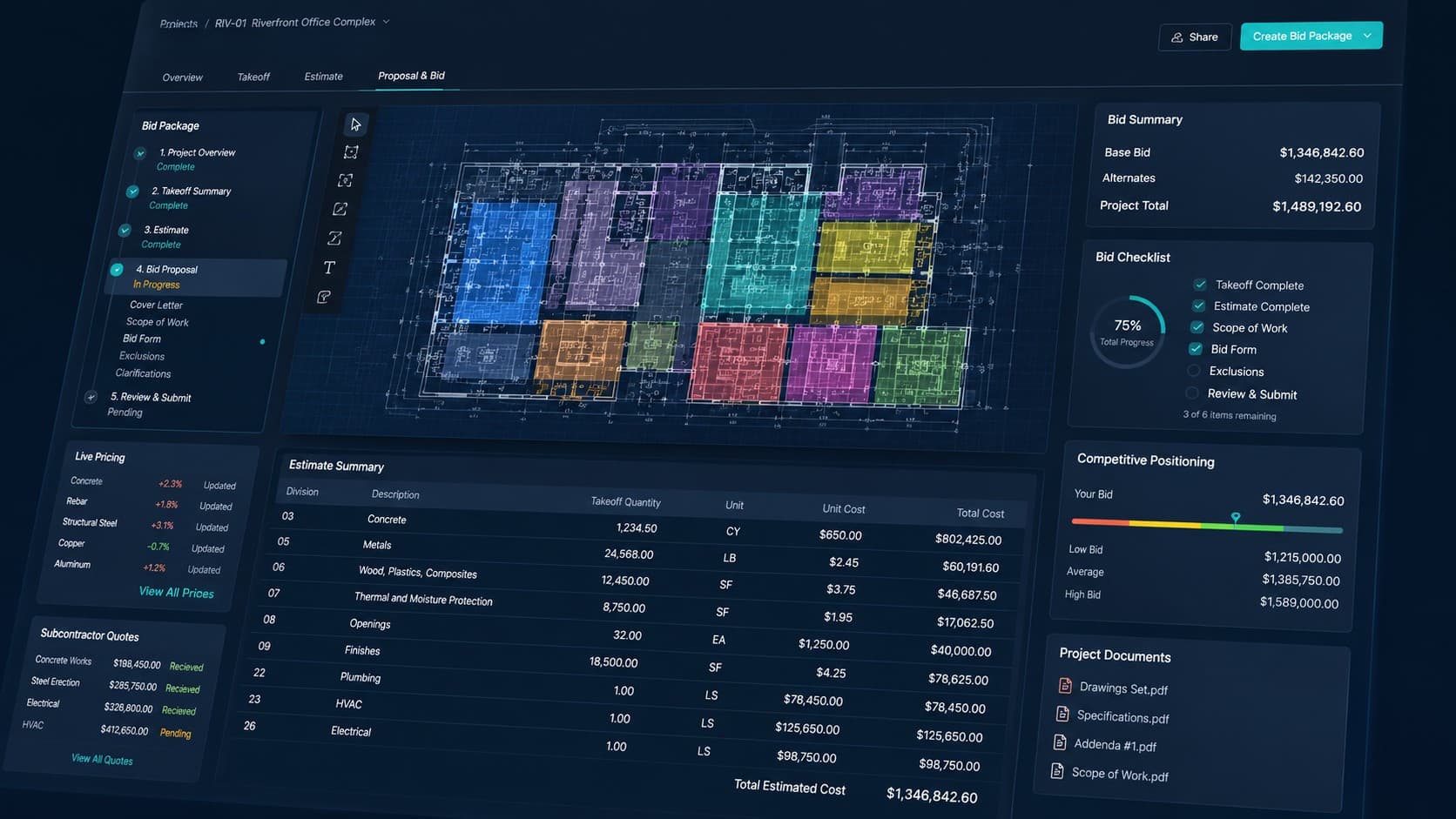
Quotr.ai helps by keeping quantities, supplier pricing, escalation assumptions, and proposal exports tied to a single estimate — so tariff exposure stays visible instead of scattered across tools.
For related workflows, see the AI Construction Estimating Software Buyer’s Guide, the Blueprint to Priced Estimate Workflow, and the Construction Cost Index Q1 2026.
Why tariff-aware estimating matters in 2026
Construction estimating has always had material risk. But tariffs make that risk sharper because prices can change because of policy, not just supply and demand. A contractor may have the right quantities and still lose margin if the estimate does not account for tariff exposure.
Common tariff-exposed construction categories include structural steel, rebar, metal studs, aluminum storefront systems, aluminum curtain wall, roofing metal, metal panels, copper wire, copper pipe, electrical conduit, switchgear, panelboards, transformers, HVAC equipment, mechanical equipment, plumbing components, imported fixtures, cabinets and casework, lumber and wood products, and fasteners and hardware.
The issue is not only that prices may rise. It is that the estimate, supplier quote, proposal, and procurement plan can become disconnected. That is where margin disappears.
The problem: most estimates are not built for tariff volatility
Traditional estimating workflows often look like this:
- Measure quantities.
- Apply unit costs from a spreadsheet.
- Add labor, overhead, and markup.
- Export a proposal.
- Email suppliers separately.
- Compare quotes manually.
- Update pricing in another spreadsheet.
- Add exclusions at the end.
- Hope the quote is still valid. That workflow breaks down when tariffs affect material pricing, because the tariff risk is spread across many places: the quantity is in the takeoff, the unit cost is in the estimate, the supplier quote is in email, the procurement plan is in a spreadsheet, the escalation clause is in the proposal, the owner’s budget is in a pro forma, and the drawing changes are in addenda. When those pieces are disconnected, tariff exposure becomes invisible.
For more on this, see The Takeoff-to-Transaction Gap.
What does "material escalation" mean in a construction bid?
Material escalation is the expected increase in material cost between the estimate date and the purchase date. It can be caused by tariffs, supply shortages, energy costs, commodity price changes, freight increases, currency movement, long-lead equipment constraints, manufacturer price updates, seasonal demand, regional market pressure, or quote expiration.
In a construction bid, escalation can be handled in several ways: built into unit costs, added as a separate escalation allowance, carried as contingency, passed through with an escalation clause, controlled through early procurement, excluded from fixed-price proposals, or shared with the owner through transparent assumptions. The right approach depends on contract type, project timeline, trade package, supplier quote validity, and owner expectations.
Why tariffs hit construction estimates differently than normal
inflation
Normal inflation usually moves gradually through the market. Tariffs can create sharper and more uneven movement. A tariff may affect raw material costs, imported finished goods, components inside equipment, domestic supplier pricing, substitution options, lead times, freight, quote validity, and buyout strategy.
Even if a contractor does not directly import materials, tariffs can still affect pricing because domestic suppliers may adjust prices based on replacement cost, market demand, or reduced competition. That means tariff-aware estimating is not only for importers — it matters for any contractor pricing materials exposed to global supply chains.
Materials most likely to need tariff-aware pricing
Steel
Steel exposure can affect structural steel, rebar, metal decking, steel joists, metal studs, hollow metal frames, steel doors, miscellaneous metals, fasteners, railings, and supports and hangers — touching structural packages, interior framing, MEP supports, and specialty scopes.
Aluminum
Aluminum exposure can affect storefront systems, curtain wall, windows, doors, louvers, metal panels, roofing accessories, HVAC components, and framing systems. Aluminum-heavy scopes can move quickly when tariff policy or supply conditions change.
Copper
Copper exposure can affect electrical wire, bus duct, switchgear, transformers, panelboards, copper pipe, plumbing systems, mechanical equipment, and controls. Copper is especially important because it appears inside multiple trades — electrical, plumbing, HVAC, low voltage, and equipment packages may all carry copper exposure.
Electrical and mechanical equipment
Tariffs can affect complete systems and components, including switchgear, transformers, panels, controls, HVAC units, pumps, motors, fans, air handlers, packaged equipment, and industrial equipment. These items may also have long lead times, so the risk is not just the current price — it is the price when the contractor actually buys the equipment.
Lumber and wood products
Lumber and wood-product exposure can affect framing lumber, sheathing, plywood, cabinets, vanities, casework, millwork, doors, and finish carpentry. For residential, multifamily, hospitality, and tenant-improvement projects, wood exposure can matter even when the primary structure is not wood-framed.
How Quotr.ai bakes material escalation into every bid
Quotr.ai helps contractors make escalation part of the estimating workflow instead of a last-minute spreadsheet adjustment. The goal is not to guess the future perfectly — it is to make tariff exposure visible, priced, and documented before the bid goes out.
Step 1: Start with the latest drawings
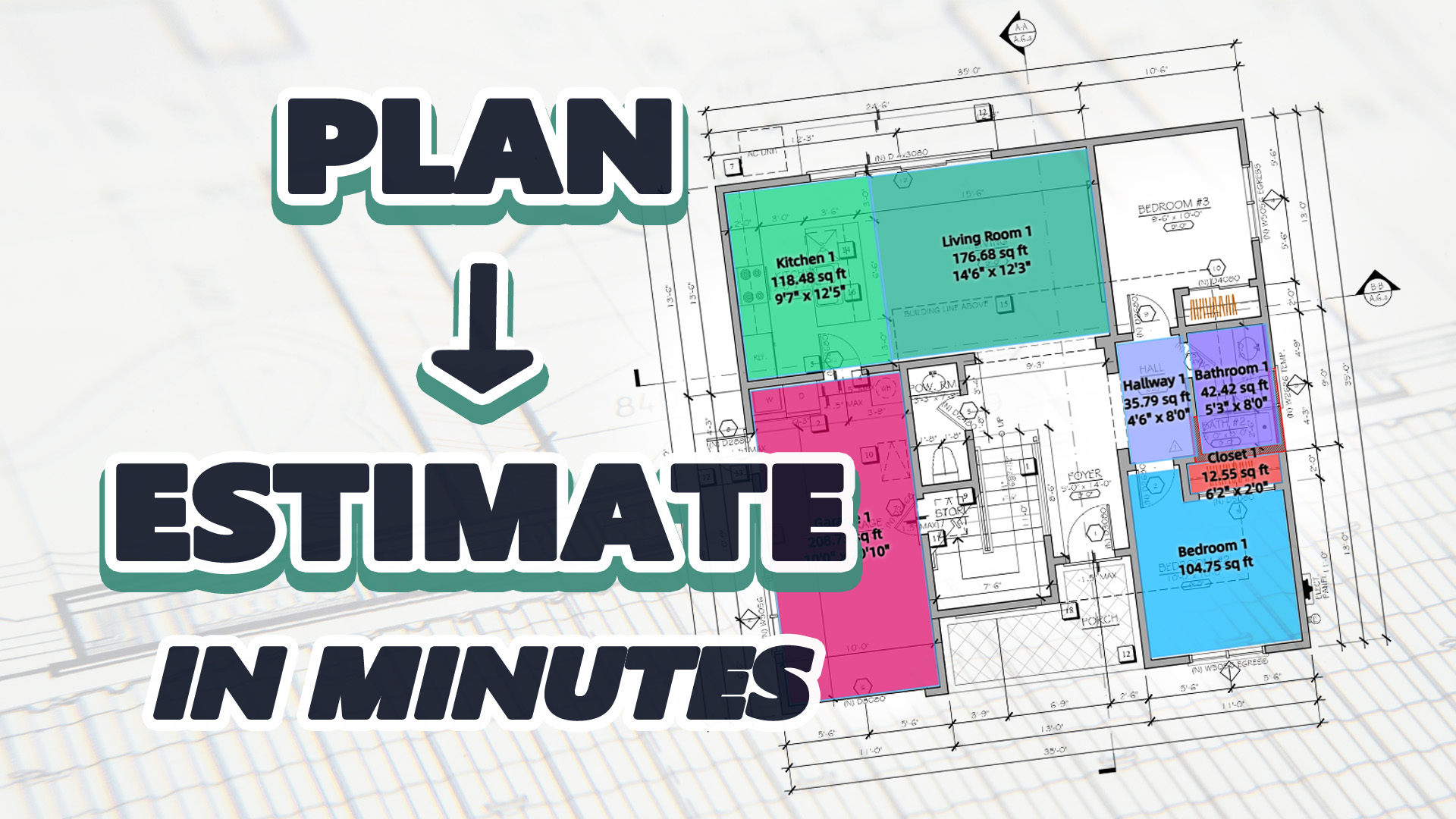
Tariff-aware estimating starts with accurate quantities. If the drawing set is outdated, every pricing assumption is already at risk. Quotr.ai helps teams upload and review drawings so estimators work from the current plan set and cut manual plan-review time. This matters because tariff exposure is quantity-driven — more copper wire means more copper exposure, more metal studs means more steel exposure, and so on. If the takeoff is stale, the tariff calculation is stale. For a deeper workflow, see How to Do a Construction Takeoff From a PDF Blueprint and AI That Reads Construction Drawings.
Step 2: Identify tariff-exposed line items
After quantities are extracted, Quotr.ai helps estimators organize the estimate by materials, assemblies, and cost categories, then flag materials that may have tariff exposure (steel, aluminum, copper, lumber, imported equipment and fixtures, electrical gear, mechanical equipment, specialty materials). The goal is to avoid treating the estimate as one blended number — tariff risk should be visible by line item, trade, supplier, and procurement timing.
| Line Item | Quantity | Material Exposure | Tariff Risk |
|---|---|---|---|
| Metal studs | 18,500 LF | Steel | High |
| Storefront | 4,200 SF | Aluminum | High |
| Copper wire | 32,000 LF | Copper | High |
| Switchgear | 1 package | Electrical equipment | High |
| Casework | 180 LF | Wood products/imported components | Medium |
| ACT ceiling | 24,000 SF | Mixed materials | Medium |
| Paint | 78,000 SF | Lower tariff exposure | Low |
Step 3: Apply escalation assumptions by material category
A tariff-aware estimate should not apply one blanket escalation percentage to the entire project — different materials move differently. Apply escalation by material category instead.
| Material Category | Escalation Method |
|---|---|
| Steel | Supplier quote plus escalation allowance |
| Aluminum | Current quote plus tariff exposure review |
| Copper | Market-sensitive pricing plus quote validity check |
| Electrical equipment | Vendor quote plus lead-time adjustment |
| HVAC equipment | Supplier quote plus procurement timing review |
| Lumber | Current supplier quote plus market adjustment |
| Imported fixtures | Tariff category review plus contingency |
| General materials | Standard cost database update |
This is more accurate than simply adding 5% to the entire bid. Quotr.ai helps estimators tie these assumptions to specific scopes instead of burying them in a single contingency line.
Step 4: Compare supplier quotes side by side
When tariffs are moving, current supplier quotes matter more than a static cost book. Quotr.ai helps contractors request and compare supplier pricing — and its AI bid-comparison parser surfaces the differences — so the estimator can see which price is current, which quote includes tariff impacts, which excludes them, which has the shortest validity, and which supplier can deliver earlier.
| Supplier | Material | Price | Quote Validity | Tariff Included? | Lead Time | | — | — | — | — | — | — | | Supplier A | Copper wire | $84,500 | 7 days | Yes | 4 weeks | | Supplier B | Copper wire | $79,900 | 3 days | No | 6 weeks | | Supplier C | Copper wire | $82,750 | 14 days | Partial | 5 weeks |
The lowest price is not always the safest price. A lower quote that excludes tariff changes may create more risk than a slightly higher quote that includes them.
Step 5: Tie escalation to buyout timing
Tariff risk depends on when the material will actually be purchased. A bid submitted today may not be bought out for weeks or months, and that gap creates exposure. Quotr.ai helps estimators connect pricing assumptions to buyout timing — when the material will be purchased, how long the quote is valid, whether the supplier is holding price, whether the product is long-lead, and whether the proposal should include escalation language or an early-procurement recommendation. This matters most for switchgear, transformers, HVAC equipment, structural steel, curtain wall, storefront, copper wire, roofing metal, and custom casework.
Step 6: Carry escalation into the proposal
Escalation is only useful if it is visible in the proposal. A contractor may include a material escalation allowance, a quote validity period, a tariff exclusion, a tariff pass-through clause, a procurement deadline, a price-hold assumption, an owner-approval requirement, a long-lead procurement note, or an alternate based on early purchasing. Quotr.ai connects estimate assumptions to proposal exports so they don’t disappear during proposal creation — reducing the risk of the estimate saying one thing and the proposal another. See AI Construction Proposals: Takeoff to Proposal.
Step 7: Update the estimate when tariffs or drawings change
Tariff-aware estimating is not a one-time step. Update the estimate when tariff policy changes, supplier pricing changes, a quote expires, drawings are revised, addenda are issued, quantities change, substitutions are approved, long-lead items are selected, or procurement timing changes. Quotr.ai keeps drawings, quantities, supplier pricing, and proposal outputs in sync so changes are easier to track — because a bid that was accurate two weeks ago may be wrong today.
Example: tariff-aware estimate adjustment
Assume a commercial tenant-improvement project includes 32,000 LF of copper wire, 18,500 LF of metal studs, 4,200 SF of aluminum storefront, one switchgear package, and 180 LF of casework. A traditional estimate might apply a general contingency across the project. A tariff-aware estimate separates the exposure:
| Scope | Base Cost | Tariff/Escalation Assumption | Adjusted Cost |
|---|---|---|---|
| Copper wire | $84,500 | 6% | $89,570 |
| Metal studs | $42,000 | 5% | $44,100 |
| Aluminum storefront | $118,000 | 7% | $126,260 |
| Switchgear | $210,000 | 8% | $226,800 |
| Casework | $56,000 | 3% | $57,680 |
Total base cost: $510,500. Total adjusted cost: $544,410. Escalation impact: $33,910. (Figures illustrative.) The contractor can show the owner exactly where the escalation risk comes from instead of hiding it inside a general markup.
Why tariff-aware estimating improves bid quality
Tariff-aware estimating makes assumptions explicit, which improves pricing accuracy, margin protection, supplier coordination, owner communication, procurement planning, bid transparency, risk documentation, proposal quality, change tracking, and buyout readiness. It also helps estimators avoid the most dangerous mistake in a volatile market: using correct quantities with stale prices.
What contractors should include in a tariff-aware bid
A tariff-aware bid should clearly document the estimate date, drawing version, supplier quote date, quote validity period, materials with tariff exposure, escalation assumptions, procurement assumptions, long-lead items, exclusions, allowances, alternates, tariff pass-through language (if applicable), owner approval deadlines, and substitution options. This doesn’t mean every bid needs a complicated legal clause — it means the pricing assumptions should be visible before the contract is signed.
Sample tariff escalation language for a proposal
Always have legal counsel review contract language, but a plain-English proposal note may look like this:
"Pricing is based on supplier quotes and tariff conditions available as of the proposal date. Materials subject to tariff-driven cost changes — including steel, aluminum, copper, electrical equipment, mechanical equipment, and imported materials — may require price adjustment if supplier quotes expire, tariff policy changes, or procurement is delayed beyond the stated validity period."
Or:
"This proposal includes current material pricing based on available supplier quotes. Tariff-related increases, manufacturer price updates, or material escalation occurring after quote expiration are excluded unless specifically included as an allowance."
The key is to avoid silent risk. If the bid assumes a price hold, say so. If it excludes future tariffs, say so. If it includes an escalation allowance, say so.
Tariff-aware estimating by role
Subcontractors are often the most exposed because they buy specific materials directly — electrical (copper wire, conduit, switchgear, panels, controls), mechanical (HVAC equipment, ductwork, motors, pumps, controls), framing (metal studs, track, fasteners), glazing (aluminum storefront, curtain wall, hardware), roofing (metal panels, fasteners, insulation), and millwork (imported panels, hardware, wood products). They should bake escalation and quote validity into the bid, not discover changes after award. See How to Bid Commercial Construction Projects as a Subcontractor.
General contractors carry risk across multiple tariff-sensitive trades — through subcontractor pricing, allowances, alternates, owner budgets, and buyout timing — even when they don’t buy materials directly. GCs should ask which trade packages are most exposed, which sub quotes include or exclude tariff risk, which materials should be bought early, and which scopes need escalation allowances.
Developers and owners need tariff-aware estimating because tariffs can affect feasibility and pro forma assumptions. A project that penciled with last month’s pricing may need review if materials, equipment, or procurement timing changed. See The Pro Forma That Never Stops Changing, the Real Estate Pro Forma Software Comparison, and the Quotr.ai Developer Desk.
Practical checklist: tariff-aware estimating
Drawing & quantity review: latest drawing set confirmed · addenda reviewed · quantities updated · scope changes identified · tariff-exposed materials flagged · long-lead items identified · alternates reviewed · substitutions considered.
Pricing review: supplier quotes refreshed · quote validity checked · tariff inclusion confirmed · tariff exclusions confirmed · escalation applied by category · freight and delivery reviewed · lead times confirmed · location-based pricing checked · cost database updated.
Procurement review: early-procurement candidates identified · supplier availability confirmed · quote comparison completed · buyout timing reviewed · owner approval deadlines listed · long-lead equipment flagged · procurement risk documented.
Proposal review: estimate date · drawing version · quote validity · escalation assumptions · tariff exclusions (if needed) · allowances · alternates · procurement deadlines · proposal synced with estimate.
Common mistakes in tariff-aware estimating
- Applying one escalation percentage to the whole bid. Steel, aluminum, copper, equipment, lumber, and general materials don’t move the same way — escalate by category.
- Forgetting quote validity. A quote that expires in seven days won’t protect a contractor awarded in six weeks.
- Assuming tariffs only affect imported materials. Domestic suppliers also adjust on replacement cost, demand, and reduced competition.
- Separating estimating from procurement. If quote comparison happens outside the estimate, tariff exposure can vanish from the final bid.
- Not updating proposals when pricing changes. A proposal should reflect current assumptions, not outdated data.
- Ignoring long-lead equipment. Electrical and mechanical equipment carries both tariff and lead-time risk.
- Hiding escalation in markup. Clear assumptions are easier to defend than hidden contingency.
Frequently asked questions
What is tariff-aware estimating?
Tariff-aware estimating is the process of identifying tariff-exposed materials, applying escalation assumptions, validating supplier pricing, tracking quote validity, and carrying those assumptions into the final bid and proposal.
Why do tariffs matter in construction estimating?
Tariffs can increase the cost of steel, aluminum, copper, electrical equipment, HVAC equipment, lumber, imported fixtures, and other materials. If those increases aren’t in the bid, contractors lose margin.
Which construction materials are most exposed to tariffs?
Common tariff-exposed materials include steel, rebar, metal studs, aluminum storefront, curtain wall, copper wire, copper pipe, switchgear, transformers, HVAC equipment, imported fixtures, casework, lumber, and hardware.
How should contractors include material escalation in a bid?
Through updated unit costs, supplier quote validation, escalation allowances, quote validity periods, procurement deadlines, alternates, exclusions, or tariff pass-through language.
Should contractors use one escalation percentage for the whole
project? Usually no. Different materials have different exposure — apply escalation by material category, trade, supplier quote, or procurement timeline.
How does Quotr.ai help with tariff-aware estimating?
Quotr.ai keeps takeoff, pricing, supplier quotes, quote comparison, and proposal exports tied to one estimate, so tariff-sensitive materials are easier to identify, price, document, and update before bid day.
Can AI help with material escalation?
AI can help identify tariff-sensitive materials in a drawing set, organize quantities, compare scope changes, and support faster estimate updates. Estimators should still validate pricing with suppliers and review tariff assumptions before submitting.
What should a tariff escalation clause include?
A tariff escalation clause or proposal note should identify the proposal date, quote validity, affected material categories, tariff assumptions, exclusions, and what happens if supplier pricing or tariff policy changes before procurement.
Final thoughts
Tariffs create a simple but serious problem: the takeoff can be right, but the bid can still be wrong. If steel, aluminum, copper, electrical or HVAC equipment, lumber, or imported materials move after the estimate is created, margin can disappear before the job starts. That’s why tariff-aware estimating matters — and why making assumptions explicit beats hiding them in markup.
See it on a live project: explore Quotr.ai Software, start a free trial, or talk to our team about pricing volatile materials into your next bid.
Related reading
- The Takeoff-to-Transaction Gap
- Construction Cost Index Q1 2026
- Tariff Impact on US Construction Costs 2026
- What Is AI Construction Estimating Software?
- AI Construction Estimating Software: Buyer’s Guide
Published on the Quotr.ai blog. Quotr.ai is an AI-powered construction estimation, takeoff, and procurement platform based in San Francisco. \