Developer Ground Truth #1: A GC’s Price Is Only a Snapshot - A conversation with a Bay Area multifamily developer on why the proforma never stops changing
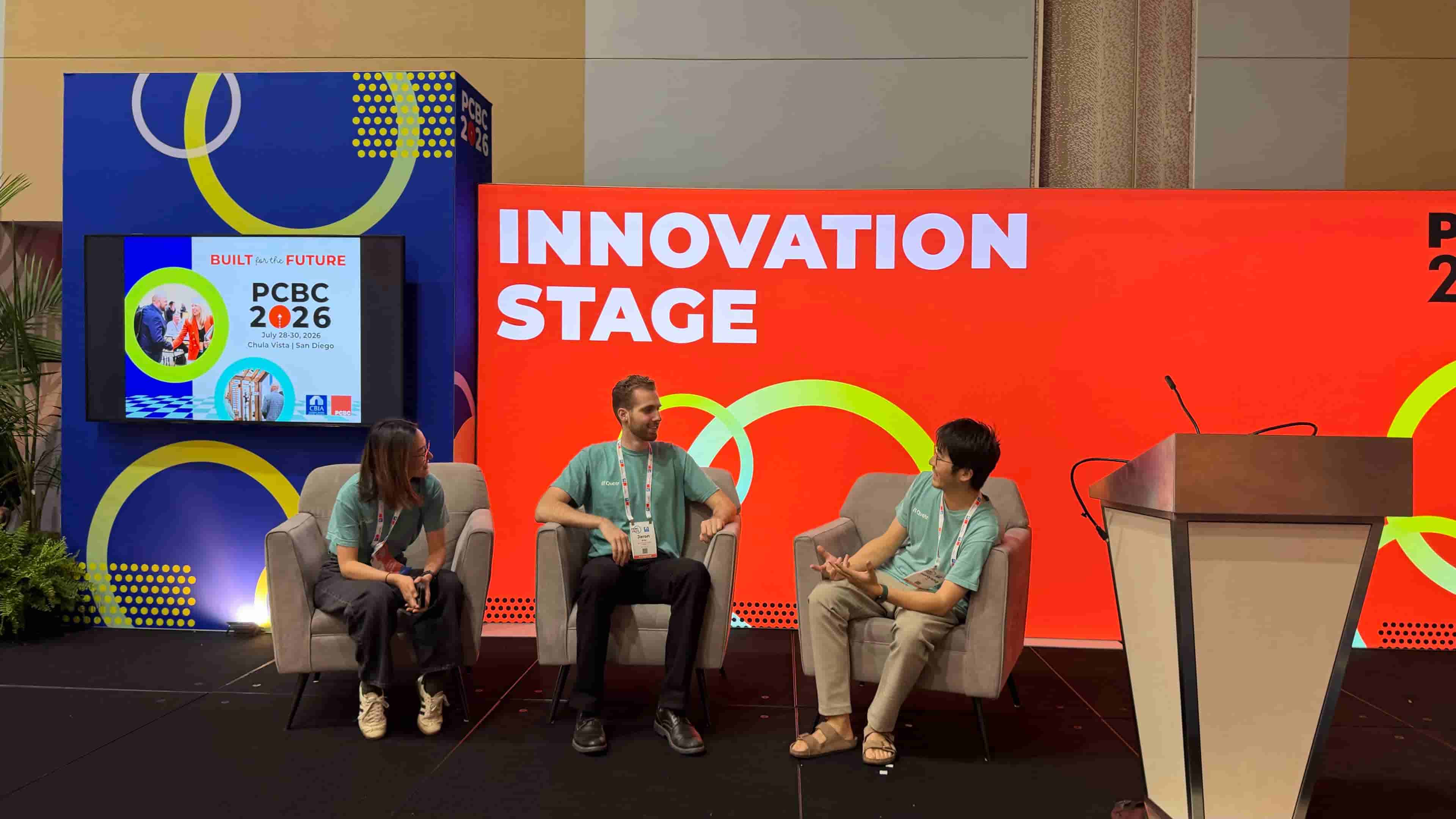
Today we sit down with Sam (a pseudonym), an experienced multifamily developer based in the Bay Area with a portfolio spanning both affordable and market-rate housing. His background stretches across two continents, having worked on residential development in Asia before building his career in the U.S., giving him a rare comparative lens on how these two very different markets operate. Today, the majority of his work is concentrated in the Bay Area, where he navigates the full complexity of development from entitlement through stabilization.
Real estate development runs on assumptions—about costs, capital, market timing, and demand. The challenge, as Sam laid out plainly in our conversation, is that almost every one of those assumptions has an expiration date. And in today’s environment, that expiration date keeps getting shorter.
How would you describe the current financing environment for multifamily development, both on the affordable and market-rate side?
“The capital is there, but only on the debt side. On market-rate deals, you can typically get 60-70% LTV from a major lender, and on affordable deals that can stretch to 80%. But the equity is difficult. And on the affordable side, finding gap financing is the real challenge. That is the public subsidy you need to cover the discounted rents for low-income households, and those funds are drying up fast. The federal government is cutting, the state is running a deficit, and it is a huge challenge to secure those funds these days.”
The picture Sam paints is one where the traditional toolkit for developers is shrinking. With equity hard to find on the market-rate side and public subsidies under pressure on the affordable side, the 25-30% of the capital stack that sits above the bank loan has become the defining challenge of getting a deal across the line.
What makes a deal attractive enough to bring investors to the table in this environment?
“It is all about timing. Real estate is cyclical. Two years ago, if I was building something in Oakland, I would not find any investors. There was a housing oversupply and the numbers just did not work. A good deal is one where the market justifies the rents you are underwriting. San Francisco right now is a good example. It had fallen out of the top ten markets after the pandemic, and now it is back in the top three because of the AI boom. Investors who would not touch it five years ago are suddenly interested.”
What Sam describes is a market where developer instinct and timing matter as much as the fundamentals. Proformas are built on forward-looking assumptions, and those assumptions live or die depending on where a market is in its cycle. Getting the numbers right means getting the timing right first.
How often do you update your proformas, and what drives those changes?
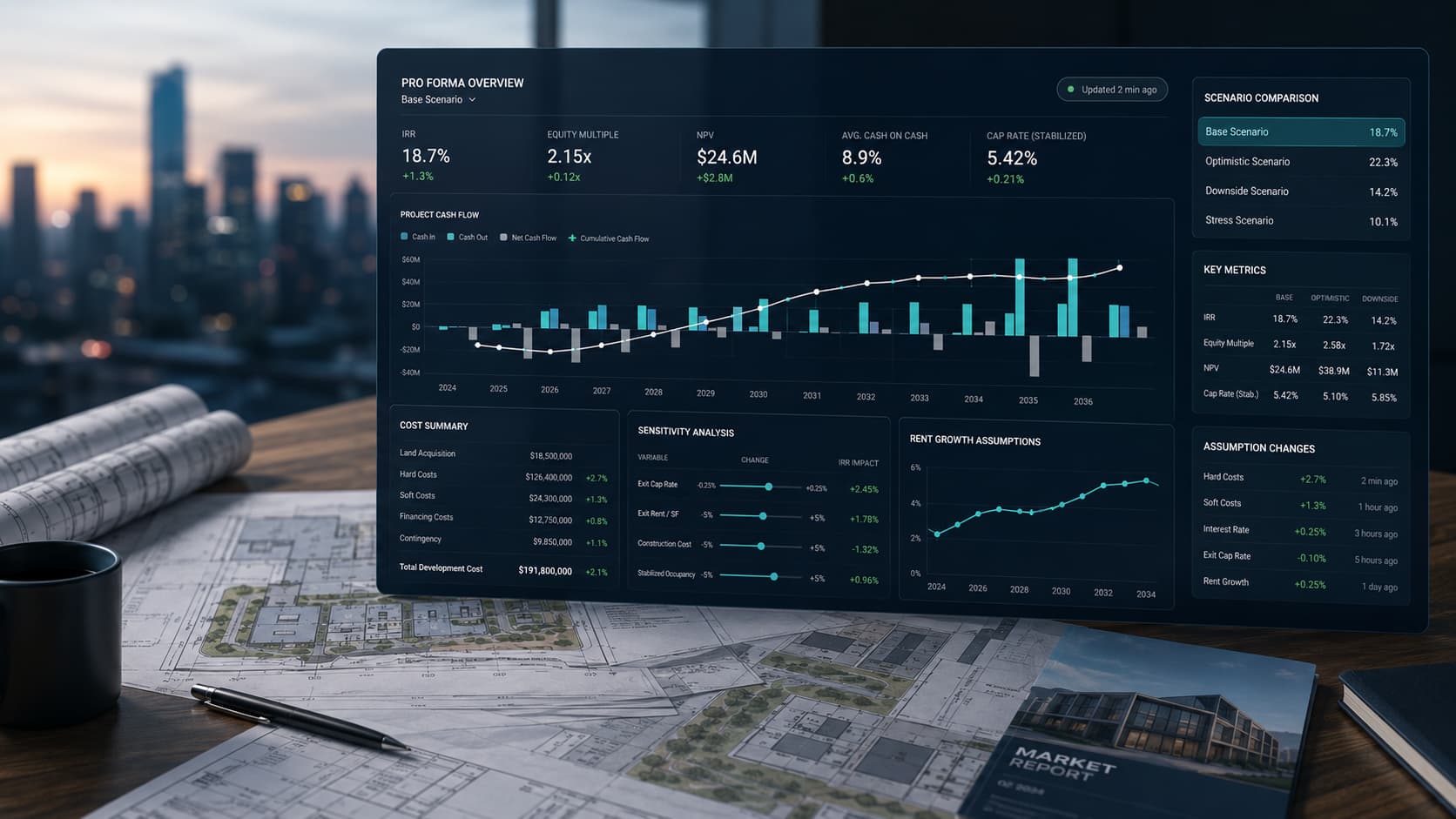
“Almost everything on the proforma is dynamic except the land cost, which is locked in at close. Everything else keeps moving. Hard costs, permit fees, consultant pricing, interest rates. They all impact the construction loan sizing, the reserves, the total project cost. I update my proformas at least once every one to two months. I wish I could do it once and have it be the same for the next four years, but that is just not the case.”
For a ground-up development that can take five to six years from acquisition to stabilization, the proforma is less a static document and more a living model that has to be constantly re-calibrated against a shifting reality. The discipline of maintaining it is, in itself, a core part of the developer’s job.
💡 Close the Takeoff-to-Transaction Gap
If you are underwriting multi-million dollar assets using static spreadsheets or disconnected templates, your project margins are exposed to silent erosion. Tie your financial proformas directly to drawing-verified physical quantities and factory-direct cost signals.
👉 Explore Quotr.ai Service or Book a 15-Minute Preconstruction Audit Live
How predictable are hard costs, and how do you manage that uncertainty?
“We get pricing from our GCs every six months, and even then it is only good for six months. They cannot predict beyond that either. Historically hard costs escalate at around 6-7% per year, but after the pandemic we saw years where it jumped by 10%, especially lumber. The last two years have actually been softer, closer to 3%, because there is not enough building happening and the subs are hungry. But you cannot count on that continuing. Tariffs, supply shocks, policy changes. These things come out of nowhere and you simply cannot predict them a year out.”
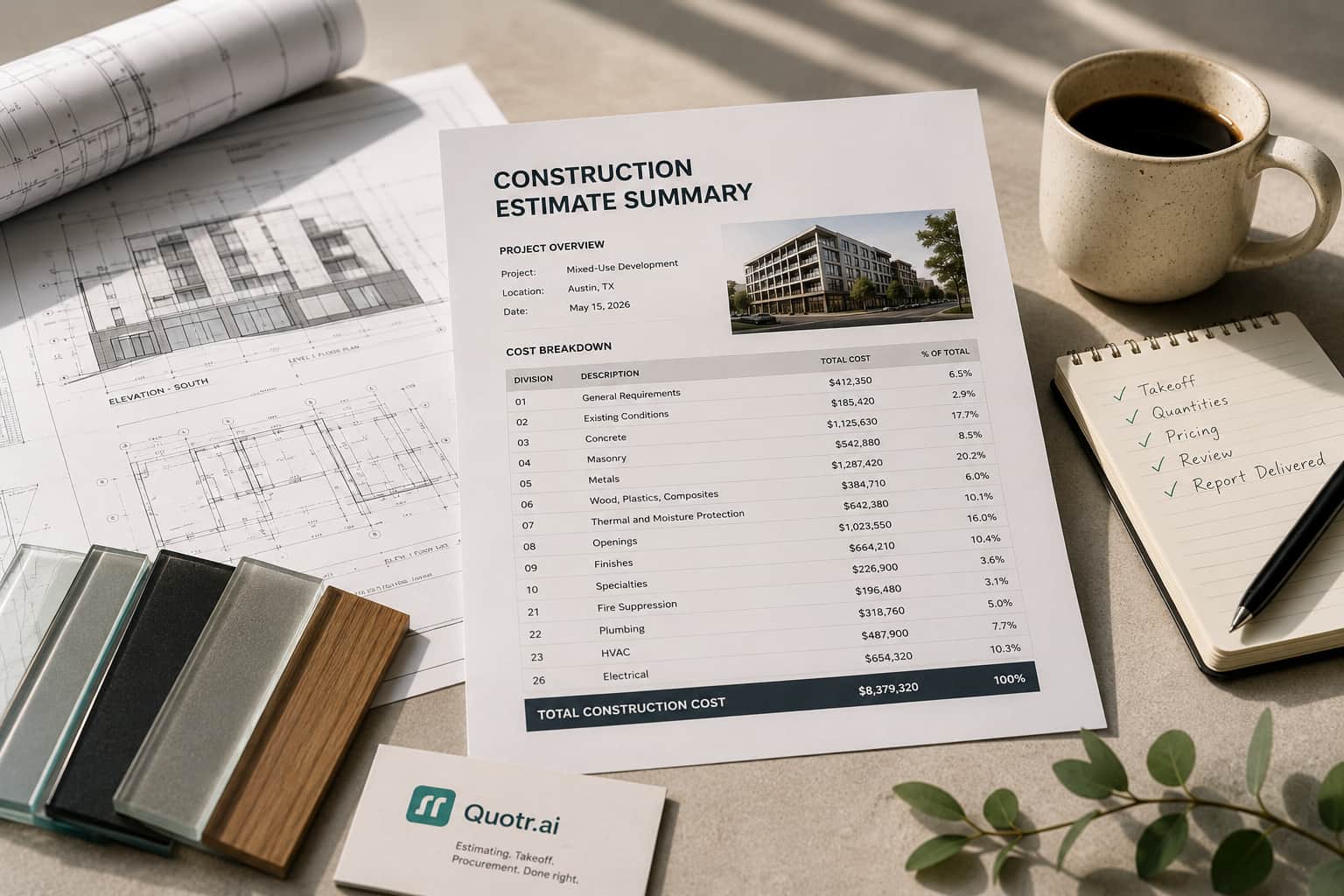
This is a gap that Quotr.ai is directly built to address. Quotr.ai is a platform designed to help developers and contractors track, predict, and update hard costs throughout the lifecycle of a project, giving teams a more accurate and current picture of where costs are headed. Hard cost prediction beyond a few months is genuinely difficult, and even experienced developers like Sam are navigating significant uncertainty. Quotr.ai’s model currently delivers reliable predictions in the three-to-four-month window, which aligns with how developers are actually making decisions: in rolling increments, updating assumptions as new data comes in.
What we take away from this conversation
Sam’s insights point to something that anyone working in development already knows but rarely says out loud: a GC’s pricing is a snapshot, not a guarantee. It is good for six months at best, and the moment market conditions shift, whether from a tariff announcement, a supply shock, or simply a change in how many projects are competing for the same subcontractors, that number becomes unreliable.
And here lies a fundamental tension in development. A ground-up project takes years to complete, yet the most reliable cost prediction window anyone in the industry will commit to is six months. That means even if you knew exactly what costs looked like today, you would still need to reprice your project eight to ten times before you ever reach stabilization. Updating a proforma’s hard costs is not just a matter of plugging in a new figure. It requires understanding why costs are moving, what underlying market conditions are driving them, and whether the trend is likely to hold.
And beneath all of that sits an even bigger question. Developing in the Bay Area means developing inside a market cycle that is always moving. San Francisco fell out of the top ten after the pandemic and climbed back to the top three on the back of the AI boom. Oakland struggled with oversupply while other markets peaked and corrected. Timing, as Sam put it, is everything. But knowing where you are in the cycle, and what that means for costs, rents, and investor appetite two or three years from now, remains one of the hardest problems in development.
How do you stay ahead of that? That is a question Sam raised honestly, and one that we at Quotr.ai are working to help answer. Explore our master guide on How AI Construction Takeoff Works in 2026 to see how we help teams stabilize their numbers before committing capital.