What Is a Construction Takeoff? (2026 Guide to Accurate Estimating)
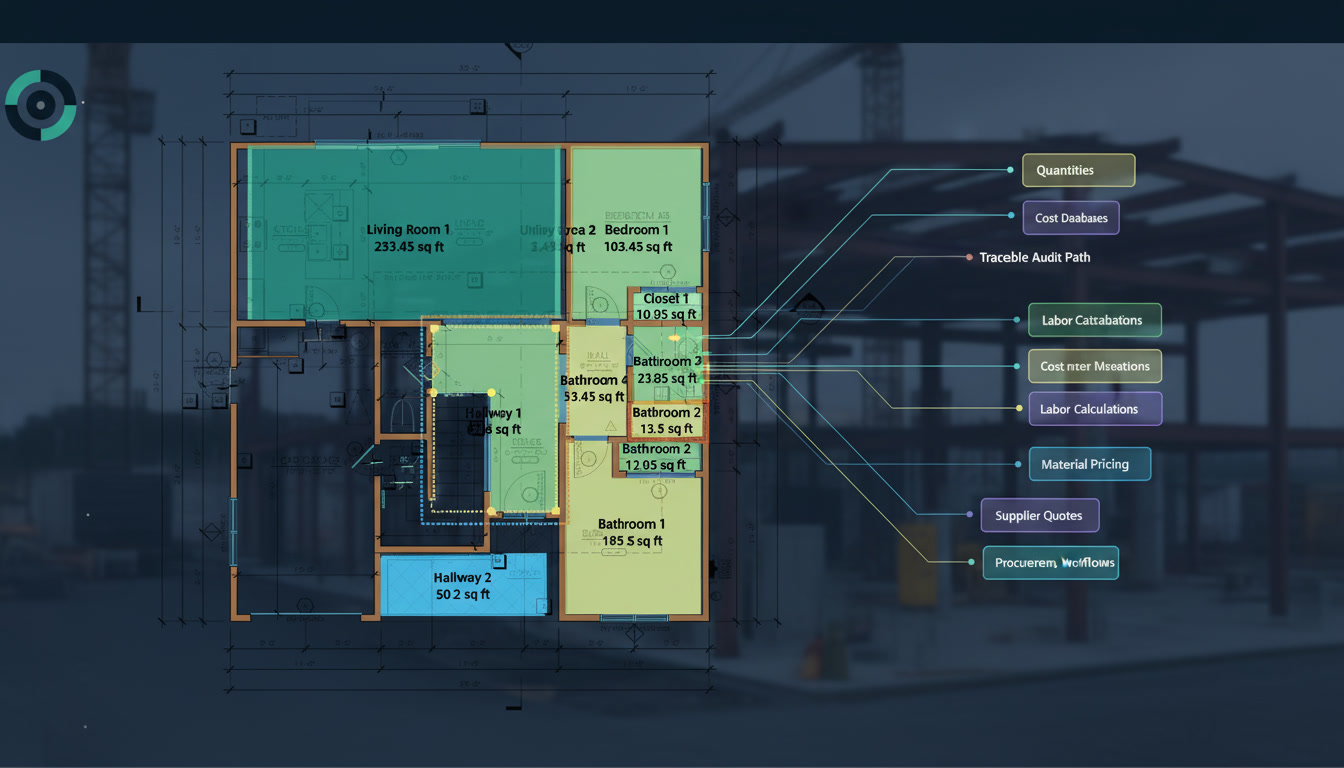
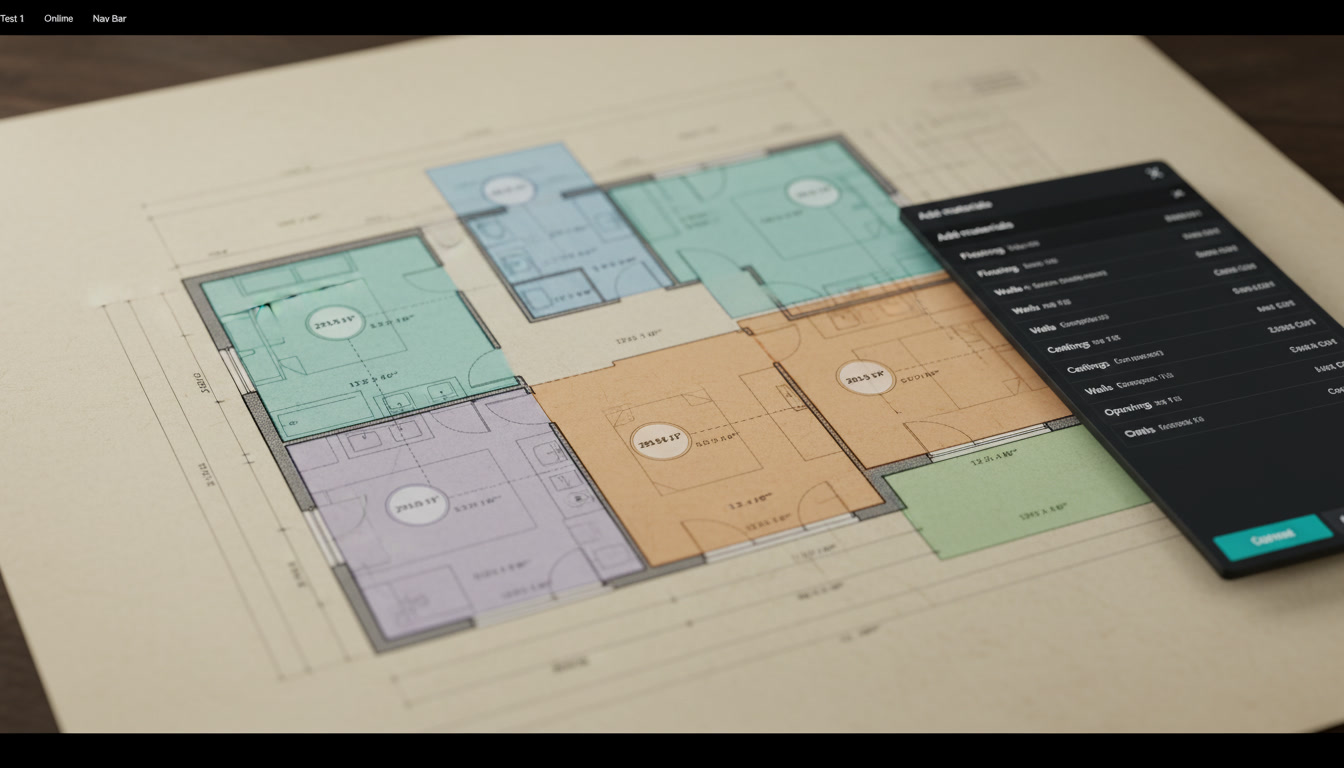
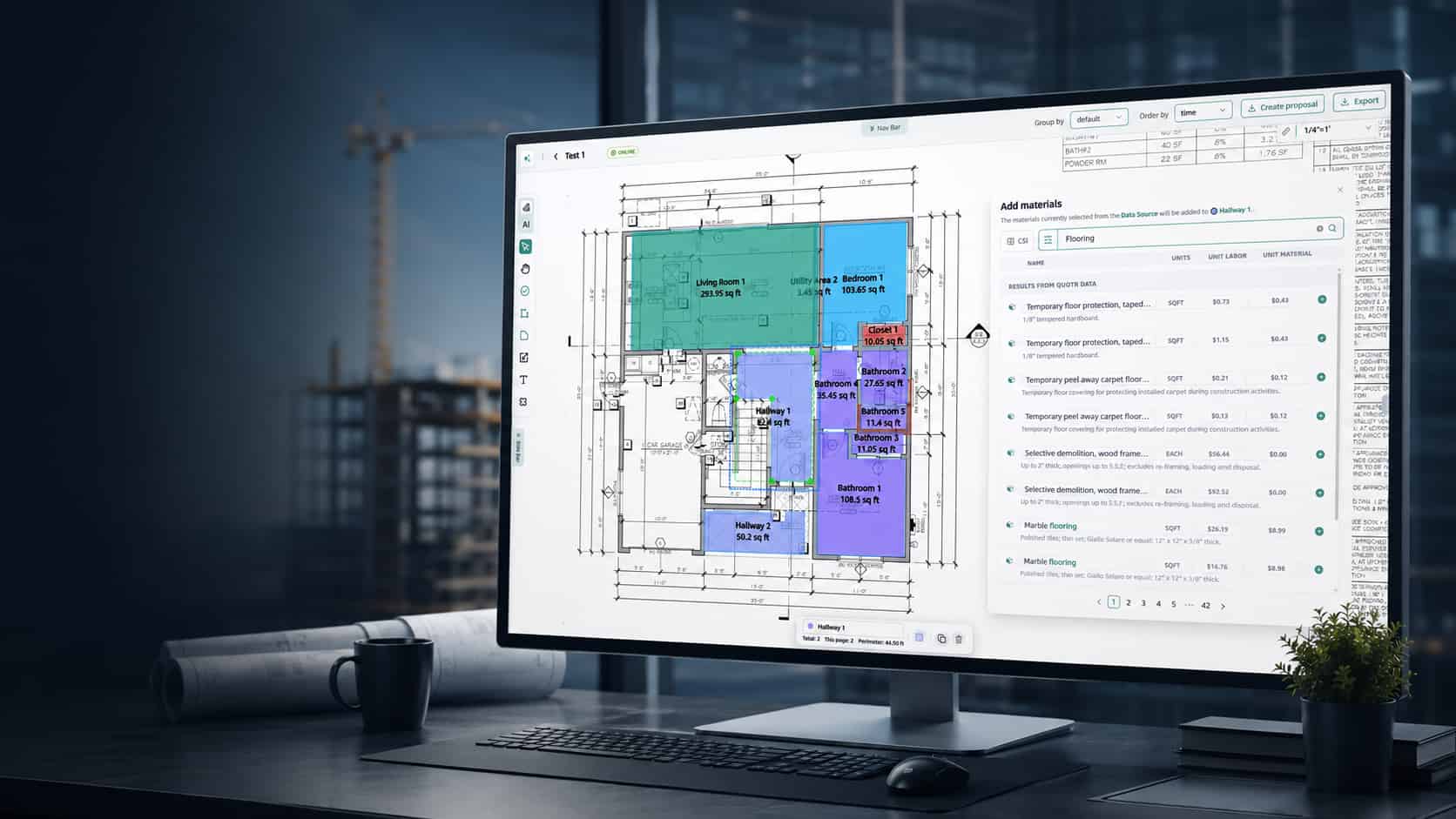
A construction takeoff—also known as a material takeoff (MTO) or quantity takeoff (QTO)—is the process of measuring and quantifying every material, labor component, and assembly required to complete a construction project.
Before a contractor submits a bid, they must determine:
- Material quantities
- Labor requirements
- Project scope
That process starts with the takeoff.
Get it right, and your margin holds. Get it wrong, and the error compounds across your entire estimate.
Why Construction Takeoff Accuracy Matters More in 2026
Construction estimating is becoming increasingly complex due to market volatility and workforce constraints.
Material prices continue to fluctuate across key categories. According to the Associated General Contractors of America (AGC), construction input costs have seen measurable increases, with materials such as aluminum, steel, and copper experiencing double-digit price changes in recent years.
At the same time, labor shortages are putting pressure on project timelines. According to the 2025 Workforce Survey by AGC, 92% of construction firms report difficulty filling open positions, and workforce shortages remain a leading cause of project delays.\
Industry analysis also shows that material costs have increased faster than bid prices, compressing contractor margins and increasing financial risk in fixed-price contracts.\
In this environment, even small takeoff inaccuracies can lead to significant financial impact. For example, a 5% variance on a $2M project represents a $100,000 difference in cost.
The 4 Types of Construction Takeoff Methods
1. Manual Takeoff (Paper-Based)
The traditional approach using printed plans and manual measurement tools.
Limitations:
- Time-intensive
- Prone to human error
- Difficult to standardize
2. Digital Takeoff (PDF-Based)
Estimators measure directly on digital drawings using software.
Limitations:
- Still manual
- Dependent on user input
- Limited automation
3. AI-Assisted Takeoff (Modern Workflow)
AI-assisted systems analyze construction drawings using:
- Computer vision
- Pattern recognition
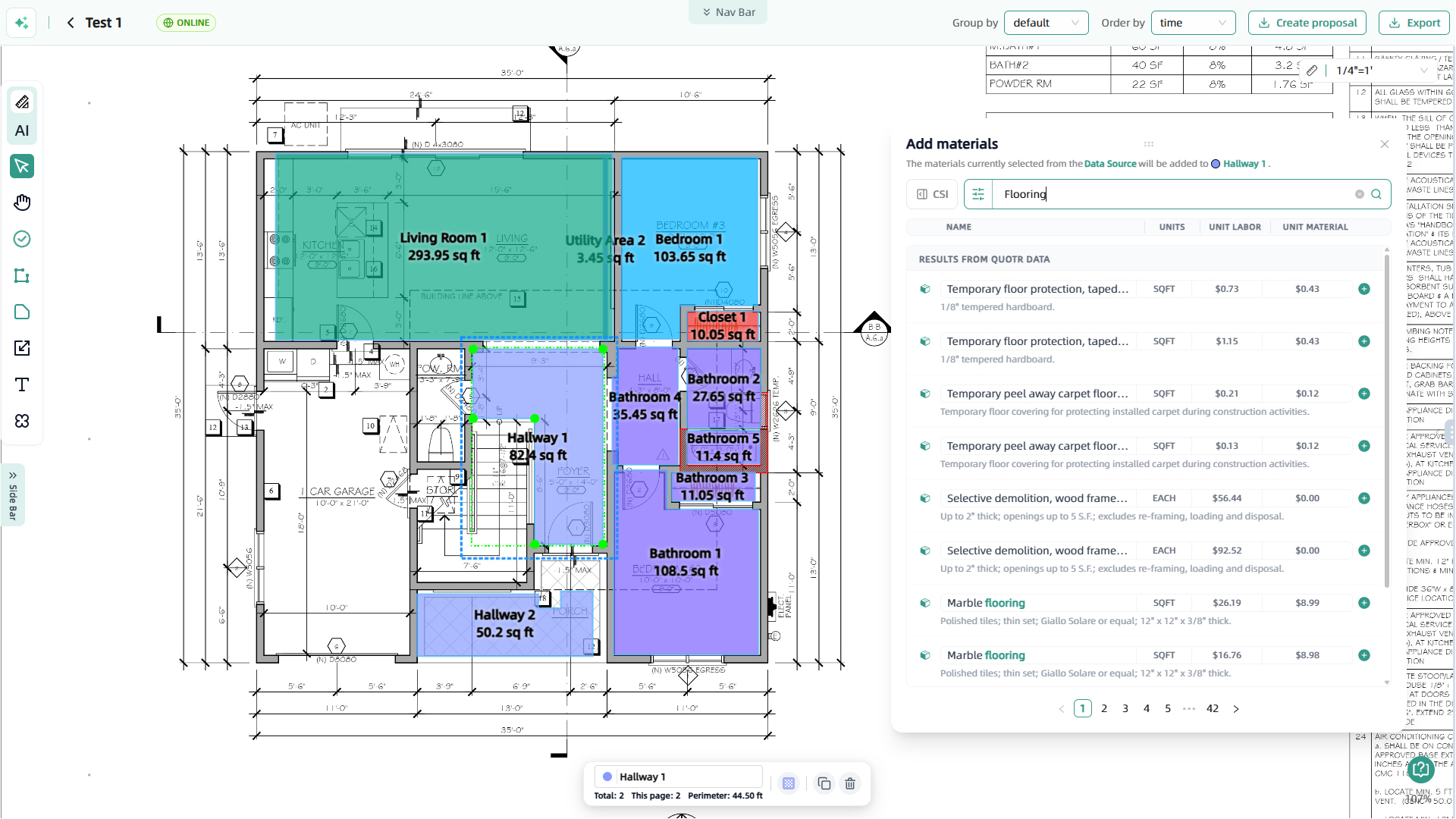
- Automated quantity extraction
Instead of manually counting, estimators validate and review outputs.
AI-assisted workflows are designed to reduce human error and improve consistency, particularly in large or complex plan sets. Industry case studies consistently show improvements in speed, repeatability, and estimator productivity compared to fully manual workflows.
Explore how this works with Quotr.ai
4. BIM-Based Takeoff
Extracting quantities directly from 3D models.
Limitations:
- Requires BIM adoption
- Not applicable to all projects
The Construction Estimating Process
A takeoff is one step in a larger estimating workflow:
- Scope review
- Quantity takeoff
- Pricing
- Bid assembly
- Submission
Takeoff often consumes the majority of estimating time, making it the highest-leverage point for improving efficiency.
The Gap Between Takeoff and Pricing
In traditional workflows, takeoff and pricing are separate processes.
Estimators:
- Complete quantities
- Contact suppliers
- Wait for quotes
This introduces delays and pricing uncertainty.
Modern platforms like Quotr.ai integrate takeoff with pricing workflows, helping reduce delays and improve decision-making speed.
Learn more:
Manual vs AI-Assisted Takeoff
| Metric | Manual | AI-Assisted |
|---|---|---|
| Time | Hours | Significantly reduced |
| Error risk | Higher | Reduced with validation |
| Output consistency | Variable | More standardized |
AI does not replace estimators—it enhances their ability to make decisions faster and more accurately.
How AI Construction Takeoff Works
When plans are uploaded:
- Object detection identifies components
- Measurements are calculated automatically
- Quantities are mapped to materials
- Confidence scores flag uncertainties
The estimator validates rather than builds from scratch.
Beyond Accuracy: Procurement and Cost Efficiency
Modern estimating platforms are increasingly integrating procurement capabilities.
Some platforms report potential cost savings in specific material categories, particularly where traditional supply chains involve multiple distribution layers.
These outcomes vary depending on project type, supplier relationships, and sourcing strategy, but reflect a broader shift toward integrated estimating and procurement workflows.
Learn how pricing works:
Quotr.ai Pricing
Who Benefits from AI-Assisted Takeoff?
Contractors
- Faster bid turnaround
- Increased bidding capacity
- Improved consistency
Explore: Quotr.ai Software
Developers
- Better cost forecasting
- Reduced risk exposure
- Improved planning
Explore: Quotr.ai Service
Frequently Asked Questions (FAQ)
What is the difference between MTO and QTO?
A material takeoff (MTO) focuses on materials, while a quantity takeoff (QTO) includes labor and equipment.
How long does a takeoff take?
Manual processes can take several hours, while AI-assisted workflows significantly reduce this time.
Is AI takeoff reliable?
AI improves consistency, especially when paired with estimator validation.
Do I need BIM?
No. AI takeoff works with standard 2D drawings.
More resources:
Start Faster, Bid Smarter
If your workflow still relies on manual processes, you’re limiting your speed and scalability.
Modern estimating requires:
- Faster turnaround
- Greater accuracy
- Integrated pricing
Start here: Quotr.ai
Or book a demo: Click here to book a demo
Sources
- Associated General Contractors of America (AGC)
https://www.agc.org - AGC Workforce Data (2025)
https://www.agc.org/news/2025/08/28/construction-workforce-shortages-are-leading-cause-project-delays-immigration-enforcement-affects - Engineering News-Record
https://www.enr.com/articles/62557-report-92-percent-of-construction-firms-struggling-to-hire-workers - ConstructConnect Industry Analysis
https://www.constructconnect.com/blog/how-contractors-can-beat-high-costs-and-labor-shortages-in-2026
Published on the Quotr.ai blog. Quotr.ai is an AI-powered construction estimation, takeoff, and procurement platform based in San Francisco.