One-Stop Procurement: Why Smart Hospitality & Residential Developers Are Consolidating Doors, Windows, and FF&E Sourcing
Short answer: Hospitality and multifamily developers are consolidating doors, windows, and FF&E (furniture, fixtures, and equipment) into a single factory-direct source to cut cost, compress timelines, and hold quality consistent across properties. Buying building-envelope products and furnishings from one capable partner — factory-direct, delivered duty paid (DDP) — removes distributor markup and the coordination burden of managing four or five separate vendors, typically saving 40–55% below distributor pricing on aluminum and vinyl door/window systems.
The hidden cost of fragmented procurement
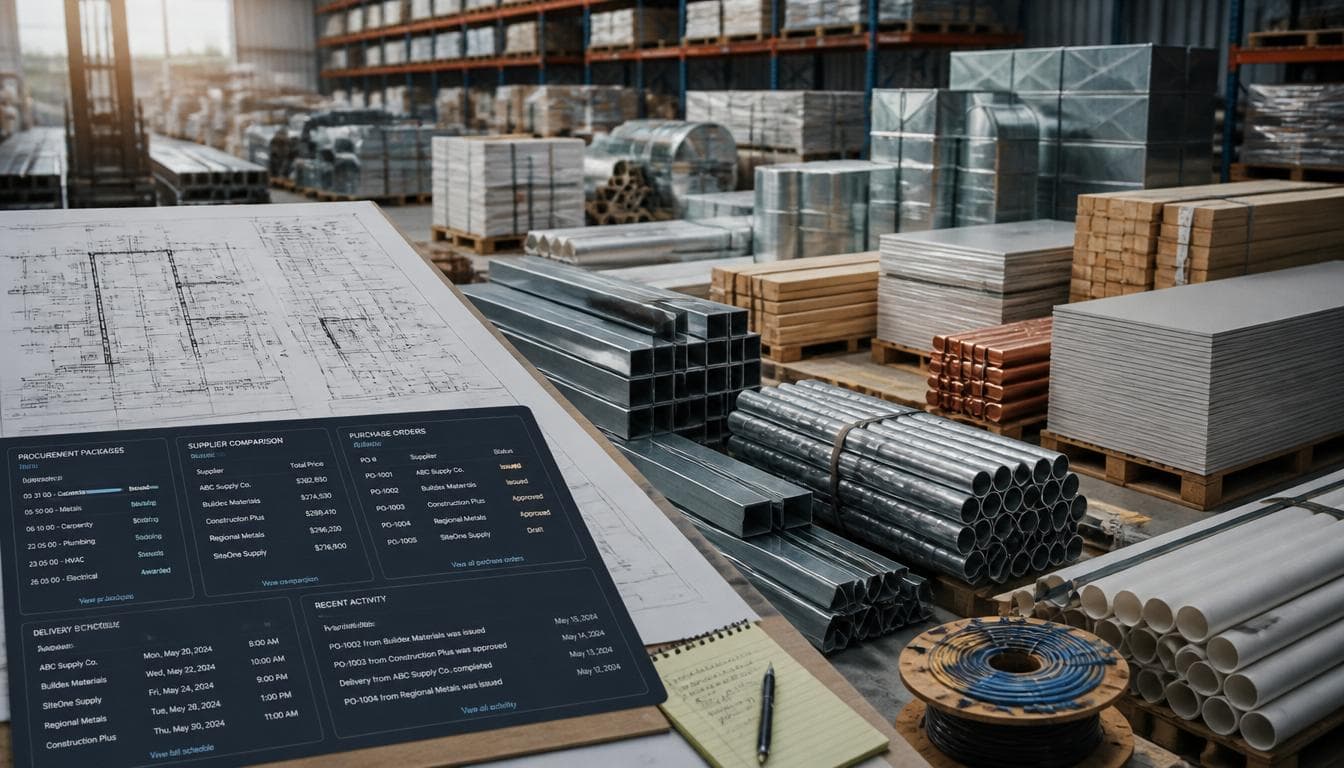
For hotel and apartment developers, a single renovation or new-build project can involve dozens of vendors — one for aluminum windows, another for vinyl doors, a third for guestroom furniture, a fourth for lobby and common-area pieces. Each vendor relationship means separate quotes, separate lead times, separate quality standards, and separate points of failure.
The result: procurement teams spend more time coordinating suppliers than evaluating value. Delays on one line item — a late door shipment, a furniture backorder — can stall an entire project timeline, even when every other vendor delivers on schedule.
The case for consolidation
Sourcing aluminum-alloy and vinyl doors and windows alongside hotel and apartment furniture from a single, capable partner addresses this directly:
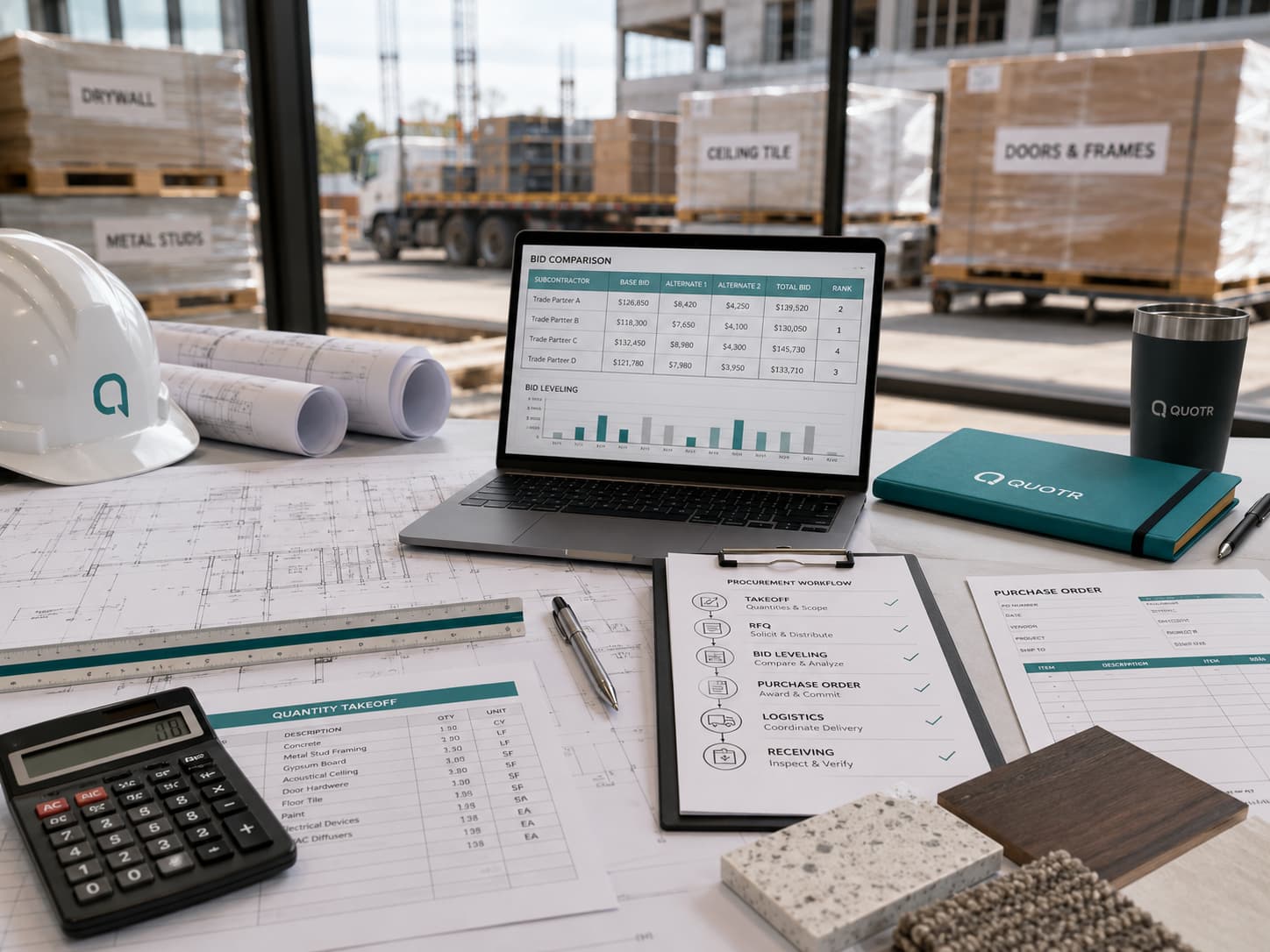
1. One point of accountability. When a single supplier manages both building-envelope products (windows, doors) and interior furnishings, procurement teams get one contact for specifications, timelines, and issue resolution — instead of chasing updates across four or five vendors.
2. Design and quality consistency. Aluminum-alloy and vinyl systems and furniture lines produced under one quality framework are easier to align on finish, tolerances, and durability standards — particularly valuable for franchise hotel brands and multi-unit apartment portfolios, where consistency across properties matters as much as consistency within one building.
3. Better cost visibility. Bundled sourcing gives developers a clearer, consolidated cost picture across categories, rather than piecing together fragmented quotes that make true project-level comparison difficult.
4. Compressed timelines. Coordinated production and shipping schedules across product categories reduce the scheduling gaps that occur when independent vendors each work to their own timelines.
Why this matters more for hotels and apartments specifically
Hospitality and multifamily projects have two characteristics that make consolidated sourcing especially valuable:
- Repeatability — hotel brands and apartment developers frequently replicate unit layouts and finish packages across multiple properties, so a supplier who understands the full package (doors, windows, and furniture) can standardize and scale faster than one managing a single category.
- Renovation cycles — both sectors run on renovation and refresh cycles (PIP requirements for hotels, unit turnover for apartments), which reward suppliers who can move quickly across categories rather than restart vendor selection each cycle.
The numbers: what factory-direct, DDP sourcing actually saves
Talk of “consolidated sourcing” is easy. The harder question is whether it shows up in real project numbers. A few recent Quotr Procurement projects illustrate the range — across both building products and furniture. (Figures below are real project examples; savings vary by spec and market, and average 40–55% below distributor pricing.)
A whole-home renovation, Bay Area, CA — entry and exterior doors, garage doors, bathroom fixtures, and railing sourced factory-direct with DDP pricing (all freight and duties included, no distributor markup):
- Estimated cost (DDP to CA): ~$18,630
- Estimated Bay Area market price for the same specification: $37,000–$48,000
- Estimated net savings: $18,000–$29,000, roughly 45–60% below local market
A luxury new-construction project, Bay Area, CA — a full thermally-broken aluminum window and door package (28 units, 235 m² of glazing), NFRC / NAFS / CARB / cUPC / ENERGY STAR certified:
- Estimated cost (DDP to CA): ~$108,290
- Estimated Bay Area market price for equivalent systems: $195,000–$245,000
- Estimated net savings: $87,000–$137,000, roughly 45–56% below local market
The pattern holds across both a mid-size remodel and a large luxury build: cutting out distributor and showroom markup on aluminum and vinyl door/window systems consistently returns savings in the 40–55% range versus local distributor pricing — even after fully loading in ocean freight, US customs, duties, and final-mile delivery.
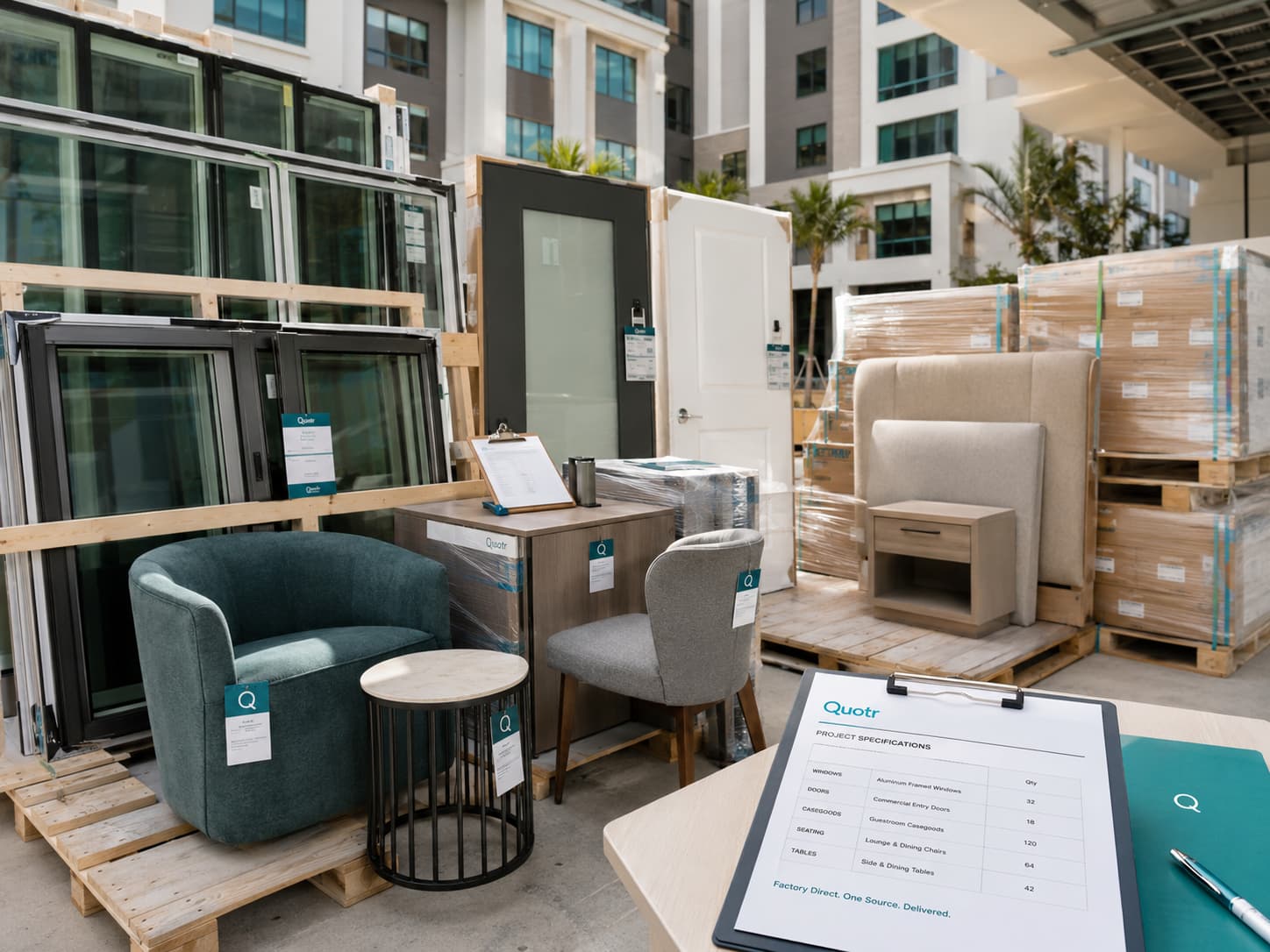
The same model applies to FF&E procurement. On a recent bulk furniture sourcing project for a student-apartment community — coffee tables, stackable bar stools, stool cushions, and kitchen fittings — factory-direct pricing saved roughly 46% versus estimated local retail equivalents: an estimated ~$11,100 vs ~$20,700 on a first, modest-sized order. For any US-based buyer furnishing student housing, multifamily, or hospitality units at scale — where the same handful of items repeats across dozens or hundreds of units — that saving compounds quickly, and it’s the same sourcing model we apply to comparable furniture packages on any similar project.
How we source: factory-direct, matched to your spec, verified before it ships
The savings above aren’t a one-off quote — they come from how Quotr Procurement structures sourcing:
- We find the source factory for your spec, not a pre-set catalog. Every project starts from the client’s actual drawings, unit schedule, or furniture spec sheet, matched to the right factory rather than fitting the client into a standard product line. Quotr Procurement works with a network of 50+ verified factories across Foshan and Guangdong, China.
- No distributor or showroom markup. Pricing is factory + freight + duties + final-mile delivery — DDP to the job site — with the markup layers that local dealers and showrooms add removed from the equation.
- Dedicated QC team on the ground in China. Before goods ship, our own quality-control staff inspect the product line and the factory’s production capacity directly — checking finish, tolerances, and certifications against the client’s spec — rather than relying on the factory’s self-reported QC.
- Full traceability back to the drawings. On both doors/windows and furniture, every line item is mapped back to the architectural schedule or order sheet, so procurement teams can audit exactly what was ordered, inspected, and delivered.
Typical timelines: a quote in roughly 3–5 business days and production lead times around 35–45 days, with no minimum order.
What procurement teams should ask suppliers
Before consolidating sourcing, pressure-test a potential partner on:
- Can they demonstrate manufacturing or quality control across both building products and furniture — not just distribution?
- What certifications apply to their aluminum and vinyl systems (thermal performance, weather sealing, fire ratings where relevant)?
- Can they support project-specific customization at scale — unit sizes, finishes, furniture configurations — without treating every order as a bespoke one-off?
- What does their track record look like on multi-property or multi-phase rollouts?
The takeaway
Procurement fragmentation isn’t just an inconvenience — it’s a real source of cost, delay, and inconsistency risk on hospitality and residential projects. A supplier capable of delivering aluminum-alloy and vinyl doors and windows alongside hotel and apartment furniture, under one quality standard and one project timeline, turns procurement from a coordination burden into a competitive advantage.
For the mechanics of factory-direct importing, see our guide to DDP construction materials; for the broader playbook, how to reduce construction material costs and what construction procurement is in 2026.
FAQ
What is hospitality procurement? Hospitality procurement is the sourcing and purchasing of everything a hotel or lodging project needs — from building-envelope products like doors and windows to FF&E (furniture, fixtures, and equipment). Increasingly, developers consolidate these categories with one factory-direct supplier to cut cost, align quality, and compress timelines across multiple properties.
What does FF&E stand for in procurement? FF&E stands for furniture, fixtures, and equipment — the movable furnishings and fittings that outfit a hotel or apartment interior, such as beds, casegoods, seating, lighting, and kitchen fittings. FF&E procurement covers specifying, sourcing, and delivering these items, often repeated across many identical units.
How much can factory-direct, DDP sourcing save on hotel and apartment projects? Factory-direct, delivered-duty-paid (DDP) sourcing typically saves 40–55% below distributor pricing on aluminum and vinyl door and window systems, and roughly 45% on bulk furniture versus local retail — even after ocean freight, US customs, duties, and final-mile delivery are included. Actual savings vary by specification and market.
Should hotel developers use one supplier for doors, windows, and furniture? Consolidating building products and FF&E with one capable supplier reduces the number of quotes, contacts, and failure points, and helps hold finish and quality consistent across a portfolio. It’s most valuable for repeatable, multi-property programs and renovation cycles like hotel PIPs and apartment unit turns.
What is DDP sourcing? DDP (delivered duty paid) means the supplier’s price covers everything to the job site — factory cost, export packing, ocean freight, US customs and duties, and final-mile delivery — as a single number. It removes the distributor and showroom markup layers and gives developers one all-in landed cost to compare against local pricing.
Related Reading
- DDP Construction Materials: Delivered Duty Paid Guide
- How Developers Source Building Materials Factory-Direct
- How to Reduce Construction Material Costs in 2026
- What Is Construction Procurement? (2026 Guide)
See what factory-direct sourcing does to your material and FF&E line: explore Quotr Procurement, or talk to our team with your drawings or unit schedule.
Published on the Quotr.ai blog. Quotr.ai is an AI-powered construction estimation, takeoff, and procurement platform based in San Francisco.