What Is Construction Procurement? (2026 Guide)
Construction procurement is one of those terms that means different things depending on who’s using it. An owner says procurement and means selecting a GC. A GC says procurement and means buying out subs. A sub says procurement and means sourcing materials. All three are right — and that’s exactly what makes it worth defining clearly.
This guide covers what construction procurement actually is, how the process works across the project lifecycle, the different procurement methods in use in 2026, where it typically breaks down, and how modern software is changing the way contractors and developers manage it.
The Definition
Construction procurement is the process of acquiring everything needed to complete a construction project — contractors, subcontractors, labor, materials, and equipment. It covers everything from the owner selecting a delivery method and soliciting bids, to the GC buying out trade packages, to the subcontractor sourcing materials from suppliers.
In short: procurement is how money turns into resources, and resources turn into a built project.
It’s distinct from estimating (figuring out what something should cost) and from project management (executing the work). Procurement sits between the two — it’s the act of actually securing what the estimate assumed would be available at the price it assumed.
Why Procurement Matters More Than Most Contractors Think
Most construction cost overruns don’t happen because the estimate was wrong. They happen because the buyout didn’t match the estimate. A GC prices a drywall scope at $85/sheet, wins the job, then buys out at $94/sheet because the market moved or a supplier relationship wasn’t in place. That gap — between estimate and actual procurement cost — is where margin goes to die.
Procurement discipline is what closes that gap. And in 2026, with material pricing volatility still elevated across most trades, the contractors who treat procurement as a strategic function — not an admin task — are the ones protecting their margins.
How the Construction Procurement Process Works
Procurement happens at multiple levels on any project. Here’s how it flows from owner to sub.
Owner-Level Procurement: Selecting a Delivery Method and Team
The owner’s procurement process starts with choosing a project delivery method — how the project will be contracted and who will be responsible for what. The major options:
Design-Bid-Build (DBB) The traditional model. The owner hires a designer first, completes construction documents, then solicits competitive bids from GCs. The low bid typically wins. Procurement is sequential — design is complete before construction pricing begins.
Design-Build (DB) The owner contracts a single entity for both design and construction. Procurement is faster and more integrated, but the owner gives up some design control in exchange for schedule and cost certainty.
Construction Manager at Risk (CMAR) The owner hires a construction manager early — often during design — who provides preconstruction services and then takes on the financial risk of delivering the project within a guaranteed maximum price (GMP). The CM manages the subcontractor procurement process.
Integrated Project Delivery (IPD) A collaborative model where owner, designer, and contractor share risk and reward under a single multi-party agreement. Procurement is deeply integrated into the design process.
Once the delivery method is set, the owner issues a solicitation — an RFP, RFQ, or ITB — and evaluates responses on price, qualifications, schedule, or some combination. That evaluation and selection process is the owner’s procurement.
GC-Level Procurement: Buying Out the Job
After the GC is awarded the project, their procurement process begins — buying out the trade packages. This typically involves:
Subcontractor solicitation and bid leveling The GC sends bid invitations to qualified subs for each trade scope, receives bids back, and levels them — comparing apples to apples across inclusions, exclusions, and assumptions before awarding.
Scope leveling Two drywall bids at the same price can have completely different scopes. Scope leveling is the process of normalizing what each sub has included so the GC isn’t surprised by gaps after award.
Award and subcontract execution Once the GC selects a sub, the subcontract is executed, which locks in scope, schedule, and price. How quickly this happens after bid award matters — delays in subcontract execution create schedule risk and give subs an opening to reprice.
Material procurement and long-lead items For materials the GC is supplying directly — or for long-lead equipment like elevators, switchgear, or mechanical equipment — procurement starts as early as design development. Missing a long-lead item is one of the most common causes of schedule delay on commercial projects.
Sub-Level Procurement: Sourcing Materials
The sub’s procurement process is about converting their scope into a material buy. Once a sub wins a scope, they need to:
- Confirm current pricing with suppliers (not the price from bid day, which may have been an estimate)
- Issue purchase orders before material prices change or lead times extend
- Manage deliveries against the project schedule
- Track material costs against the original estimate to catch margin drift early
This is the level where procurement most directly affects sub margin — and where the gap between estimate pricing and actual buyout pricing shows up first.
The Main Construction Procurement Methods
Beyond delivery models, procurement method refers to how bids are solicited and how suppliers or contractors are selected.
Competitive bidding (open) The solicitation is open to any qualified bidder. Common on public work, where open competition is often legally required. Drives price competition but can attract contractors without relevant experience.
Selective bidding (invited) The GC or owner solicits bids from a pre-qualified list. More control over who’s bidding; less administrative burden than open bidding; standard practice on most private commercial work.
Negotiated procurement The owner or GC negotiates directly with a preferred contractor or supplier without a formal bid process. Common on fast-track projects, repeat relationships, or specialized scopes where only one or two contractors are qualified.
Best value selection Award goes to the bid that offers the best combination of price and qualifications — not necessarily the low number. Common on public projects that have moved away from pure low-bid selection.
Direct purchase / factory-direct The GC or sub bypasses the traditional supply chain and sources materials directly from the manufacturer or a direct procurement platform. Can reduce material costs significantly on high-volume trades, but requires more purchasing sophistication and lead time management.
Where Construction Procurement Breaks Down
Most procurement problems trace back to one of four patterns:
Estimate-to-buyout gaps The estimate used budgetary pricing; the actual buyout came in higher. This is the most common source of margin erosion on construction projects and the clearest sign that procurement isn’t integrated with estimating.
Scope gaps at award A trade scope was bought out, but inclusions and exclusions weren’t leveled carefully. The sub shows up thinking certain work is out of scope; the GC thinks it’s in. The dispute that follows is expensive for everyone.
Long-lead item misses A critical piece of equipment — a transformer, an elevator, a custom curtainwall system — wasn’t ordered early enough. The project is ready to install it; the lead time is 24 weeks. Schedule delay follows.
Poor supplier relationship management Procurement done entirely on spot-buy terms — no preferred suppliers, no volume leverage, no advance pricing agreements — leaves contractors paying market rate on every purchase and getting deprioritized when materials are tight.
How Technology Is Changing Construction Procurement in 2026
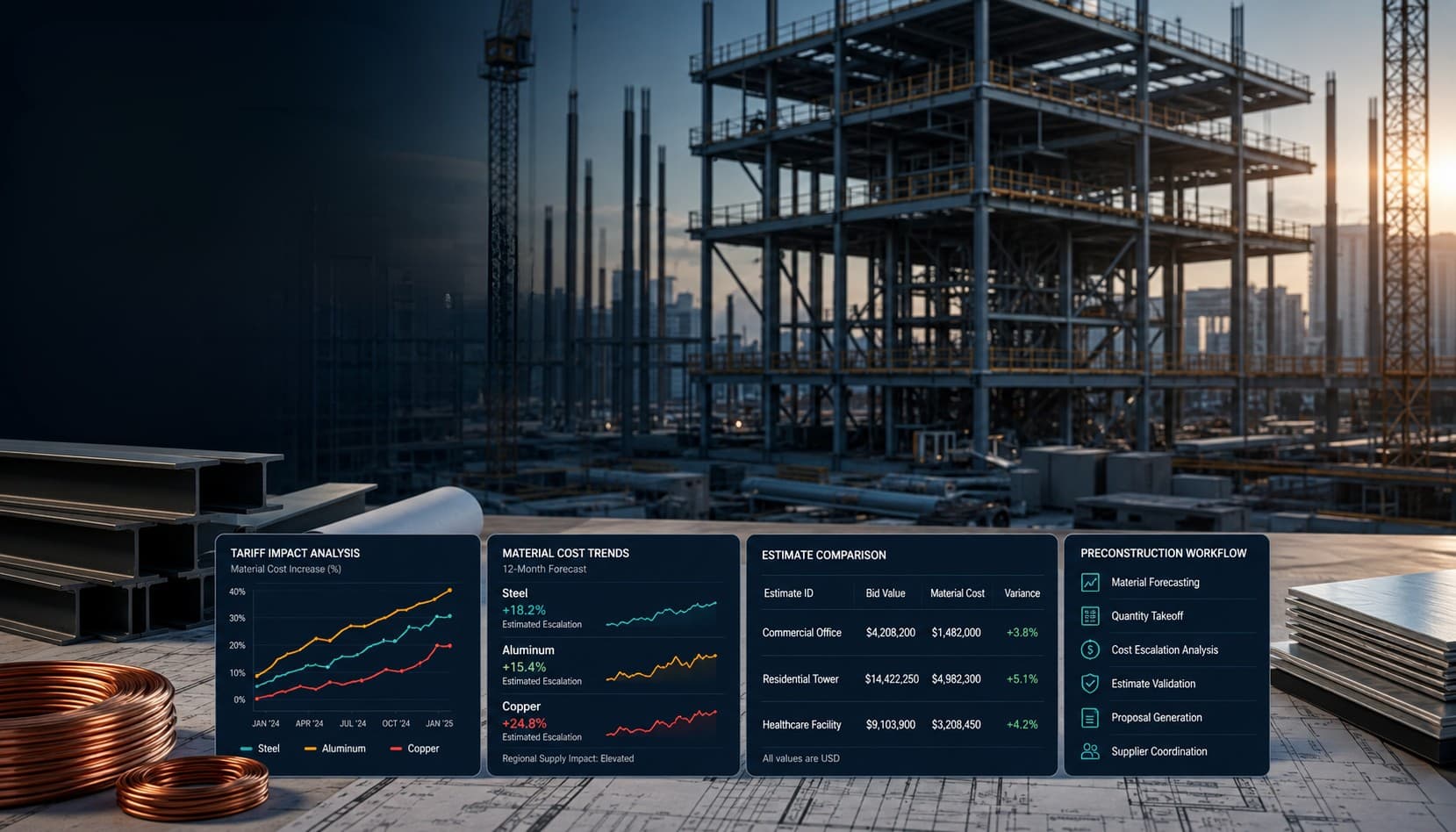
The procurement process that ran on phone calls, email chains, and spreadsheets for decades is being replaced — at least in part — by integrated platforms that connect estimating, bid management, and material sourcing in a single workflow.
The shift matters for a few reasons:
Estimate-to-procurement integration When the takeoff, the estimate, and the procurement workflow live in the same platform, the gap between estimated cost and actual buyout cost becomes visible — and manageable — in real time. A sub can see immediately when a supplier quote comes in above the estimated material cost and adjust before the job starts.
Factory-direct sourcing Platforms like Quotr.ai connect contractors directly to manufacturers and factory-direct suppliers, bypassing traditional distribution markups. On high-volume material trades — drywall, framing, roofing, electrical — the savings compound quickly.
Supplier bid management Digital procurement tools let contractors send quote requests to multiple suppliers simultaneously, receive bids in a structured format, and compare them side by side — replacing the phone-and-spreadsheet process with something faster and more auditable.
Real-time pricing Static pricing databases go stale. Procurement platforms connected to live supplier pricing give contractors a more accurate picture of current material costs — which feeds back into more accurate estimates and more competitive bids.
Construction Procurement vs. Construction Estimating: What’s the Difference?
These terms get conflated, but they’re distinct functions:
Estimating is the process of predicting what a project will cost — before contracts are signed and before materials are purchased. It produces a number the contractor bids against.
Procurement is the process of actually acquiring what the estimate assumed — at or near the estimated cost. It’s the execution of the estimate’s assumptions.
The relationship between the two is what determines margin. A great estimate executed with poor procurement produces a money-losing job. A tight procurement process built on a shaky estimate produces surprises in the field. The contractors who protect their margins in 2026 treat both as connected disciplines — not separate departments.
Bottom Line
Construction procurement is the process of securing everything a project needs — contractors, subs, materials, and equipment — at a price that holds up against the estimate. It happens at every level of the project delivery chain, from the owner selecting a GC to the sub buying materials from a supplier.
Getting it right is what separates a project that performs from one that bleeds margin quietly from bid day to final billing. In 2026, the contractors and developers who are pulling ahead aren’t the ones with the biggest teams — they’re the ones who’ve connected their estimating and procurement into a single, visible workflow.
Quotr.ai connects AI-powered takeoff directly to procurement — supplier quotes, factory-direct pricing, and bid comparison in one platform. See how it works or start a free trial.
Related reading: