Should You Outsource Construction Estimating? Costs, Pros & Cons (2026)
Short answer: Outsource construction estimating when your bid volume is uneven or under roughly 12–15 estimates a month — at that level, per-project outsourcing (typically $250–$2,500 per estimate) costs far less than a fully loaded in-house estimator ($115,000–$195,000/year). Hire in-house once you have ~20+ consistent monthly estimates and enough repeat work that your own historical cost data beats an outside number.
Deciding whether to outsource estimating isn’t really a quality question anymore — good outsourced estimators and good in-house estimators both produce defensible bids. It’s a volume-and-economics question: does your bid pipeline justify a full-time salary, or are you paying for capacity you only use part of the year? This guide lays out the real cost math, when each option wins, the honest pros and cons, and how a modern outsourced estimating service actually works.
What outsourcing construction estimating means
Outsourcing construction estimating means handing your plans and scope to an outside team that produces the takeoff and priced estimate for a per-project fee — instead of employing a salaried estimator to do it in-house. You send a drawing set; you get back quantities, a structured cost breakdown, and often a bid-ready proposal, usually in a few business days. It scales up when you’re slammed and down to zero when you’re quiet.
Outsourcing covers the repetitive, time-intensive part of the bid — the takeoff and pricing pass — not the parts that require your judgment (scope decisions, labor strategy, client relationships). The best providers pair AI takeoff with an experienced cost estimator’s review, so you get speed without giving up accuracy.
The real cost: in-house estimator vs. outsourcing
This is where the decision usually gets made. The two models price completely differently:
| In-house estimator | Outsourced estimating | |
|---|---|---|
| Cost model | Salary + benefits + software + overhead | Per estimate (or per sq ft) |
| Typical cost | ~$115,000–$195,000/year fully loaded | ~$250–$2,500 per estimate |
| You pay when | Always — busy or slow | Only when you have a project |
| Turnaround | Ongoing, in-house | ~24 hours to a few business days |
| Best at | Repeat work with clean historical cost data | Overflow, one-off bids, seasonal/growing volume |
Figures are 2026 industry benchmarks; confirm against current sources — Edge Estimates, Blaze Estimating.
The math is straightforward: a fully loaded estimator running $115k–$195k a year only pays off if you keep them busy. Below roughly 12–15 estimates a month, per-project outsourcing costs less than that salary — and you’re not carrying the cost through slow months.
When to outsource vs. hire in-house
Outsource if:
-
You bid fewer than ~12–15 estimates a month, or your volume is seasonal/uneven.
-
You’re a growing firm not yet at consistent volume, or a specialty sub with spiky bid seasons.
-
You’re slammed and turning down bids because your one estimator is at capacity — every skipped bid is revenue handed to a competitor.
-
You need a defensible number on a one-off or unfamiliar scope fast. Hire in-house if:
-
You have 20+ consistent monthly estimates to keep an estimator busy year-round.
-
You build the same product repeatedly and have clean historical cost data — on that repeat work, your own numbers will beat any external estimate.
-
Estimating is a core competitive advantage you want to own and refine internally. Many teams end up doing both: an in-house estimator for core repeat work, plus an outsourced service for overflow during bid surges.
Pros of outsourcing construction estimating
- Speed. Estimating is the provider’s entire focus — no site supervision, RFIs, or purchase orders competing for attention — so turnaround is often 24–48 hours to a few business days.
- Pay only for what you use. No salary carried through slow months; cost scales with your actual bid volume. A real advantage for seasonal, specialty, and growing firms.
- Capacity on demand. Cover a bid surge without hiring, so you stay in the running on more work.
- Accuracy from specialists. Dedicated estimators who do this all day; some providers report materially tighter cost variance than a stretched in-house generalist, though results vary by provider and scope.
Cons and limits (the honest view)
- It doesn’t replace trade knowledge. An outside estimator doesn’t know your crews, your suppliers, or your means-and-methods the way your team does.
- Repeat work favors in-house. If you build the same product with clean historical costs, your internal numbers will usually beat an external estimate on that specific work.
- Communication overhead. You have to scope the request well and review the output — a good service makes this easy, but it’s not zero effort.
- Quality varies by provider. Turnaround and accuracy differ widely; pilot a provider on a real set before you rely on them.
How modern outsourced estimating works (and where Quotr fits)
Outsourced estimating used to mean emailing a PDF to an overseas shop and waiting. The modern version pairs AI takeoff with a human cost estimator, which is faster and more auditable.
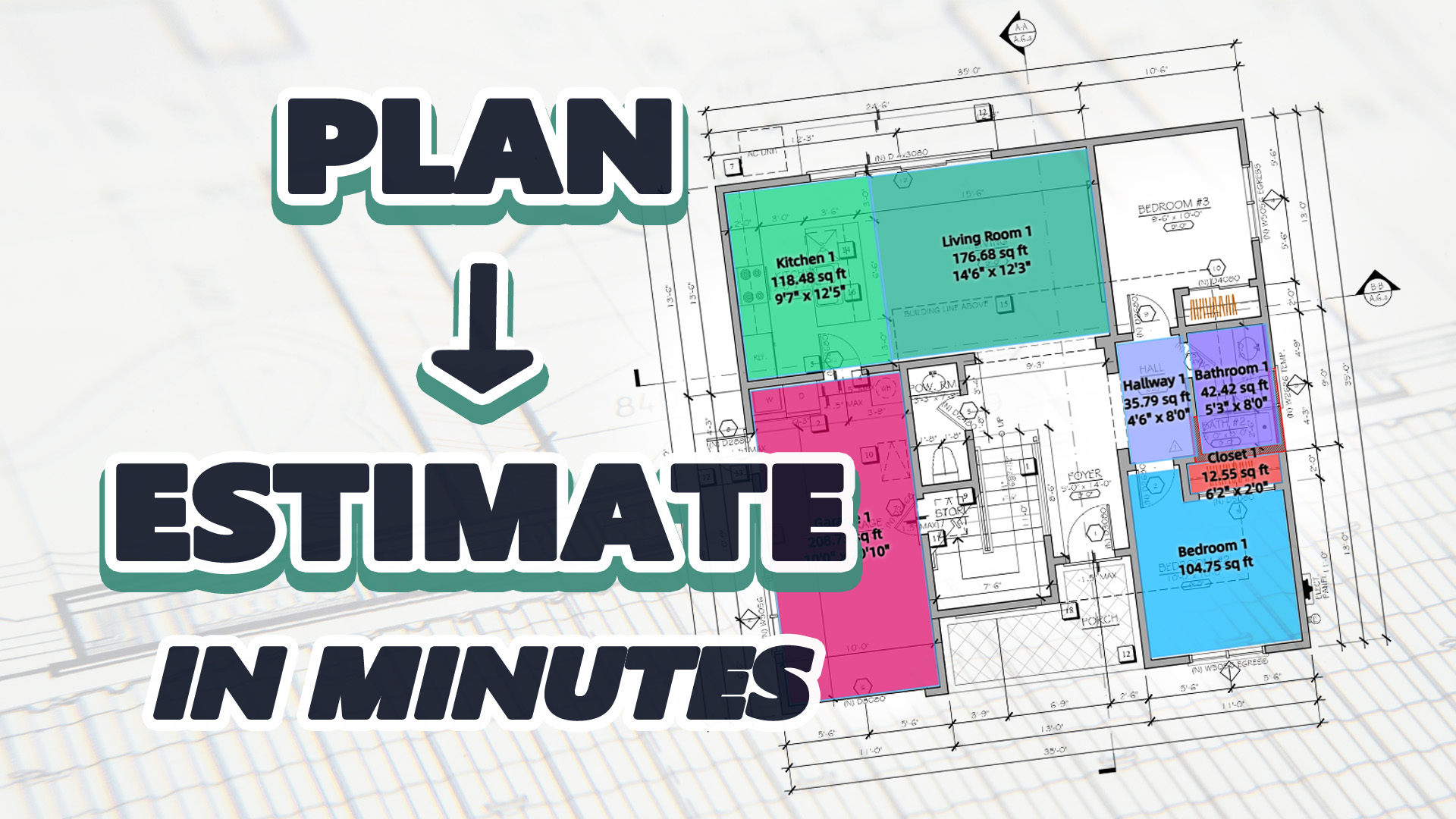
That’s how Quotr Service works — the done-for-you side of Quotr. You describe the project and share drawings and assumptions; Quotr’s AI extracts quantities and cost signals, and an in-house cost estimator adds the assumptions-and-risk layer and reviews before delivery. You get a development cost estimate in 3–4 business days (or a deal-level pro forma in 2–3), priced per project — $0.25/sq ft under 50,000 sq ft, $0.10/sq ft above — with the scope and price approved before any work begins. Accuracy on the takeoff runs 95–99% on clean vector PDFs (Quotr internal benchmarking), with flagged items reviewed by a human.
And if your volume grows to the point where you’d rather bring estimating in-house, the same engine is available as self-serve software — Quotr Software — so you can switch models without switching vendors. Full context on the category is in Construction Estimating Services: What They Do and When to Use One.
Should you outsource? A 30-second decision
Count your average monthly estimates. Under ~12–15, or uneven? Outsource — you’ll pay less and stay flexible. 20+ and steady, with lots of repeat work? Hire in-house. In between, or growing? Start by outsourcing overflow, and bring it in-house when your volume is consistent enough to keep a salaried estimator busy. Either way, talk to our team or scope a project to see a per-project price before you commit.
Frequently Asked Questions
How much does it cost to outsource construction estimating? Outsourced construction estimating typically costs $250–$2,500 per estimate, ranging up to ~$5,000 for large or complex projects, priced per project rather than by salary. By comparison, a fully loaded in-house estimator runs about $115,000–$195,000 per year. Quotr Service prices by square footage — $0.25/sq ft under 50,000 sq ft and $0.10 above — scoped before work begins.
When should you outsource construction estimating instead of hiring? Outsource when you bid fewer than roughly 12–15 estimates a month or your volume is seasonal — at that level, per-project fees cost less than a full-time salary you pay year-round. Hire in-house once you have about 20+ consistent monthly estimates and enough repeat work that your own historical cost data outperforms an outside number.
Is outsourcing construction estimating worth it? For most contractors bidding under ~20 jobs a month, yes — outsourcing wins on cost and speed, delivering estimates in days without carrying a salary through slow periods. It’s less advantageous for firms doing high volumes of repeat work with clean internal cost history, where an in-house estimator’s familiarity produces sharper numbers on that specific work.
Does an outsourced estimating service replace my estimator? No. Outsourcing covers the repetitive takeoff-and-pricing pass and overflow capacity; it doesn’t replace your team’s trade knowledge, scope judgment, or supplier relationships. Most contractors use a service to augment an in-house estimator or cover bid surges, not to eliminate the role.
How fast can an outsourced estimating service turn around a bid? Many outsourced services deliver in 24–48 hours to a few business days, because estimating is their sole focus. Quotr Service typically returns a development cost estimate in 3–4 business days and a deal-level pro forma in 2–3, once scope and inputs are confirmed and priced.
Is outsourced estimating accurate? It can be very accurate — dedicated estimators do this all day, and modern services pair AI takeoff (95–99% on clean vector PDFs in Quotr’s internal benchmarking) with a human review layer. Accuracy depends on drawing quality and the provider, which is why a per-item confidence-scored, human-reviewed workflow matters before a bid goes out.
Related Reading
- Construction Estimating Services: What They Do and When to Use One
- The Quotr Developer Desk: Underwriting-Grade Estimates in 72 Hours
- How to Reduce Construction Material Costs in 2026
- How Subcontractors Bid GCs Without Losing Margin
About Quotr.ai
Quotr is an AI construction platform with three parts: Quotr Software (AI takeoff, estimating, and bidding — including the AI agent that reads your plans), Quotr Service (done-for-you cost estimates and pro formas for developers and busy teams), and Quotr Procurement (factory-direct materials delivered door-to-door). Built for subcontractors, general contractors, and developers, and based in San Francisco.
Published on the Quotr.ai blog. Quotr.ai is an AI-powered construction estimation, takeoff, and procurement platform based in San Francisco.