2026 CBD Fair Field Notes: Building Material Trends & How to Source Them From China
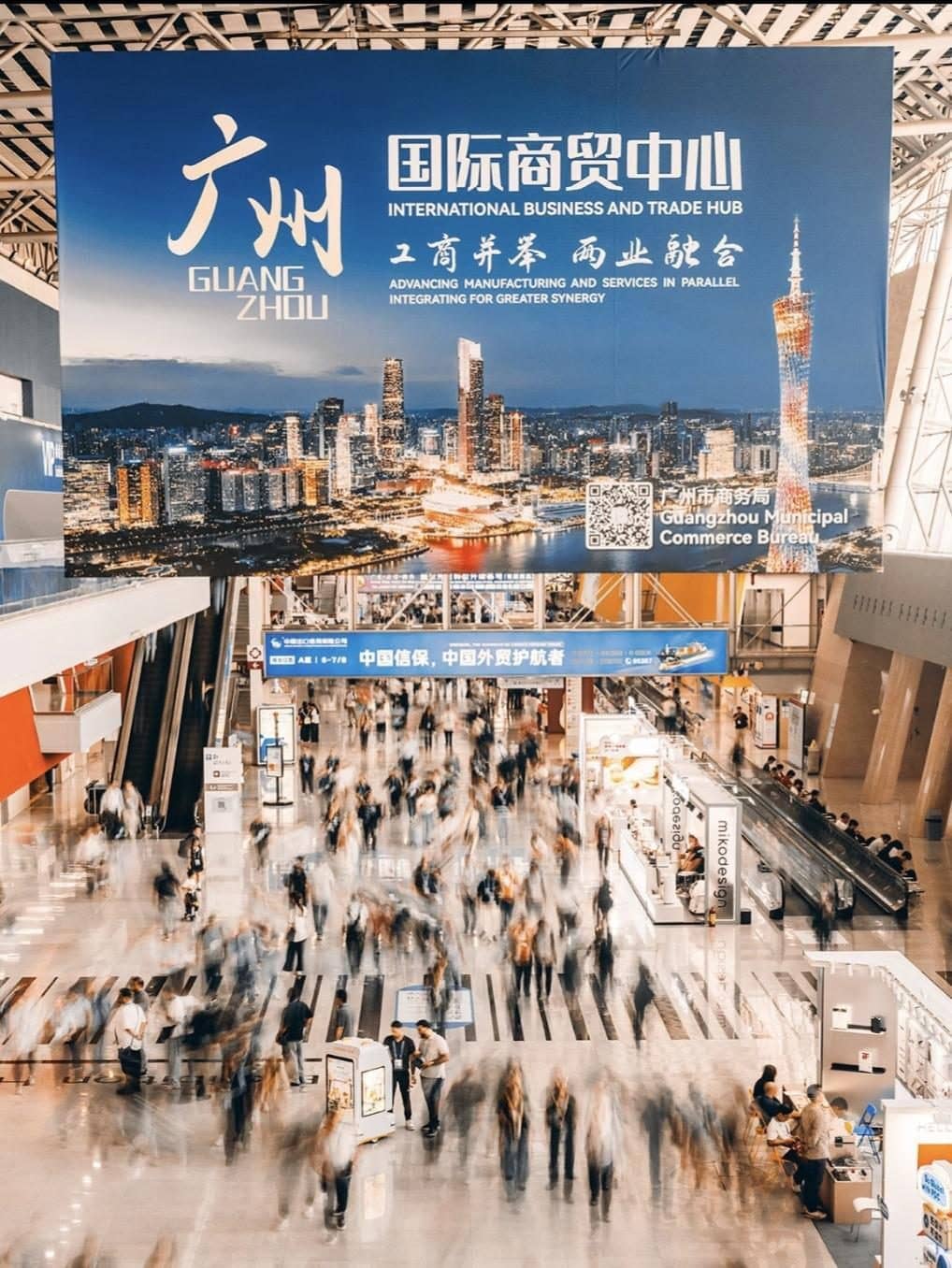
Recently, one of our team based in China spent four days on the floor of the CBD Fair in Guangzhou and came back with a notebook full of field notes. This is what they saw.
Walk through the entrance of the Canton Fair Complex in Pazhou and the first thing that hits you is the crowd — shoulder to shoulder — and rows of booths that seem to run on forever. As the year’s headline event for architecture and interior design, the 28th China (Guangzhou) International Building Decoration Fair (CBD Fair) ran July 8–11 across roughly 300,000 square meters with more than 2,000 exhibitors. Last year’s edition drew 205,621 trade visitors — including 8,602 international buyers from 145 countries and regions — and 2026 kept climbing, with overseas attendance up 33.4%. Our reason for being there was straightforward: to stand at the front of the industry and vet the world’s best building-material supply chains, by hand, on your behalf.
On the floor: the next bellwether for building materials
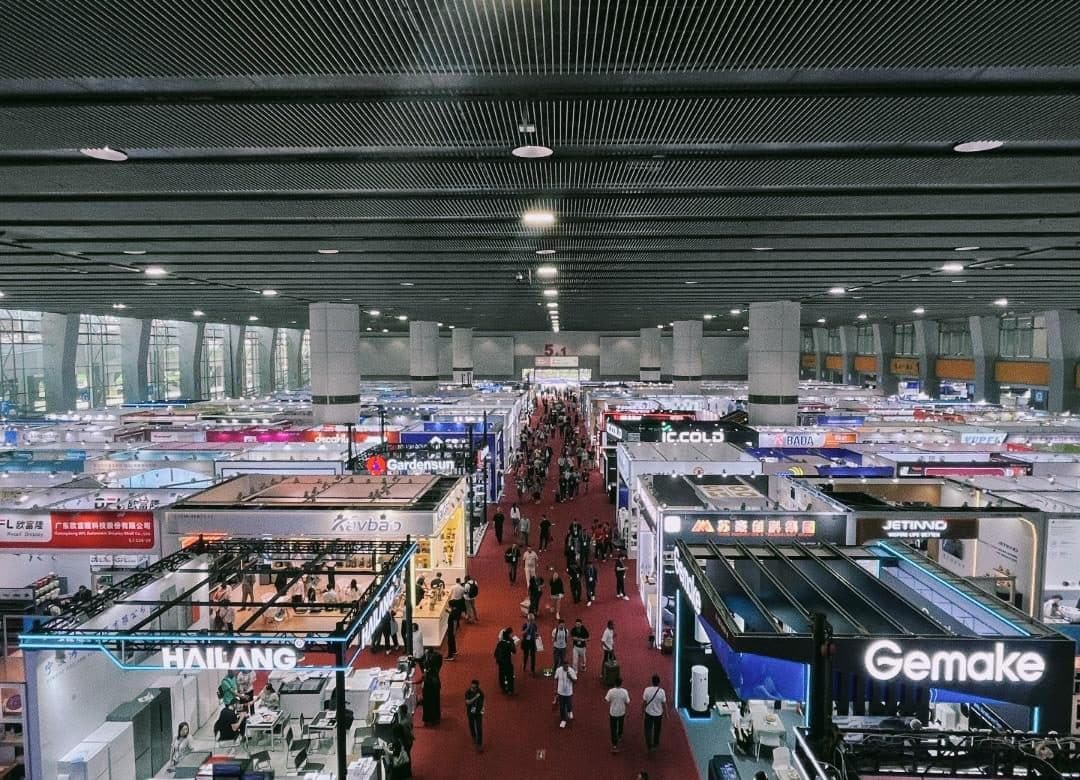
Roughly 300,000 square meters and more than 2,000 exhibitors, organized this year into three ecosystems.
Moving between the halls, the strongest impression was one word: convergence. This year the show was organized into three integrated ecosystems — INTERIOR (smart home, whole-house customization, surfaces, and renovation), EXTERIOR (doors, windows, façade systems, sunshading, aluminum, and outdoor living), and MATECH (new materials and intelligent manufacturing) — and it did more than display the sheer scale of Chinese manufacturing. It made a few industry trends unmistakable.
1. Minimalist and high-end
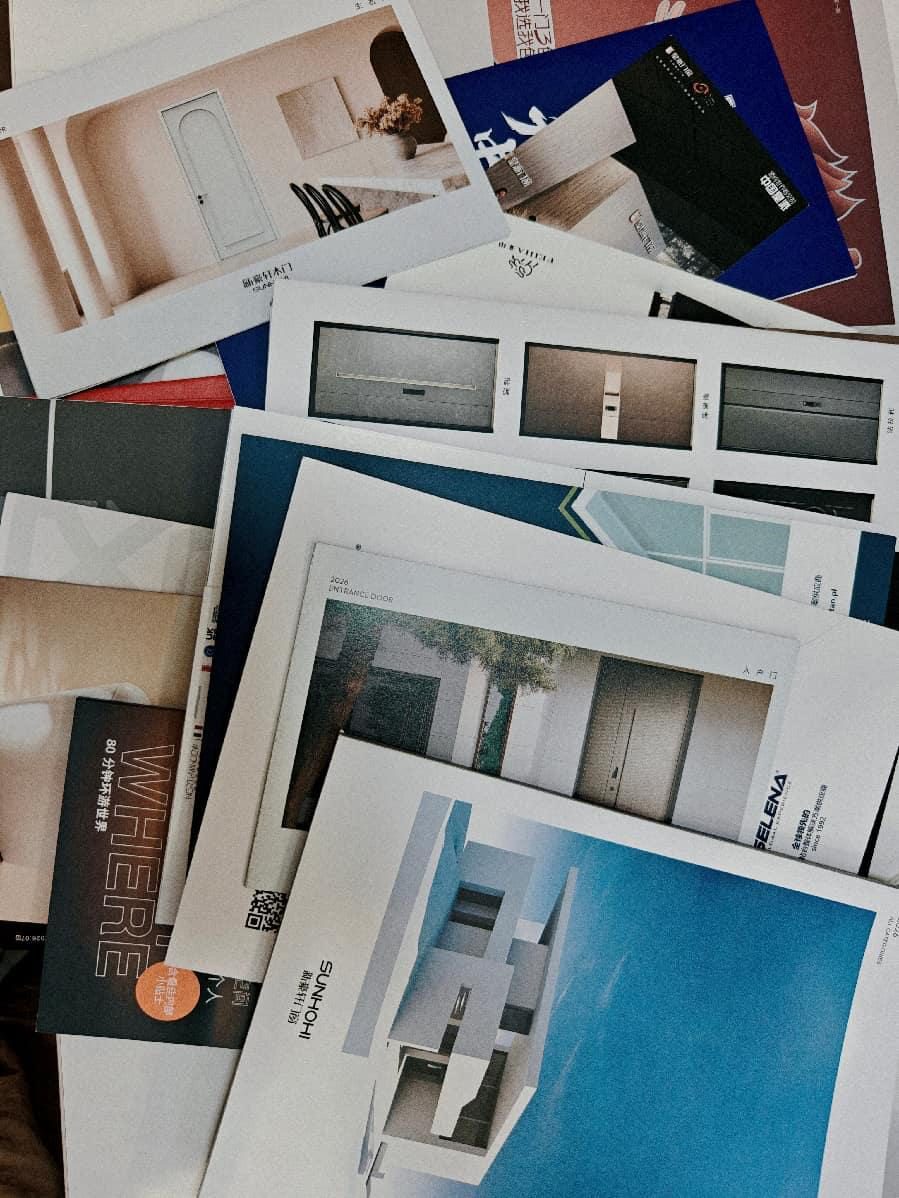
Catalog after catalog pointed the same way: clean lines, invisible frames, and 2026 “entrance door” minimalism.
High-spec sintered stone, invisible door systems, and ultra-narrow frameless aluminum windows drew some of the biggest crowds — a category sweeping the global market at a reported 40%+ compound annual growth rate. Clean lines and seamless, “frameless” spatial integration are now the single most-specified trend among leading architects and designers. Custom-cabinetry giants like OPPEIN and Sofia stood alongside Haier and Hisense, who now build entire appliance suites into cabinet faces and walls and fold lighting, locks, and climate control into one system. The line between “custom” and “smart” is quietly disappearing.
2. Green and sustainable
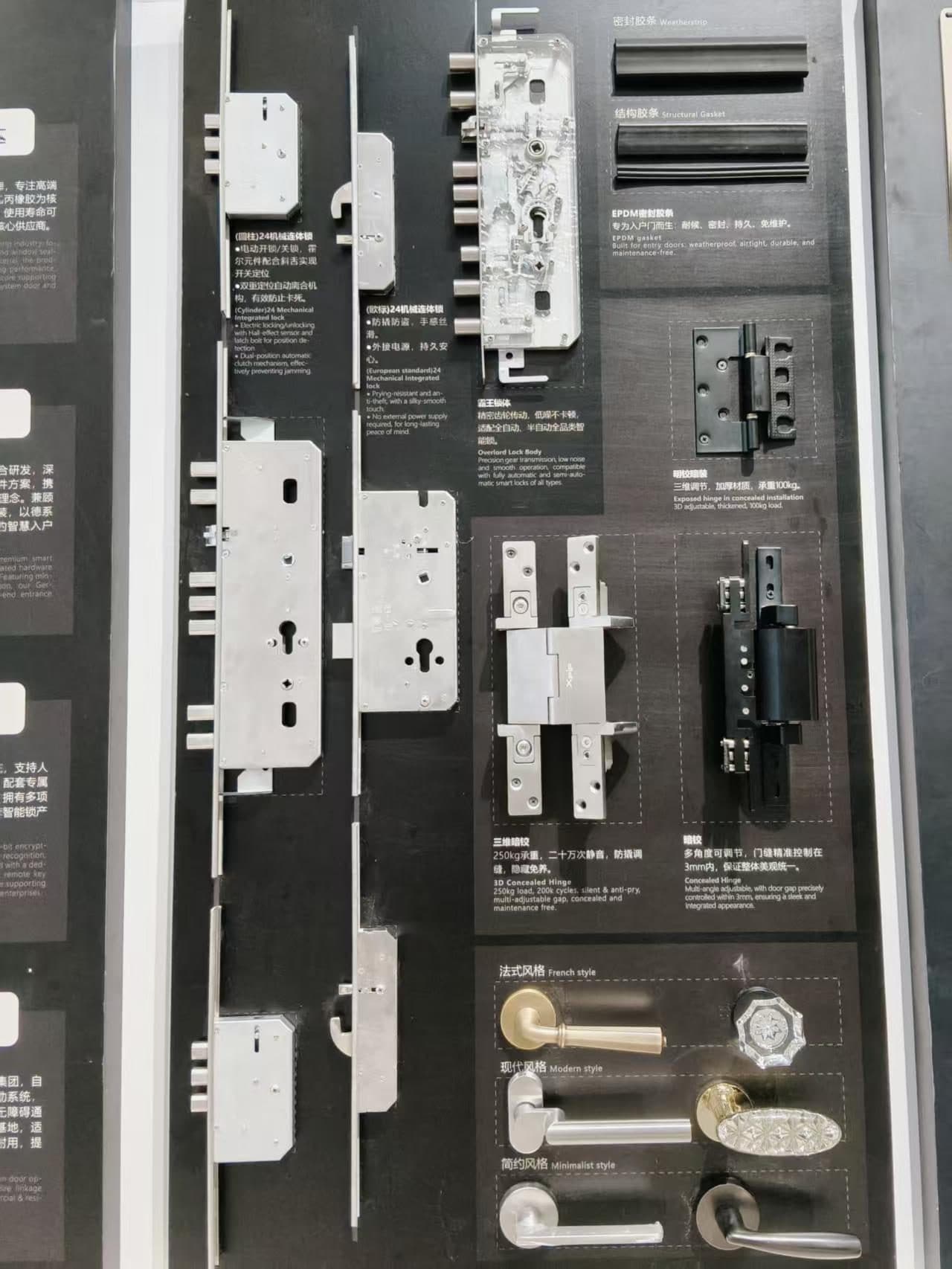
The unglamorous stuff that decides longevity: concealed hinges rated for 250kg and 200k cycles, integrated locks, and weather seals.
Low-carbon is no longer just a marketing line. From zero-formaldehyde bamboo-fiber panels to recycled aggregate, sustainable composite materials have become standard issue for many of the big manufacturers. And it’s the “invisible” hardware and material brands — Blum, Häfele, Higold, TuBaBao — that most determine delivery quality and service life. When a cabinet door starts sagging after two years, the problem usually isn’t the cabinet box. It’s a hinge that costs a few dollars.
3. Smart and invisible tech
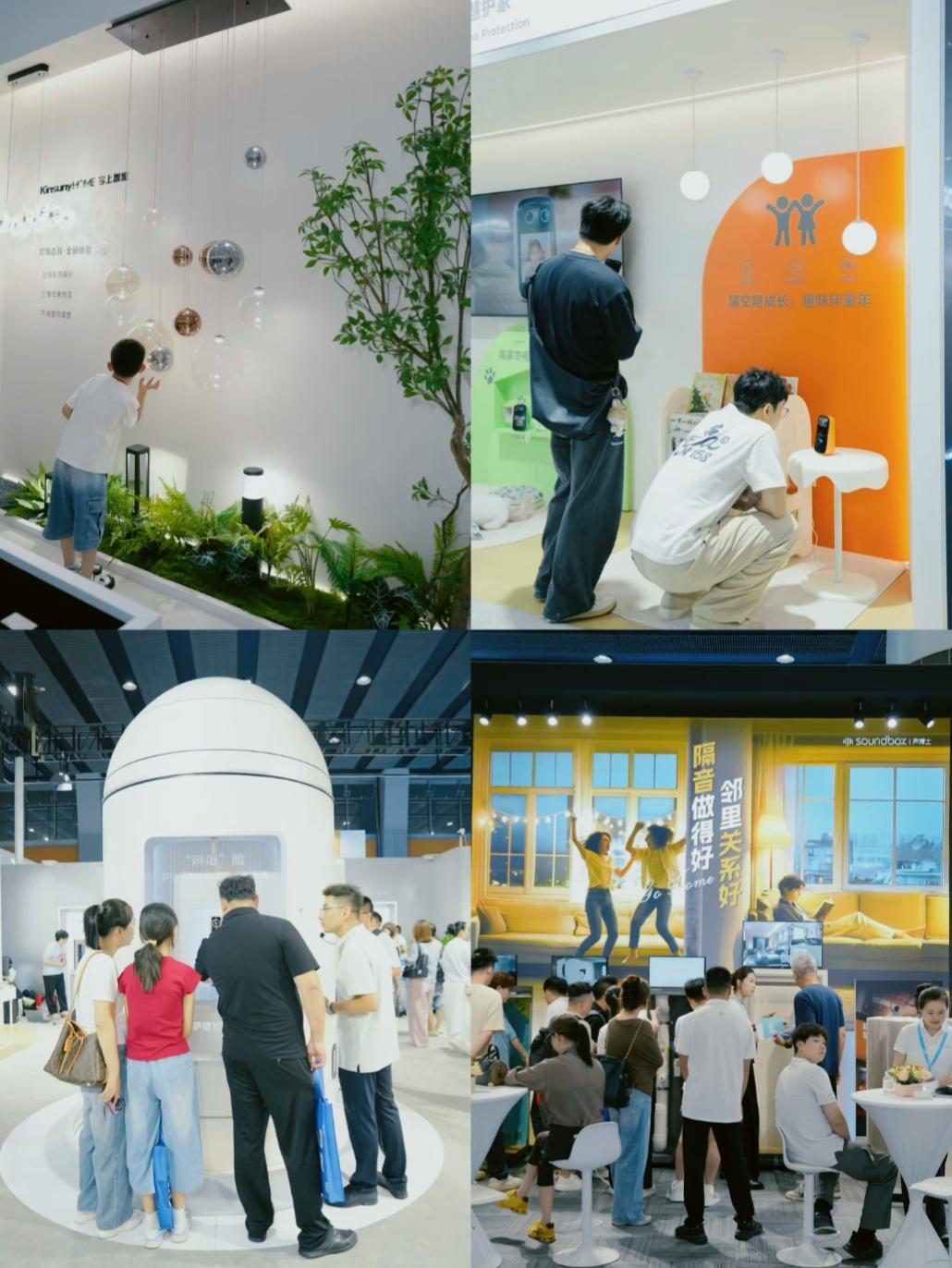
From integrated lighting to acoustic “quiet rooms,” the competition was over specs you can’t see: soundproofing, thermal, and fit.
The marriage of smart home and traditional building materials keeps getting more seamless — invisible smart locks, whole-home lighting, and motorized shading integrated everywhere you look. Domestic and international window-system brands — Schüco and HOPPE next to China’s Paiya, Sinpolo, and others — competed head to head. The contest wasn’t about who looked flashier. It was about the things you can’t see: sound insulation, thermal performance, and the precision of the installation details.
Two numbers that point to the next decade
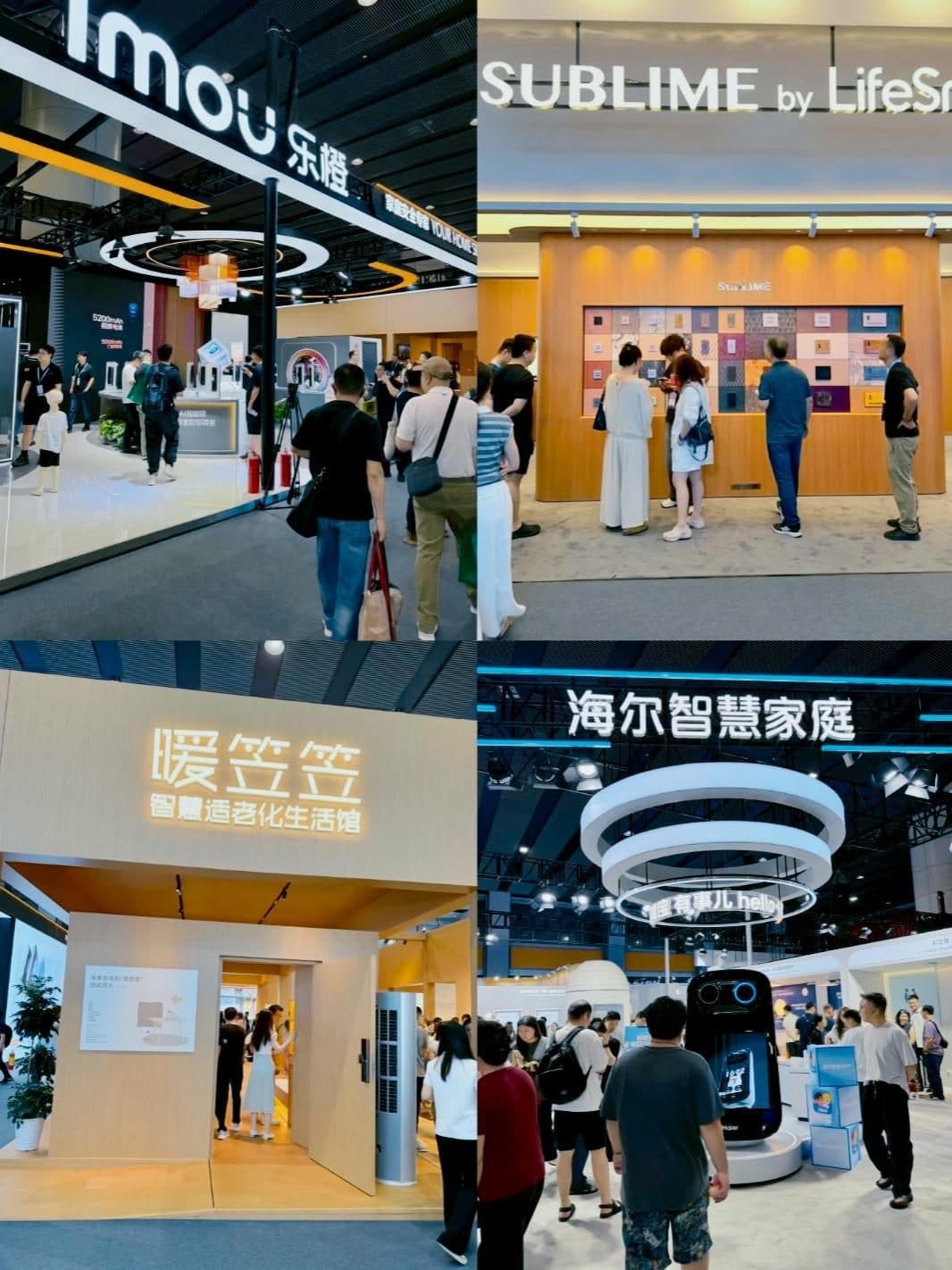
Two demand signals under one roof: the “Warm & Smart” aging-in-place pavilion (bottom left) and Haier’s smart-home zone.
Two figures stuck with us this year. First, the “Renovation & Remodel” themed zone grew 94% versus last year. Second, “Warm & Smart Aging-in-Place Living” made its debut. A market that is getting older and looking for opportunity in its existing building stock — for anyone in procurement, that’s the shape of demand for the next ten years.
The sourcing dilemma behind endless choice
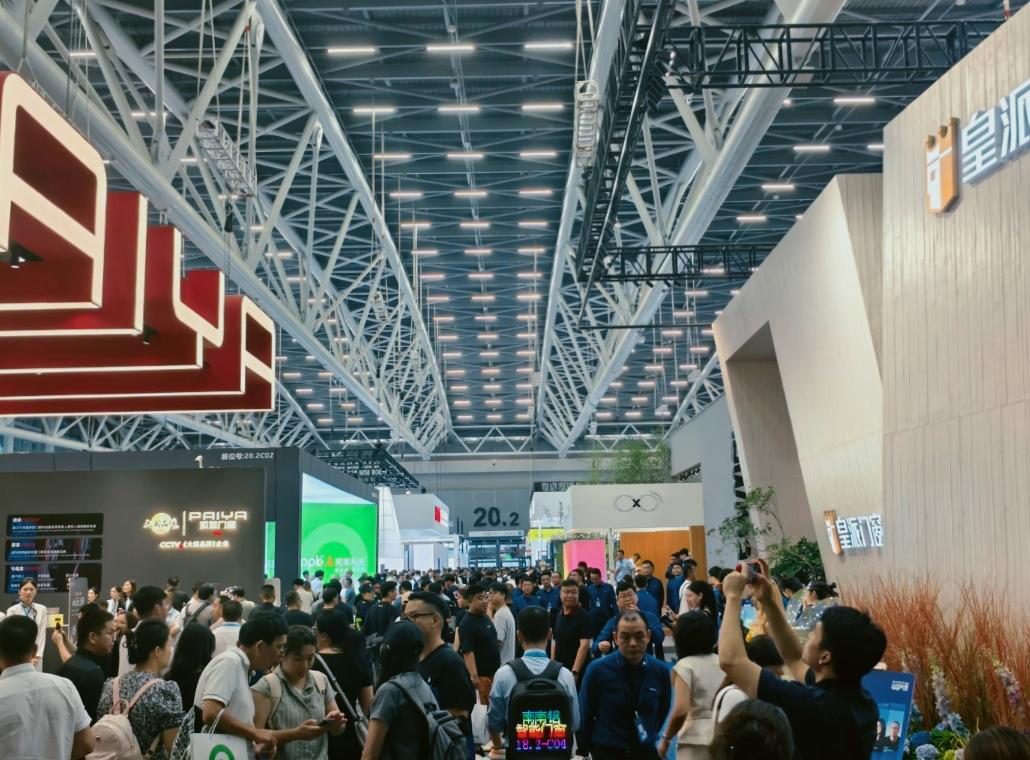
Nearly 2,000 suppliers under one roof — exhilarating on the floor, overwhelming when you have to actually choose and buy.
Standing among nearly two thousand suppliers and a dizzying wall of new products, the excitement gives way fast to a very practical question: if you’re an architect or developer overseas, facing this much choice, how do you actually decide?
From years of conversations with international clients, we know the hidden killers of cross-border procurement well:
- The quality-and-transparency black box. The sample on the show floor looks perfect. But can the factory’s real monthly capacity, its QC process (ISO 9001), and its international certifications (CE, UL, SGCC, and for glazing, NFRC/NAFS) actually meet spec? Take an ordinary-looking double-glazed insulated glass unit: with your eyes and your hands alone, you cannot tell whether its U-factor is 1.2 or 2.8, or whether the seal will fail and fog up five years from now.
- Runaway time and communication cost. Coordinating 20-plus suppliers across categories — re-confirming CAD drawings, checking quotes and lead times across time zones — routinely drains two to three months of a team’s most expensive hours.
- The high-risk stretch: fulfillment and delivery. Bulk orders that don’t match the sample, ocean-freight delays, no real recourse on a cross-border claim. A single day of project delay can mean thousands — sometimes tens of thousands — of dollars in liquidated damages, and it drags on the whole project’s cash flow. This is exactly why we go in person. Some homework simply has to be done at the source. The gap between a factory with real export experience and one that only sells domestically is night and day: the first assumes you’ll ask about certifications, English documentation, and consolidated-shipment paperwork; the second is still explaining that “we sell very well here in China.”
Quotr.ai: a safe harbor for cross-border procurement, built on data and supply-chain muscle
Across those four days we weren’t there to “see a show.” We were running a high-intensity vetting operation — holding suppliers to a hard standard, sitting down face to face with the R&D and export leads at dozens of quality factories to assess their production lines, their export compliance, and their pricing power.
Here’s how Quotr.ai Procurement turns that legwork into your advantage:
- 50+ verified factories across Foshan and Guangdong — the few that pass a full audit. We never just copy a product catalog. Quotr.ai audits factories on-site — checking equipment precision, compliance credentials, and real output capacity — and keeps only the most cost-effective, export-ready producers, with in-factory QC on every product before it ships.
- Transparent, factory-direct pricing — 40–55% below distributor markup. Upload your project requirements (BOQ/BOM) and we match specs across the network and return a transparent, factory-direct quote in about 3–5 business days. That squeezes out the middleman margin and the information gap, and on average lands your material cost 40–55% below typical distributor pricing.
- Door-to-door (DDP) delivery, fully managed. From free sampling and deep compliance audits to real-time production tracking and pre-shipment QC, Quotr.ai manages the cross-border legwork end to end. One number covers factory cost, export packing, ocean freight, US customs and duties, and final-mile delivery to your jobsite — with all certification documents (NFRC, NAFS, CARB, cUPC, ENERGY STAR) included. No surprise freight or duty invoices. Let architects focus on design and contractors focus on building — and hand the tedious, complicated work of supplier vetting and pricing to us. Quotr.ai Procurement is the sourcing layer of the Quotr.ai platform, alongside Quotr.ai Software (AI takeoff and estimating) and Quotr.ai Service (done-for-you estimates), so the quantities you price can flow straight into a factory-direct buy.
Sourcing materials for a project? Talk to our team and we’ll fit better quality into your next build, at a better cost.
Frequently Asked Questions
How do I source building materials from China safely? Work with a partner that audits factories on-site, verifies certifications (ISO 9001, plus CE, UL, and product-specific marks like NFRC or SGCC), and runs QC before shipment — rather than buying off a showroom sample. Quotr.ai vets a network of 50+ verified factories across Foshan and Guangdong and manages compliance, sampling, and pre-shipment inspection, so you avoid the sample-to-production bait-and-switch that sinks most overseas orders.
How much can you save sourcing building materials factory-direct from China? Buying factory-direct typically cuts material cost 40–55% below standard distributor markups by removing middleman margin and information asymmetry. Quotr.ai returns a transparent, factory-direct quote in about 3–5 business days from your BOQ/BOM, delivered door-to-door (DDP) with customs and duties included — so the quoted number is the landed number, not a starting point.
What is DDP (delivered duty paid) for construction materials? DDP means one price covers everything to your jobsite — factory cost, export packing, ocean freight, US customs and duties, and final-mile delivery — with no surprise freight or duty invoices. It’s how Quotr.ai Procurement delivers factory-direct materials like windows, doors, cabinetry, and flooring, with all certification documents included.
What were the biggest trends at the 2026 CBD Fair? The 28th CBD Fair (July 8–11, Guangzhou) pointed to three trends: minimalist, frameless high-end design (sintered stone, invisible doors, ultra-narrow aluminum windows); sustainable, zero-formaldehyde and recycled materials as the new standard; and smart technology built invisibly into building materials. The standout demand signals were a 94% jump in the renovation/remodel zone and the first-ever aging-in-place (“Smart Senior Living”) exhibit.
Which building material certifications should I check when importing? Check ISO 9001 (factory quality management) plus product-specific marks: CE and UL for general compliance, SGCC for safety glass, and for windows and doors, NFRC and NAFS for thermal and structural performance. For a real spec like an insulated glass unit, confirm the U-factor and the seal warranty on paper — you can’t verify performance by eye, which is exactly why factory audits and documentation matter.
Related Reading
- What Is Construction Procurement? (2026 Guide)
- How Developers Source Building Materials Factory-Direct
- How to Reduce Construction Material Costs in 2026
About Quotr.ai
Quotr.ai is an AI construction platform with three parts: Quotr.ai Software (AI takeoff, estimating, and bidding — including the AI agent that reads your plans), Quotr.ai Service (done-for-you cost estimates and pro formas), and Quotr.ai Procurement (factory-direct materials delivered door-to-door). Built for subcontractors, general contractors, and developers, and based in San Francisco.
Published on the Quotr.ai blog. Quotr.ai is an AI-powered construction estimation, takeoff, and procurement platform based in San Francisco.