Real Estate Pro Forma Software Comparison: Quotr.ai vs. Aprao vs. Excel Spreadsheets
For real estate developers, building a defensible financial model is the most high-stakes phase of preconstruction. Whether underwriting a multi-family mid-rise or assessing a light commercial site, your asset relies entirely on your pro forma.
Historically, this meant choosing between an incredibly error-prone spreadsheet or rigid financial templates. Today, true cloud-native real estate pro forma software has fundamentally broken the mold.
However, as platforms add automated modeling to their feature sets, a massive operational gap has emerged between systems that handle pure financial formulas and systems that actually understand physical drawings.
This comprehensive guide breaks down the 2026 market by running a head-to-head comparison of Quotr.ai, Aprao, and legacy Excel Spreadsheets to show exactly how each handles feasibility, cost mapping, and underwriting risk.
The Ultimate Preconstruction Metric: Form vs. Physical Ground Truth
When evaluating real estate pro forma software, developers must categorize their options into three distinct tiers of project modeling:
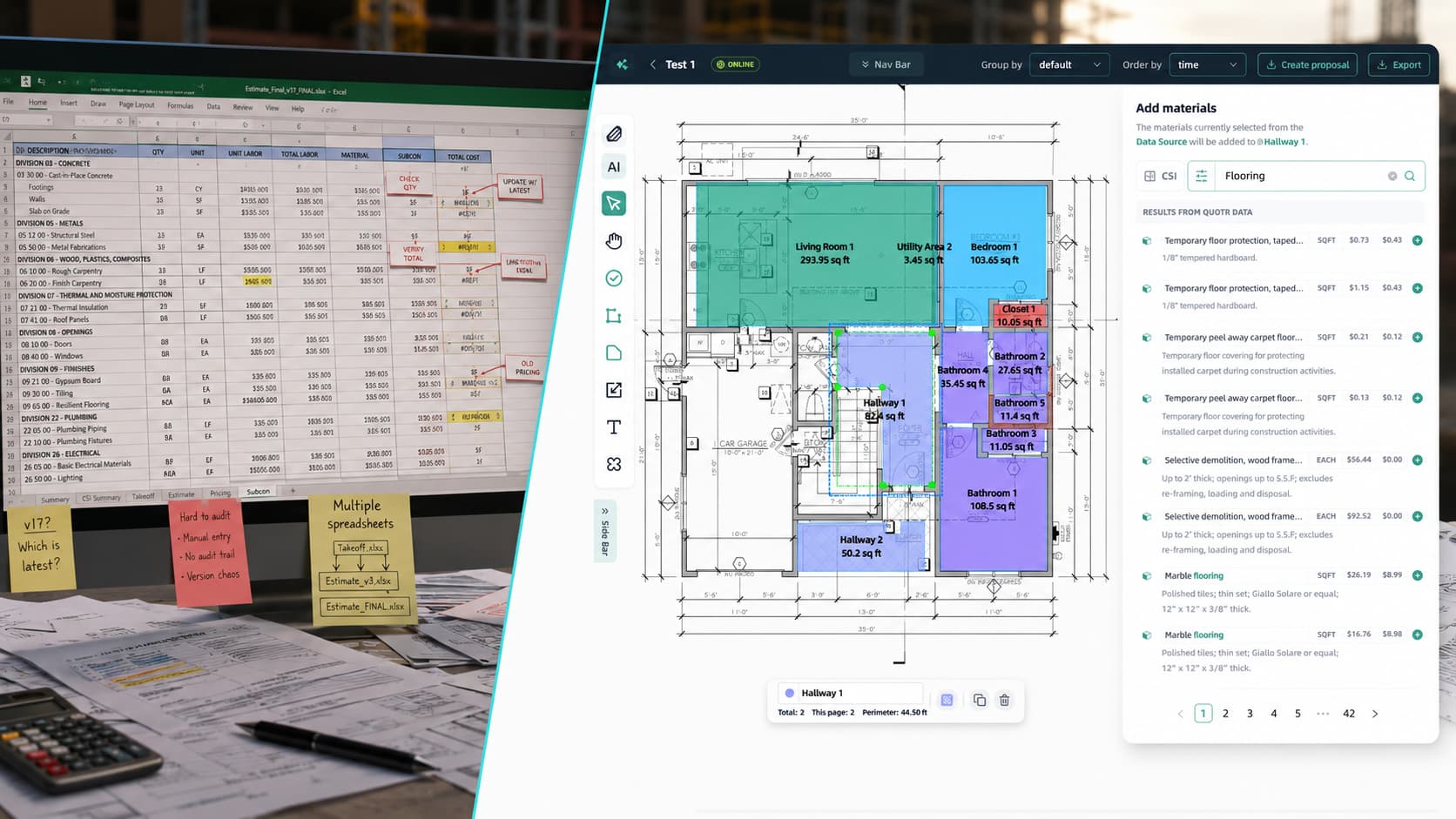
- The Disconnected Grid (Excel): Highly customizable but completely static. It requires manual input for every single cell, exposing your fund to severe execution risk.
- The Cloud Financial Wrapper (Aprao): A standardized, formulaic template ecosystem that automates cash flows, residual land math, and loan interest modeling beautifully, but relies entirely on your team to type in the correct baseline building costs.
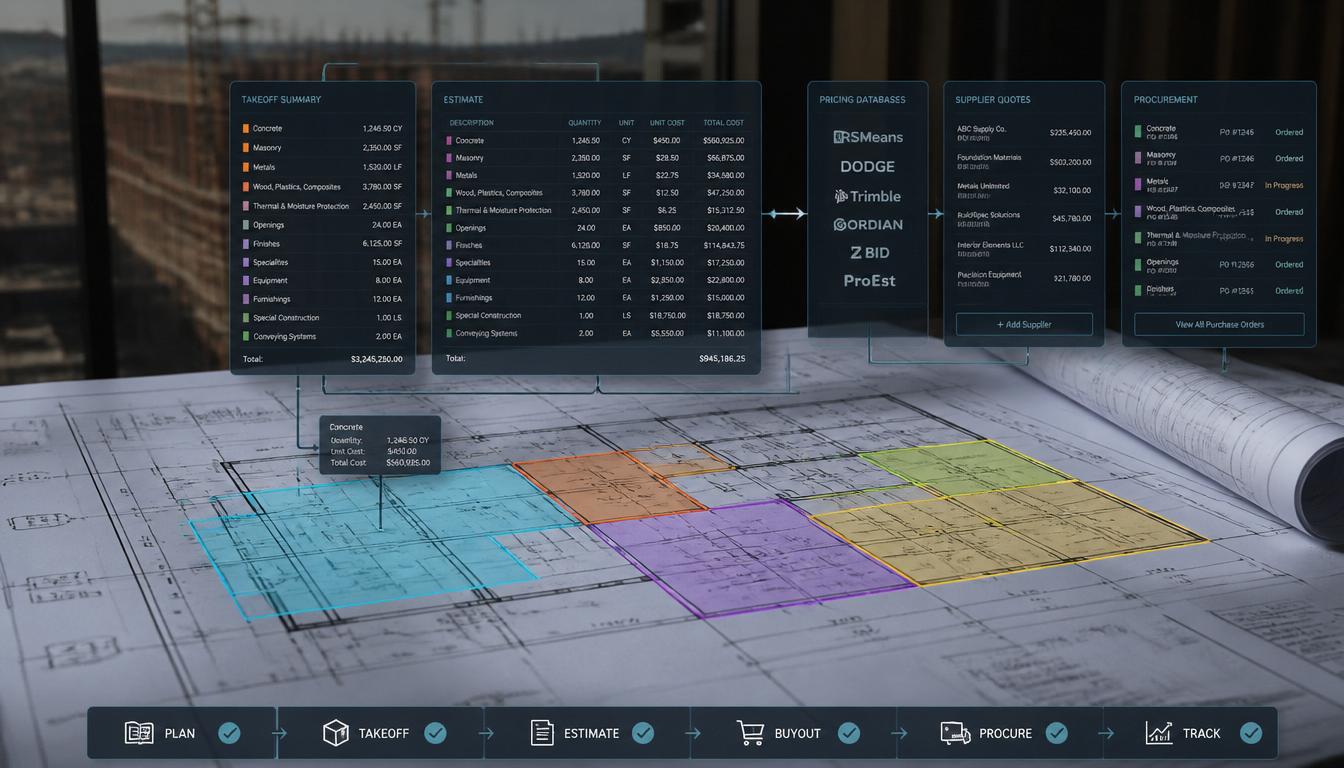
- The Unified Physical-to-Financial Platform (Quotr.ai): A predictive preconstruction system that extracts raw physical volumes natively from drawing data and instantly pipes those hard metrics into an active, procurement-backed financial pro forma.
The massive flaw with traditional modeling isn’t the interest formula—it’s the hard cost assumption. If your baseline construction inputs are off by even 5% because of stale data, your pro forma isn’t a financial strategy; it’s a liability.
Detailed Real Estate Pro Forma Software Reviews
1. Quotr.ai – Best for Natively Unifying Blueprints, Pro Formas, and Supply Chains
Quotr.ai bridges the gap between architectural concept and financial validation. Purpose-built for commercial developers and preconstruction executives who need to stress-test high volumes of land opportunities rapidly, the platform links physical blueprints directly to a live underwriting model.
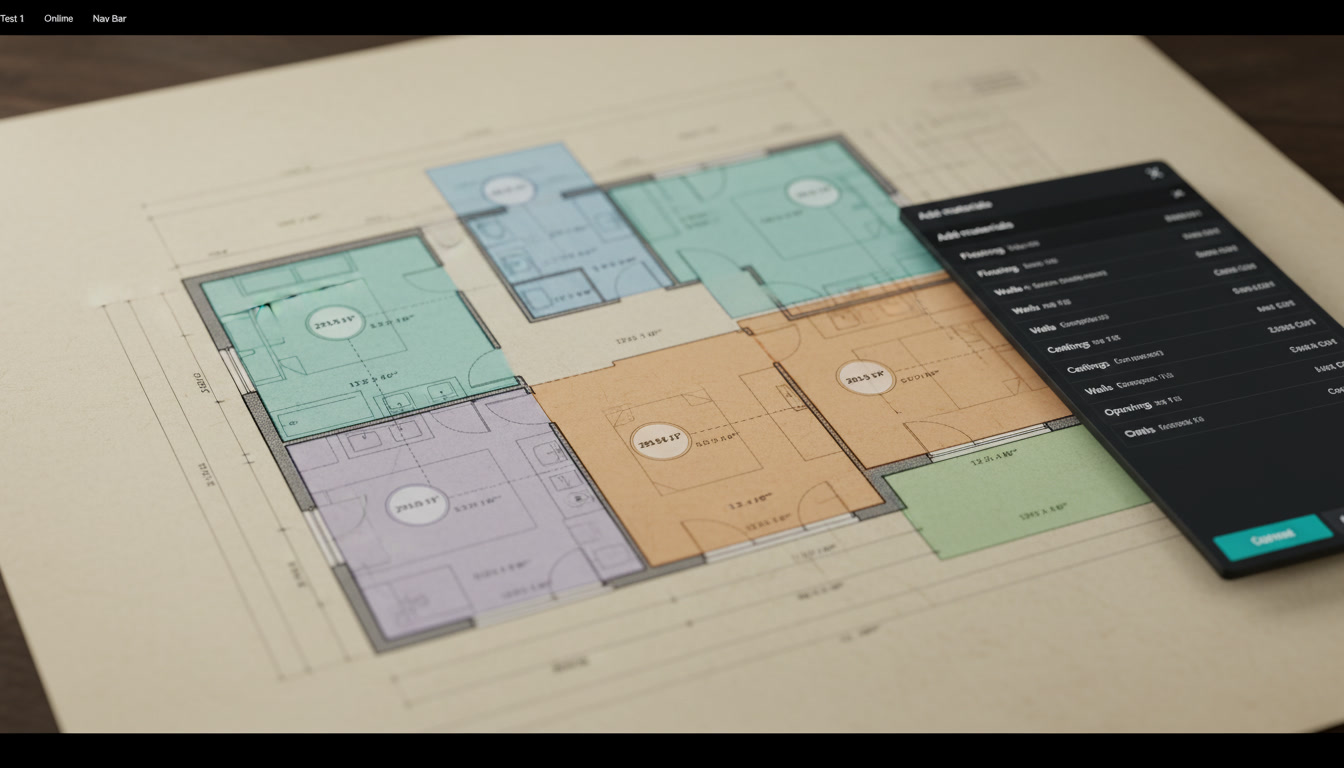
- How it Works: The developer uploads a schematic PDF plan set. Quotr.ai’s semantic vision engine instantly parses the sheets to map out baseline interior footprints, envelope perimeters, and core components. It then converts those raw physical counts into a live pro forma.
- The Procurement Wedge: Instead of filling hard cost lines with regional guesses or historical book rates, Quotr.ai connects the takeoff data directly to a network of 220+ global manufacturing factories. This allows developers to see true, buyable hard costs up to 40% to 50% below standard retail markup at the earliest stage of feasibility.
- Best Fit: Infill developers, commercial builders, and preconstruction teams who need exact, blueprint-verified hard costs to defend their pro formas to lenders.
2. Aprao – Best for Standardizing Pure Financial Feasibility and Residual Land Value
Aprao is an exceptional, cloud-based appraisal and feasibility tool designed specifically to move real estate finance out of traditional desktop spreadsheets.
- How it Works: It provides structured, consistent cloud templates for residual land evaluations, multi-tier finance calculations, sensitivity analyses, and stakeholder reporting.
- The 2026 Catch: Aprao is entirely focused on the financial layer. It does not read architectural drawings, run automated vector takeoffs, or host a live material supply line. To populate an Aprao pro forma, your team must execute a separate takeoff in a tool like Bluebeam or PlanSwift, apply local pricing, and manually input the total sum into Aprao’s cost boxes.
- Best Fit: Land brokers, development surveyors, and financial analysts whose primary task is modeling site acquisitions, residual values, and debt/equity capital stacks without managing drawing files.
3. Excel Spreadsheets – Best for Completely Custom, One-Off Edge Case Models
The humble Excel spreadsheet remains the default backdrop for real estate modeling because of its infinite, unconditional flexibility.
- How it Works: An analyst shapes rows and columns to match a highly unique joint-venture waterfall structure or complex tax-credit arrangement.
- The 2026 Catch: It acts as a complete data silo. Over 80% of human-compiled spreadsheets contain formula or transcription errors. Furthermore, Excel has zero awareness of volatile material markets or changing plans. The moment construction costs surge mid-quarter, your entire spreadsheet model must be manually audited line-by-line.
- Best Fit: Financial engineers modeling hyper-unusual institutional structures that off-the-shelf software cannot map out out-of-the-box.
Head-to-Head real estate pro forma software Feature Matrix
| Core Performance | Excel Spreadsheets | Aprao | Quotr.ai |
|---|---|---|---|
| Data Infrastructure | Static local file (.xlsx) |
Cloud-native financial dashboard | Cloud-native physical + financial database |
| Blueprint Takeoff | Fully disconnected manual process | Requires separate external software | Native automated computer-vision extraction |
| Cost Basis Veracity | User-typed historical book rates | User-typed manual cost inputs | Live transactional factory-direct tracking |
| Sensitivity Analysis | Manual data tables (highly fragile) | Automated variables & interest stress | Automated plan modifications + supply chain stress |
| Primary Value Asset | Infinite programmatic customization | Fast, consistent bank-ready formatting | Blueprint to priced pro forma in 12 minutes |
Decoupling the Cost Assumptions: Why the Takeoff to Transaction Gap Kills Pro Formas
If your development team is evaluating land using separate systems for design and financial modeling, you are absorbing a massive operational risk known as The Takeoff-to-Transaction Gap.
When input costs shift dramatically—such as the recent 12.6% construction price surge—a static pro forma breaks instantly.
- The Broken Flow: A designer updates a PDF. An estimator counts it manually in Bluebeam (Bluebeam AI Alternatives Guide). An analyst updates an Excel workbook or Aprao cell (Quotr.ai vs Traditional Estimating).
- The Connected Flow: With a unified platform, the drawing is the data source. When architectural sheets are updated or substituted, the underlying quantities regenerate instantly, causing your capital stack, construction loan interest calculations, and expected internal rate of return (IRR) to adjust automatically.
The Verdict: How to Build Your Development Stack
- Choose Excel if you are an institutional quantitative analyst running highly complex, non-standard equity waterfall logic that requires fully manual programmatic tinkering.
- Choose Aprao if your primary day-to-day focus is pure financial modeling for land appraisals, underwriting simple debt-to-equity ratios, and you already have an internal team handling separate manual construction takeoffs.
- Choose Quotr.ai if you are a modern real estate developer, general contractor, or preconstruction director who wants to remove manual counting entirely, tie your financial pro formas directly to real drawing data, and lock down up to 50% material savings via a factory-direct supply pipeline.
Stop guessing your hard costs. Ready to bridge your design data directly into an ironclad underwriting structure? Learn how AI construction takeoff works natively alongside live project financials, and explore how Quotr.ai Service today.
Frequently Asked Questions (FAQ)
How accurate is the blueprint-to-pro-forma translation in AI platforms?
On clean, vector-based architectural PDF plan sets, modern semantic engines achieve 95% to 99% accuracy on initial space classifications, structural perimeters, and component counts. By combining this geometry parsing with a built-in cost matrix, the software completely removes the hours of manual entry typically required to transition from a conceptual design to a preliminary capital expenditure (CapEx) budget.
Can Aprao read or audit structural and architectural drawing sheets?
No. Aprao is strictly a real estate development financial appraisal and cash flow forecasting platform. It does not possess computer vision capabilities to parse blueprints, analyze vector data, or map out materials. To populate its cost buckets, developers must execute their takeoff inside separate, traditional tracing software and type the finished numbers into Aprao manually.
Why do traditional spreadsheet pro formas pose a structural risk to land acquisitions?
Legacy spreadsheets are static data islands. According to industry metrics, over 80% of human-managed Excel workbooks contain structural formula or transcription errors. More importantly, Excel cannot track live market volatility or design changes. If material input costs spike mid-due diligence, your spreadsheet models will fail to flag the margin crunch unless an analyst completely rebuilds the model manually.
Does using a unified software platform allow developers to bypass general contractor markups?
Yes. Because a unified system like Quotr.ai maps blueprint quantities directly to a verified network of over 220 global manufacturing plants, developers can view true, un-escalated material costs at the earliest phase of underwriting. This grants preconstruction teams immense leverage when negotiating buyout contracts, verifying sub bids, or purchasing finishes and core packages factory-direct to save 40% to 50% on retail distributor premiums.
Ready to close the Takeoff-to-Transaction Gap? Book a 15-Minute Preconstruction Audit with Quotr.ai and stress-test your hardest blueprint live.