The Architect's Survival Guide: Unlocking New Revenue Streams in Pre-Construction
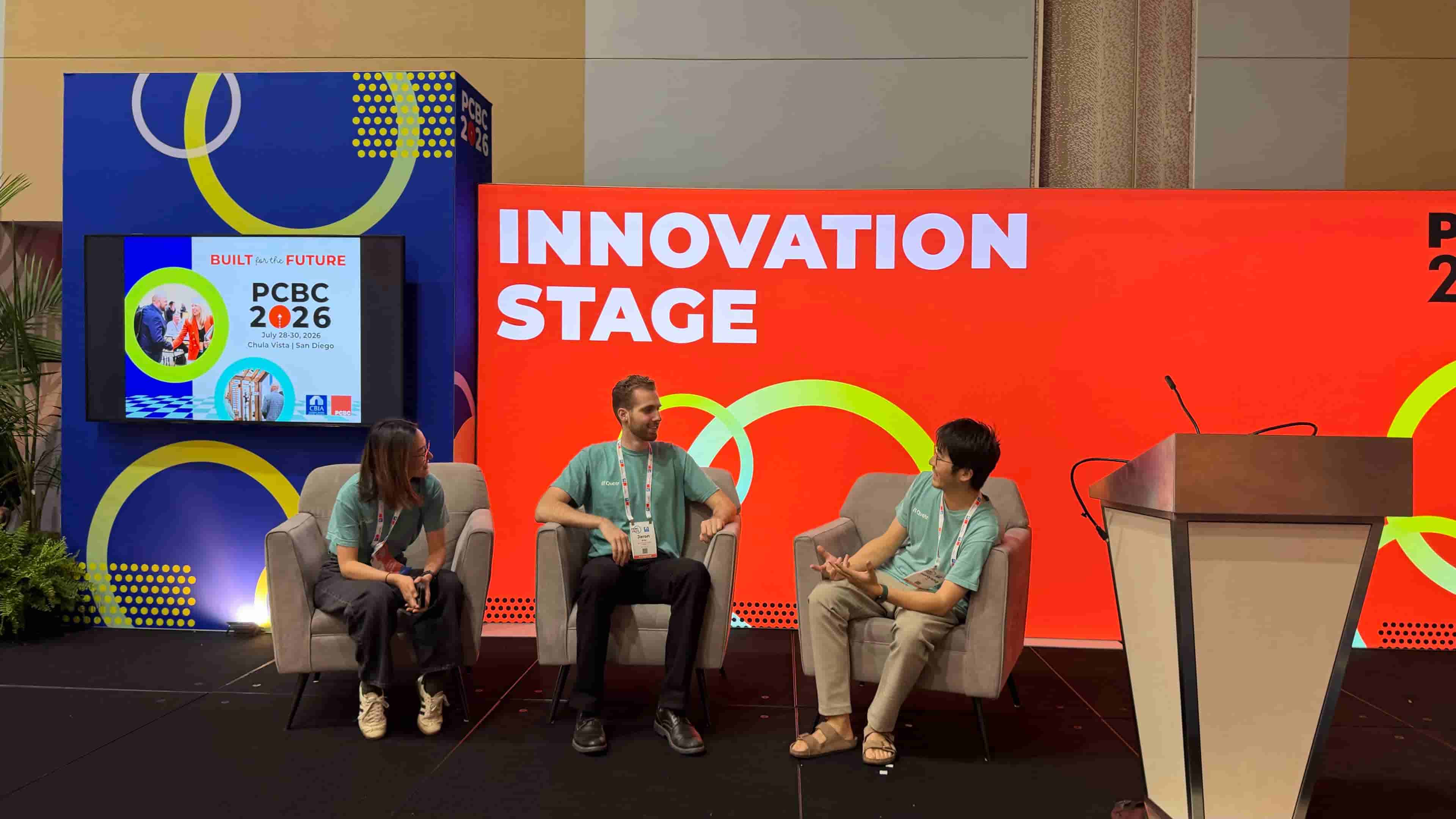
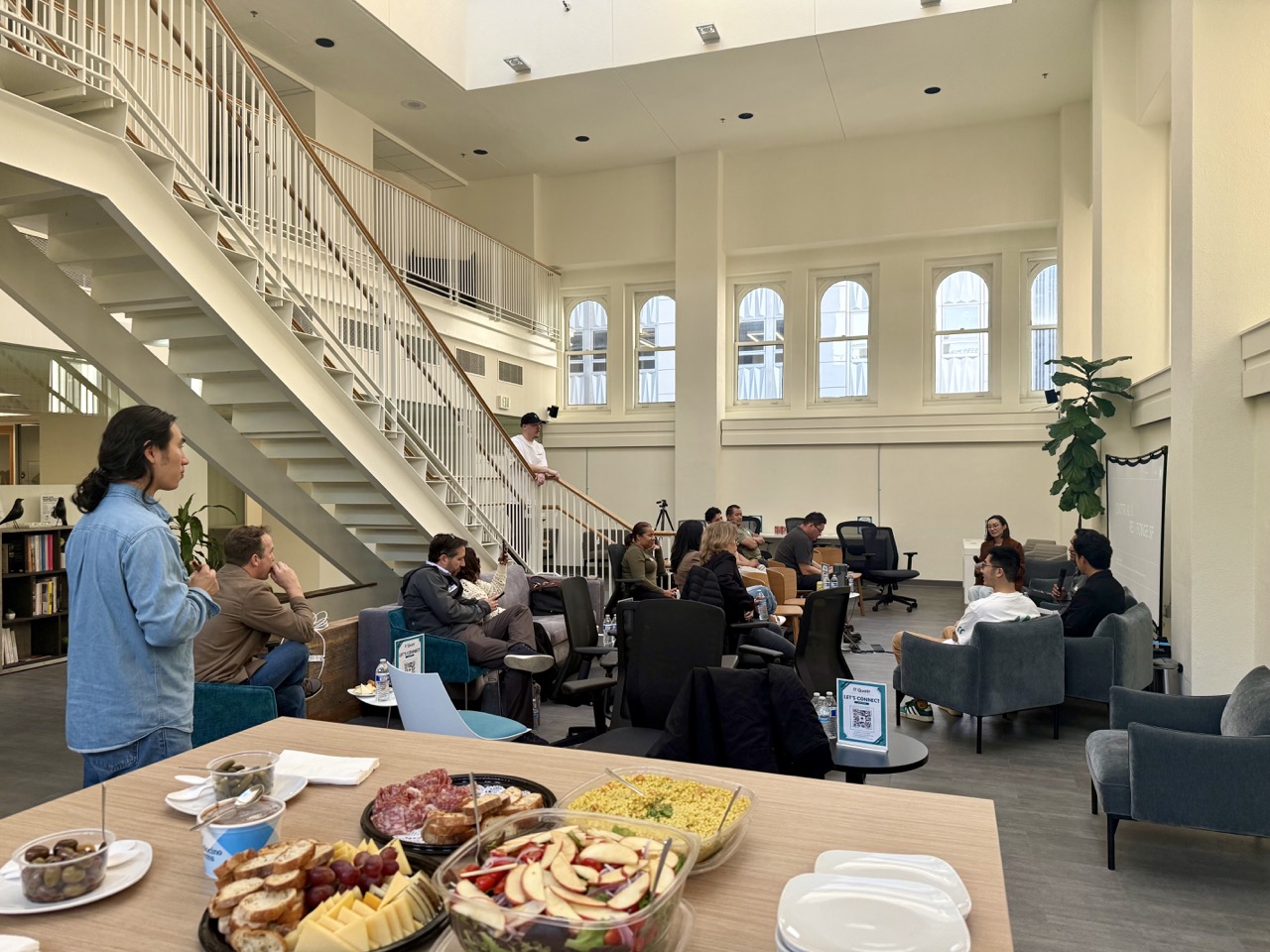
Insights from the AIA East Bay webinar featuring Hanyang Liu, Co-Founder & CEO of Quotr.ai — March 26, 2026
The Hard Truth About Architectural Value
Here is the contradiction that defines practice in 2026: architects touch every meaningful decision on a construction project — every material, every system, every spatial relationship flows through their judgment — yet they consistently capture the smallest share of the project’s total financial value.
Contractors capture management fees. Suppliers capture procurement margins. Developers capture development spread. Architects capture hours.
This is not a new problem. But it is becoming an existential one.
Fees are compressed on every project type. Clients demand cost certainty earlier than ever — often before schematic design is complete. And the nightmare scenario — late-stage Value Engineering (VE) — has become so routine that architects have quietly normalized it: months of careful design work, stripped down in two weeks of contractor-driven budget reconciliation, with the architect watching from the sidelines.
The architects who will own the next decade are not waiting for the market to correct this dynamic. They are restructuring how they participate in the value chain altogether.
This post draws from an AIA East Bay webinar presented by Hanyang Liu, Co-Founder & CEO of Quotr.ai, on March 26, 2026 — a session that delivered a clear, tactical argument: moving into pre-construction services is not optional innovation. For architecture firms in 2026, it is a survival imperative.
The Integrated Delivery Model: Where the Value Gap Lives
To understand the opportunity, you first need to see the structural problem clearly.
Design-Bid-Build: The Value Chain Gap
In the traditional Design-Bid-Build model, the architect’s role effectively ends when construction documents are issued. The contractor then takes the project — and the budget narrative — entirely into their own hands. They manage procurement, source materials, negotiate supplier terms, and capture margins at every step of that process.
The architect created the conditions for all of that value. The contractor captured it.
This is what Liu calls the “value chain gap.” The architect’s expertise in materials, systems, assemblies, and sequencing directly informs every procurement decision the contractor makes downstream. But because the architect stepped out of the process, they receive none of the financial benefit.
Architect-Led Design-Build: Closing the Gap
Architect-Led Design-Build (ALDB) closes this gap by repositioning the architect as the owner of pre-construction services: feasibility analysis, cost estimating, and procurement partnerships. Instead of handing off after CDs, the architect remains the primary project intelligence hub from the first site visit through construction.
The financial logic is direct: if the architect’s design decisions drive procurement choices, the architect should participate in the procurement value chain. This is not about architects becoming contractors. It is about architects recognizing that they already perform the analytical work that justifies pre-construction fees — they have just been giving it away.
Participating in the value chain, not just the design chain, is what builds financial resilience for a firm.
The Three Risk Gaps Pre-Construction Services Close
The case for expanding into pre-construction is not just about revenue capture. It is equally about risk elimination. There are three categories of project risk that early-phase services directly address.
1. Cost Risk: Designing Without Real-Time Data
Material price volatility is real and consequential. Steel, concrete, envelope systems, and MEP components have all experienced significant price swings in recent years — and the market is not stabilizing.
Without real-time cost data embedded in the design phase, architects are designing blind. They produce well-coordinated drawings based on historical cost assumptions that may be meaningfully wrong by bid day. When bids come in over budget, the default contractor response is VE — and the architect absorbs the reputational and relational cost of a design that could not be built as intended.
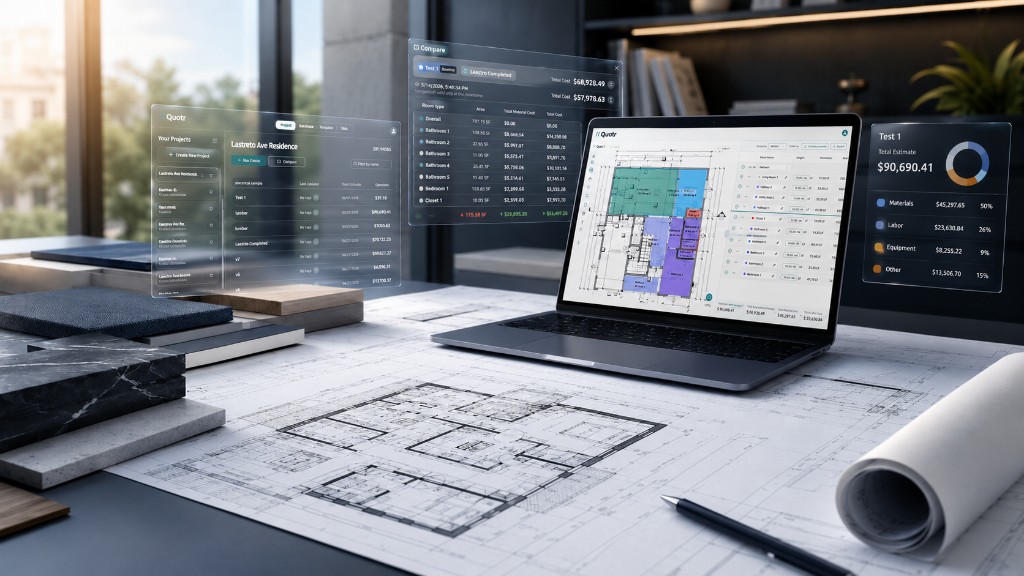
AI-powered tools like Quotr.ai address this directly. By automating quantity takeoffs from drawings and normalizing cost data across global manufacturer networks, Quotr.ai reduces estimating time from days to minutes — up to a 90% reduction in estimating time — and enables up to 50% savings on material costs by connecting buyers directly to manufacturers rather than through distributor markups. Cost alignment throughout design, rather than after it, eliminates the conditions that produce VE.
2. Execution Risk: Scope Gaps and Sequencing Errors
Execution risk accumulates when scope is ambiguous and sequencing is unresolved at the time of contractor handoff. Vague specifications produce substitutions. Coordination gaps produce RFIs. Both erode design intent and cost the project money.
Pre-construction services allow architects to define scope with the precision that prevents this. When the architect leads the feasibility and planning process, scope gaps get resolved before they become contract disputes.
Site analysis platforms like TestFit extend this further. TestFit allows architects to run massing studies and evaluate development yield — net rentable area, parking ratios, zoning compliance — in hours rather than weeks. Clients can see live adjustments to massing options during a meeting, with financial feasibility recalculated in real time. This is no longer a weeks-long iterative process; it is a collaborative design session.
3. Financial Risk: From Hourly Fees to Leverage-Based Revenue
The traditional architectural fee structure is linear: hours multiplied by billing rate. There is a hard ceiling on earnings, because there is a hard ceiling on hours.
Pre-construction participation introduces a different model. Architects who establish procurement partnerships — connecting clients to materials sourced directly through platforms like Quotr.ai — can structure fees tied to procurement margins, not just hourly service. The result is leverage-based revenue: design decisions multiplied by value captured in the procurement chain.
This is a structural shift in the firm’s financial model, not just a new service offering.
The AI Tech Stack: Automation vs. Judgment
Before going further, one framing note is essential: AI is a tool for the “boring” work. It is not a replacement for the architect’s judgment, relationships, or legal accountability. Conflating the two produces either over-reliance or reflexive dismissal — both of which are costly mistakes.
What AI Handles Well
- Automated quantity takeoffs directly from drawings, eliminating hours of manual counting (Quotr.ai)
- Unstructured data organization and cost normalization across global supplier networks
- Site massing and financial modeling — real-time yield on cost, net rentable area, parking ratios, zoning analysis (TestFit)
- Construction documentation and progress verification via 360° site walkthroughs, enabling remote quality assurance and dispute prevention (OpenSpace)
These are tasks that require precision, speed, and data integration. AI performs them faster and more accurately than any human team. Deploying AI here frees the architect to focus on the work that actually requires professional judgment.
What AI Cannot Do
- Determine which design tradeoffs are contextually, socially, or civically appropriate
- Replace the licensed architect’s seal and legal responsibility
- Manage client trust and relationship dynamics
- Make judgment calls on when a cost saving is worth a design compromise
The critical framing from Liu’s presentation: “A design decision cannot ultimately be justified by saying that a model recommended it.”
AI relocates risk — it concentrates risk at the moment the professional interprets the result. The architect who understands this is categorically more powerful with AI than without it. The architect who abdicates judgment to the model has not gained capability; they have transferred liability without retaining control.
Quotr.ai’s capabilities make this practical: up to 90% reduction in estimating time, and 40% savings on procurement by connecting builders directly to global manufacturers — bypassing the distributor markups that have historically been invisible to design teams. (Quotr.ai has validated this model with a $3.5 million Seed round led by Lava Ventures, a signal of institutional confidence in the platform’s underlying economics.) Explore Quotr.ai’s tutorials to see these workflows in action.
Step-by-Step: The Path to Architect-Led Design-Build
Transitioning into this model does not require reinventing the firm overnight. It follows a logical, four-phase progression. Each phase builds on the previous one, and each generates independent value — firms can capture returns at any stage, not just the end state.
Phase 1: Master Feasibility and Site Analysis
Before anything else, get comfortable charging for pre-design work.
Most architects already perform informal feasibility analysis at project pursuit — reviewing zoning, assessing program fit, sketching massing options. That work has real value. The first move is formalizing it into a billable service with a defined deliverable.
Tools like TestFit enable rapid site feasibility studies: massing options, zoning analysis, development yield projections. A study that once required weeks of iterative work can now be delivered in hours. This compresses the time cost for the firm while increasing perceived value for the client, who gets a fast, data-supported decision-making tool at project inception.
Charging for pre-design feasibility is the foundation of everything that follows.
Phase 2: Implement Target Value Design (TVD)
Target Value Design (TVD) inverts the traditional design sequence. Instead of designing a project and then estimating its cost, the cost target is established first — and design is iterated continuously to stay within it.
TVD has been a theoretical best practice for years. AI-powered estimating makes it operationally viable by making cost feedback instantaneous rather than requiring a separate estimating cycle. As design decisions are made, their cost implications are visible in near real time.
The result: no late-stage VE surprises. Clients get the cost certainty they have been demanding. Architects protect the design intent they have been losing to contractor-driven value engineering. TVD, enabled by AI estimating, is arguably the single highest-leverage change a firm can make to its pre-construction practice.
Phase 3: Explore Procurement Partnerships
Once a firm has cost intelligence in-house, procurement partnerships become a natural extension.
By helping clients source materials at better prices — through platforms that connect directly to global manufacturers rather than through distributor networks — architects can capture a margin that previously went entirely to contractors and material distributors. This is fee income that the architect’s design work directly enables.
The structure matters: this is not about architects becoming material suppliers. It is about the architect exercising the specification authority they already hold, and being compensated for the procurement value that authority creates.
Quotr.ai’s direct-to-manufacturer network is the enabling infrastructure here, providing the pricing intelligence and supplier connections that make procurement partnerships viable without requiring the architect to build that network independently.
Phase 4: Move Toward Joint Ventures or Self-Performing Design-Build
This is the advanced tier, and it requires the most organizational change. Some firms will form joint ventures with trusted contractor partners, formalizing a shared delivery model and fee structure. Others will self-perform design-build on select project types where their expertise is most concentrated.
This phase offers the highest potential for reversing fee compression — but it also demands the most clarity about firm capacity, risk tolerance, and strategic positioning. The right entry point for most firms is high-end residential, covered in the next section.
High-End Residential: The Ideal Testing Ground
Not every project type is equally suited to the ALDB model as a starting point. High-end residential is the clear entry-point recommendation — and for reasons that map directly to the model’s logic.
In high-end residential projects:
- Clients have high design intent and are deeply sensitive to material substitutions. A contractor swapping a specified material for a value-engineered alternative is not an acceptable outcome — which means the architect’s procurement involvement is welcome, not resisted.
- Design decisions directly affect resale value and market positioning. The architect’s material selections and spatial choices are not abstract preferences; they are financial decisions with measurable market impact.
- The architect’s taste and judgment is the product. Clients in this market hired the architect specifically for their design authority. The integrated model formalizes what the client relationship already assumes.
- Budgets are fixed and clients want cost predictability from day one. The demand for early cost certainty is highest precisely where the ALDB model delivers it most clearly.
During the AIA East Bay webinar, Liu highlighted a San Jose high-end residential project as a real-world illustration of this model in practice — a project where early cost intelligence and procurement involvement protected both design intent and project margins throughout delivery. While the specific financial metrics of that project are not disclosed here, the structure is instructive: early pre-construction engagement changed the architect’s role from design vendor to project co-investor, with corresponding changes in both accountability and financial participation.
High-end residential gives firms a contained, relationship-driven environment to test the ALDB model, build the internal competency, and document the ROI story before scaling to commercial or mixed-use projects.
Stop Thinking in Deliverables. Start Thinking in Decisions.
Here is the challenge this post closes with — and it is a direct one.
Architects have been trained to think in terms of deliverables: drawings, specifications, submittals, permit packages. These are outputs. They are measurable, contractually defined, and easy to scope. They are also a deeply limiting frame for understanding what architecture is worth.
Every early project decision an architect makes — about site selection, program allocation, material systems, structural strategy — has financial consequences that persist through the entire life of the building. The question is not whether that expertise has value. It is whether the architect is positioned to capture any of it.
The firms that transition from “we deliver drawings” to “we provide decision-making services” are the firms that will close the value chain gap. They are the firms that will use pre-construction services not as an add-on, but as the foundation of a restructured practice model. They are the firms that will stop watching contractors capture margins that their design work made possible.
The tools exist. The market conditions justify it. The framework is clear.
The firms that act on this in 2026 will own the next decade.
Ready to reclaim your project control? Explore Quotr.ai’s pre-construction platform — or see pricing to find the right fit for your firm. Have questions? Get in touch with the Quotr.ai team, and consider joining your local AIA chapter’s next practice innovation session.
About the Webinar
This post is based on the AIA East Bay practice innovation webinar presented on March 26, 2026, featuring Hanyang Liu, Co-Founder & CEO of Quotr.ai. Quotr.ai is an AI-powered pre-construction platform that automates quantity takeoffs, normalizes material cost data, and connects builders directly to global manufacturers. Quotr.ai has raised a $3.5 million Seed round led by Lava Ventures.
Published on the Quotr.ai blog. Quotr.ai is an AI-powered construction estimation, takeoff, and procurement platform based in San Francisco.