
How to Bid Commercial Construction Projects as a Subcontractor: Step-by-Step Estimating, Takeoff, and Bid-Win Guide
Subcontractors bid commercial construction projects by reviewing the invitation to bid, downloading the drawings and specifications, identifying their trade scope, completing a quantity takeoff, calculating labor and material costs, adding overhead and profit, writing a clear proposal, submitting the bid before the deadline, and following up with the general contractor.
The basic subcontractor bidding process looks like this:
- Find the right commercial bid opportunities.
- Review the invitation to bid.
- Download the plans, specifications, and addenda.
- Confirm your exact scope of work.
- Perform a quantity takeoff.
- Price materials, labor, equipment, and subcontracted work.
- Add overhead, profit, contingency, and escalation assumptions.
- Write inclusions, exclusions, alternates, and clarifications.
- Submit the proposal before the bid deadline.
- Follow up with the GC and prepare for scope review.
Winning commercial construction bids is not only about being the cheapest subcontractor.
The best subcontractor bids are accurate, complete, clear, responsive, and easy for the general contractor to level against competing quotes.
That is where tools like Quotr.ai can help. Quotr helps contractors move faster from drawings to takeoff, estimate, bid, proposal, and procurement decisions, reducing the manual work that slows down subcontractor estimating teams.
What Is a Commercial Construction Bid?
A commercial construction bid is a formal price submitted by a contractor or subcontractor to perform a defined scope of work on a commercial project.
For subcontractors, a bid usually includes:
- Total price
- Trade scope
- Inclusions
- Exclusions
- Alternates
- Unit prices if requested
- Addenda acknowledged
- Clarifications
- Proposal expiration date
- Schedule assumptions
- Payment terms
- Contact information
A subcontractor bid is different from an internal estimate.
The estimate is the calculation behind the number. The bid is the price submitted to the general contractor. The proposal is the document that explains what the bid includes and excludes.
A strong bid gives the GC confidence that your company understands the scope, reviewed the documents, and can perform the work.
Why Commercial Construction Bidding Is Different From Residential Bidding
Commercial construction bidding is more formal, more document-heavy, and more competitive than most residential bidding.
A residential contractor may create a proposal after a site visit, owner conversation, or simplified plan review.
A commercial subcontractor usually works from a larger bid package that may include:
- Architectural drawings
- Structural drawings
- Civil drawings
- Mechanical drawings
- Electrical drawings
- Plumbing drawings
- Fire protection drawings
- Specifications
- Addenda
- Alternates
- Unit price requests
- Bid forms
- Insurance requirements
- Bonding requirements
- Schedule requirements
- Prevailing wage requirements
- Substitution rules
- Scope sheets from the GC
Commercial bidding also usually involves multiple general contractors asking multiple subcontractors for pricing on the same project.
That means your bid has to be fast, accurate, and easy to compare.
A confusing bid can lose even if the price is competitive.
Who This Guide Is For
This guide is written for subcontractors who want to bid more commercial construction work and improve their estimating workflow.
It is especially useful for:
- Electrical contractors
- HVAC contractors
- Plumbing contractors
- Drywall contractors
- Concrete contractors
- Framing contractors
- Roofing contractors
- Flooring contractors
- Painting contractors
- Fire protection contractors
- Low-voltage contractors
- Masonry contractors
- Specialty trade contractors
- Owner-operator subcontractors
- Estimating managers
- Chief estimators
- Junior estimators learning commercial bidding
If you are new to commercial work, this guide will help you understand the process.
If you already bid commercial projects, it will help you tighten your workflow, reduce missed scope, and improve your bid-win rate.
Step 1: Find the Right Commercial Construction Bid Opportunities
The first step is finding projects that match your trade, geography, crew capacity, licensing, bonding ability, and project experience.
Subcontractors usually find commercial bid opportunities through:
- Invitations from general contractors
- Plan rooms
- Local builders exchanges
- GC subcontractor portals
- Public agency bid boards
- Construction networks
- Supplier referrals
- Architect or owner relationships
- Online construction bidding platforms
- Repeat work from existing GCs
The mistake many subcontractors make is bidding every project they see.
That creates estimating overload and weak bid quality.
A better strategy is to qualify opportunities before spending time on takeoff.
Ask:
- Is this project in our trade scope?
- Is it in our service area?
- Do we have the manpower to perform the work?
- Do we know the GC?
- Is the bid deadline realistic?
- Are the drawings complete enough?
- Is this a public or private project?
- Does the project require bonding, union labor, or prevailing wage?
- Is the project size right for our company?
- Do we have a real chance of winning?
- Would this project be profitable if we win?
The best subcontractors do not just bid more.
They bid better-fit projects.
Step 2: Review the Invitation to Bid
The invitation to bid, often called the ITB, tells you whether the project is worth reviewing.
Before opening every drawing, read the bid invitation carefully.
Look for:
- Project name
- Project location
- Bid due date and time
- GC contact
- Scope requested
- Required bid form
- Addenda instructions
- Site walk requirements
- RFI deadline
- Construction schedule
- Insurance requirements
- Bonding requirements
- Wage requirements
- Alternates
- Unit prices
- Submission method
The deadline matters.
A commercial bid may be due at 2:00 p.m. on a specific date. If you submit late, the GC may not include your number.
The scope also matters.
A GC may invite your company to bid, but the bid package may include work you do not perform. For example, an electrical subcontractor may need to clarify whether low-voltage, fire alarm, lighting controls, generator work, temporary power, or design-assist work is included.
Do not assume.
Clarify early.
Step 3: Download and Organize the Plans, Specs, and Addenda
Commercial bids are document-driven.
Before estimating, organize the full bid package.
Create a folder structure like:
- 01 Drawings
- 02 Specifications
- 03 Addenda
- 04 RFIs
- 05 Vendor Quotes
- 06 Takeoff
- 07 Estimate
- 08 Proposal
- 09 Submitted Bid
Make sure you are working from the latest documents.
One of the most common bidding mistakes is estimating from an old drawing set or missing an addendum.
Before starting takeoff, check:
- Are all drawings included?
- Are specifications included?
- Are there addenda?
- Are there revised sheets?
- Are there alternate drawings?
- Are there bid forms?
- Are there scope sheets from the GC?
- Are there conflicts between plans and specs?
- Are there missing sheets?
- Are there unreadable details?
If you use Quotr.ai, this document organization step becomes easier because the workflow is designed around moving from plan review to takeoff and estimate. You can also review Quotr.ai’s guide on how to do construction takeoff from a PDF blueprint.
Step 4: Identify Your Exact Scope of Work
Before measuring anything, define your scope.
A subcontractor estimate is only useful if it matches the work being requested.
Review:
- Drawings
- Specifications
- General notes
- Schedules
- Details
- Alternates
- Addenda
- GC scope sheets
- Division-specific requirements
For example, an electrical subcontractor may need to include:
- Lighting fixtures
- Lighting controls
- Panels
- Feeders
- Branch wiring
- Devices
- Conduit
- Low-voltage rough-in
- Fire alarm
- Temporary power
- Equipment connections
- Site lighting
- Generator work
- Testing
- Permits
A drywall subcontractor may need to include:
- Metal studs
- Gypsum board
- Shaft wall
- Sound insulation
- Fire-rated assemblies
- Moisture-resistant board
- Ceilings
- Backing
- Finishing levels
- Patching
- Acoustical coordination
A concrete subcontractor may need to include:
- Slabs
- Footings
- Walls
- Rebar
- Vapor barrier
- Formwork
- Pumping
- Finishing
- Saw cutting
- Curing
- Testing coordination
Every trade has hidden scope.
The goal is to find it before bid day.
Step 5: Read the Specifications, Not Just the Drawings
Many subcontractors make the mistake of estimating from drawings alone.
Drawings show the work visually. Specifications explain the standards, materials, products, installation methods, testing requirements, manufacturers, substitutions, and performance requirements.
For example, the drawings may show flooring areas, but the specifications may define:
- Product type
- Manufacturer
- Adhesive
- Substrate preparation
- Moisture testing
- Warranty requirements
- Installation method
- Cleaning requirements
The drawings may show electrical devices, but the specifications may define:
- Device grade
- Conduit requirements
- Wiring standards
- Panelboard requirements
- Fixture substitutions
- Testing
- Labeling
- Commissioning
The drawings may show drywall partitions, but the specifications may define:
- Fire rating
- Sound rating
- Board type
- Finish level
- Fasteners
- Insulation
- Control joints
- Moisture-resistant areas
If you skip the specs, your bid may be incomplete.
A complete commercial subcontractor bid requires both drawings and specifications.
Step 6: Perform the Quantity Takeoff
The quantity takeoff is the process of measuring and counting the work shown in the drawings.
This is the foundation of the estimate.
Depending on your trade, your takeoff may include:
- Linear feet
- Square feet
- Cubic yards
- Counts
- Assemblies
- Fixtures
- Devices
- Openings
- Rooms
- Systems
- Equipment
- Materials
- Labor units
Manual takeoff is slow because estimators have to count, measure, label, and organize quantities sheet by sheet.
That is why many subcontractors are moving toward AI-assisted takeoff and estimating workflows.
Quotr.ai helps contractors speed up the takeoff process by turning plan review into a more structured workflow. For more detail, see how AI construction takeoff works in 2026 and AI that reads construction drawings.
Step 7: Check the Takeoff Against the Scope
A takeoff is not finished just because the quantities are counted.
You need to review the quantities against the bid scope.
Ask:
- Did we include all required sheets?
- Did we include all addenda?
- Did we miss any alternates?
- Did we double-count anything?
- Did we count the right assemblies?
- Did we separate base bid and alternates?
- Did we include temporary work?
- Did we include mobilization?
- Did we include testing, permits, layout, freight, or equipment?
- Did we include material waste?
- Did we include project-specific conditions?
- Did we include anything that should be excluded?
- Did we miss anything buried in the notes?
This is where experienced estimators create value.
AI can help speed up counting and plan review, but the estimator still needs to verify whether the takeoff matches the actual scope.
For trade-specific examples, see Quotr.ai’s guide on how to estimate electrical work from drawings.
Step 8: Build the Estimate
After the takeoff is complete, build the estimate.
A subcontractor estimate usually includes:
- Material costs
- Labor costs
- Equipment costs
- Sub-subcontractor costs
- Supplier quotes
- Freight
- Taxes
- Permits
- Bonds
- Insurance
- General conditions
- Supervision
- Mobilization
- Demobilization
- Overhead
- Profit
- Contingency
The estimate should be structured so you can explain your number if the GC asks for a scope review.
Do not only produce a lump sum.
Internally, you should know what is driving the price.
For example:
- Is the job labor-heavy?
- Are materials driving the cost?
- Are there long-lead items?
- Are there difficult site conditions?
- Are there multiple mobilizations?
- Is the schedule compressed?
- Is access limited?
- Is overtime required?
- Are the specs unusually strict?
- Are there expensive alternates?
- Are there unclear details?
A good estimate is not just math.
It is a construction decision.
Step 9: Get Supplier and Vendor Quotes Early
For many subcontractors, supplier quotes can make or break the bid.
Do not wait until the last minute.
Send quote requests early for:
- Major equipment
- Fixtures
- Gear
- Materials
- Specialty items
- Long-lead items
- Custom products
- Buyout-sensitive scopes
When requesting vendor quotes, include:
- Project name
- Bid due date
- Relevant drawings
- Relevant specifications
- Addenda
- Scope notes
- Delivery requirements
- Alternates
- Approved manufacturers
Then compare quotes carefully.
Do not only look at price.
Check:
- Is the quote complete?
- Does it include freight?
- Does it include tax?
- Does it include all specified products?
- Does it exclude anything important?
- Does it include lead times?
- Does it match the latest addenda?
- Does it include substitutions?
- Does it assume a different product than the specs require?
This is where procurement becomes part of estimating.
Quotr.ai’s broader platform is designed around the connection between takeoff, estimating, and procurement. See the takeoff-to-transaction gap for more on why estimating and procurement should not be disconnected.
Step 10: Add Labor Productivity and Project Conditions
Labor is often the hardest part of a subcontractor bid.
Material quantities may be measurable, but labor productivity depends on job conditions.
Before finalizing labor, consider:
- Project schedule
- Crew size
- Site access
- Floor count
- Phasing
- Overtime
- Weather exposure
- Coordination requirements
- Safety requirements
- Union or prevailing wage rules
- Congestion
- Material handling
- Parking
- Loading zones
- Night work
- Occupied building conditions
- Elevator access
- Security requirements
- Work hour restrictions
A simple unit labor rate may not be enough.
Two projects can have the same quantities but very different labor costs.
That is why subcontractor estimating should combine quantity takeoff with field judgment.
Step 11: Add Overhead, Profit, Contingency, and Escalation
After direct costs are built, add business costs and risk.
This may include:
- Company overhead
- Project management overhead
- Profit margin
- Contingency
- Bond cost
- Insurance cost
- Escalation
- Tariff risk
- Fuel risk
- Material volatility
- Financing cost
- Credit card or payment fees if applicable
Do not treat markup as an afterthought.
Your markup should reflect risk, project fit, competitiveness, backlog, and relationship with the GC.
A risky project may require more contingency.
A repeat-client project may justify a sharper number.
A project with unclear drawings may need more protection.
A bid with volatile materials may need escalation language.
Step 12: Write Clear Inclusions, Exclusions, and Clarifications
A subcontractor bid should never be just a number.
Your proposal should clearly state what is included and excluded.
This helps the GC compare your bid and protects your company from scope disputes later.
Include:
- Base bid amount
- Scope included
- Scope excluded
- Alternates
- Unit prices if requested
- Allowances
- Assumptions
- Clarifications
- Addenda acknowledged
- Tax status
- Schedule assumptions
- Payment terms
- Proposal expiration date
Common exclusions may include:
- Permits
- Bonds
- Engineering
- Design responsibility
- Utility fees
- Temporary utilities
- Testing
- Hazardous materials
- Overtime
- Premium time
- Patching
- Painting
- Firestopping
- Cutting and coring
- Demolition
- Moisture mitigation
- Unshown work
- Work outside trade scope
Do not use vague exclusions.
Write them clearly.
The goal is to make your bid easy to level.
Step 13: Submit the Bid Correctly
Commercial bid submission is deadline-driven.
Before submitting, check:
- Correct GC contact
- Correct project name
- Correct bid form
- Correct bid amount
- Addenda acknowledged
- Alternates included
- Unit prices included
- Scope letter attached
- Proposal signed if required
- File format correct
- Submission method correct
- Deadline confirmed
Submit early when possible.
If the bid is due at 2:00 p.m., do not submit at 1:59 p.m.
General contractors may be receiving dozens or hundreds of subcontractor bids. A clean, early, complete proposal makes their job easier.
That can improve your chance of being included.
Step 14: Prepare for Scope Review
After bid submission, the GC may request a scope review.
This is where they compare your proposal against other subcontractors and confirm what is included.
Be ready to explain:
- Your base bid
- Your inclusions
- Your exclusions
- Your alternates
- Your assumptions
- Your vendor quotes
- Your schedule assumptions
- Any scope gaps
- Any value engineering ideas
A scope review is not only a technical conversation.
It is a trust conversation.
The GC wants to know whether your company understands the job and can perform the work without creating problems later.
Step 15: Follow Up After Submission
Many subcontractors stop after sending the bid.
That is a mistake.
Follow-up matters.
After submitting, ask the GC:
- Did you receive our bid?
- Is our scope clear?
- Are there any gaps compared with other bidders?
- Are we carrying the correct alternates?
- Do you need a scope review?
- When do you expect award?
- Are there any outstanding addenda or clarifications?
This helps you stay engaged and shows professionalism.
It also helps you learn why you win or lose.
If you lose the bid, ask for feedback:
- Were we high, low, or in range?
- Did our scope match the others?
- Did we miss anything?
- Was there a preferred subcontractor?
- Was the decision based on price, schedule, relationship, or scope?
Winning more bids requires feedback loops.
How to Win More Commercial Construction Bids as a Subcontractor
Winning more commercial bids is not just about lowering your price.
Subcontractors win more bids when they combine speed, accuracy, clarity, relationships, and follow-through.
1. Bid the Right Projects
Do not waste estimating time on projects you are unlikely to win.
Track your hit rate by:
- GC
- Project type
- Project size
- Location
- Trade scope
- Public vs. private work
- Bid deadline length
- Competitor mix
If your hit rate is low in a certain project type, ask why.
Maybe you are too expensive. Maybe you are bidding the wrong GCs. Maybe your scope letters are unclear. Maybe you are too slow. Maybe you are missing relationship-building.
2. Respond Faster Than Competitors
Speed matters.
If you can produce an accurate takeoff and estimate faster, you can bid more projects and respond to GC questions earlier.
This is one of the biggest reasons contractors use AI-assisted estimating tools.
Quotr.ai helps contractors reduce manual takeoff time and move faster from drawings to priced estimates. See AI construction estimating software for a deeper comparison of modern estimating workflows.
3. Make Your Bid Easy to Level
General contractors need to compare subcontractor bids quickly.
If your bid is unclear, they may not use it.
Make your proposal easy to read.
Include:
- Clear scope
- Clear exclusions
- Clear alternates
- Clear addenda acknowledgment
- Clear price
- Clear contact information
A well-written bid can beat a messy cheaper bid because the GC trusts it more.
4. Build GC Relationships Before Bid Day
Many subcontractors only talk to GCs when they need work.
The best subcontractors build relationships before bid day.
Stay in touch with:
- Estimators
- Project managers
- Preconstruction managers
- Project executives
- Procurement teams
Ask what types of projects they are pursuing.
Ask what they value in subcontractor proposals.
Ask how you can make their bid-day process easier.
5. Track Your Bid History
If you do not track your bids, you cannot improve.
Track:
- Project name
- GC
- Bid date
- Bid amount
- Trade scope
- Result
- Winning number if known
- Your rank if known
- Reason lost
- Notes from GC
- Estimate hours spent
- Margin assumptions
This turns bidding into a system.
Over time, you will learn which GCs, project types, and scopes are most profitable.
6. Use Technology to Reduce Manual Estimating Work
Manual takeoff and spreadsheet estimating can work when bid volume is low.
But as bid volume grows, manual systems become a bottleneck.
Modern AI estimating tools can help subcontractors:
- Read construction drawings faster
- Count symbols faster
- Extract quantities faster
- Reduce repetitive manual work
- Compare bid documents
- Generate structured estimates
- Create proposal outputs
- Connect estimating to procurement
For a practical example of the workflow, see Quotr.ai’s guide to the blueprint to priced estimate workflow.
Common Mistakes Subcontractors Make When Bidding Commercial Projects
Mistake 1: Bidding From Old Drawings
Always confirm you are using the latest plans and addenda.
A missed addendum can destroy a bid.
Mistake 2: Not Reading the Specifications
Drawings show what to build.
Specifications often explain product requirements, installation requirements, testing requirements, approved manufacturers, and performance standards.
Do not estimate from drawings alone.
Mistake 3: Missing Alternates
Alternates can change the project scope significantly.
Separate base bid and alternates clearly.
Mistake 4: Sending a Number Without Scope
A number without scope is hard for the GC to trust.
Always include a proposal letter with inclusions, exclusions, and assumptions.
Mistake 5: Forgetting Labor Conditions
The same quantities can require different labor depending on schedule, phasing, access, and site conditions.
Mistake 6: Ignoring Procurement Risk
Material pricing, lead times, and supplier availability can change the final cost.
Do not treat procurement as something that happens after estimating.
Mistake 7: Bidding Too Many Bad-Fit Jobs
More bids do not always mean more revenue.
Focus on projects where you have a realistic chance to win and perform profitably.
Mistake 8: Not Following Up
If you never ask why you lost, you cannot improve.
Bid feedback is one of the most valuable inputs in estimating.
Commercial Construction Bid Checklist for Subcontractors
Use this checklist before submitting a commercial subcontractor bid.
Opportunity Review
- Project matches our trade
- Project is in our service area
- Project size is appropriate
- GC is known or worth pursuing
- Bid deadline is realistic
- Bonding and insurance requirements are acceptable
- Labor requirements are understood
- Project schedule is realistic
- We have a real chance to win
Document Review
- Latest drawings downloaded
- Specifications downloaded
- Addenda downloaded
- Alternates reviewed
- Bid form reviewed
- RFI deadline checked
- Scope sheets reviewed
- Drawing revisions checked
- Missing sheets identified
- Conflicts noted
Takeoff Review
- All relevant sheets included
- Quantities measured
- Counts completed
- Areas calculated
- Linear footage measured
- Assemblies reviewed
- Alternates separated
- Addenda included
- Takeoff checked for missed scope
Estimate Review
- Materials priced
- Labor priced
- Equipment included
- Vendor quotes reviewed
- Freight included
- Tax included if applicable
- Permits considered
- Bonds considered
- Insurance considered
- Overhead included
- Profit included
- Contingency included
- Escalation risk reviewed
Proposal Review
- Base bid amount clear
- Inclusions listed
- Exclusions listed
- Alternates listed
- Unit prices included if required
- Addenda acknowledged
- Proposal expiration included
- Contact information included
- Submission instructions followed
Follow-Up
- GC confirms receipt
- Scope review requested
- Bid result tracked
- Feedback requested if lost
- Notes saved for future bids
How Quotr.ai Helps Subcontractors Bid Commercial Construction Projects
Quotr.ai helps subcontractors move faster through the commercial bidding workflow.
Instead of manually moving from PDF drawings to spreadsheet takeoffs to estimate files to proposal documents, contractors can use Quotr.ai to create a more connected workflow.
Quotr.ai helps with:
- AI-assisted construction takeoff
- Plan review
- Quantity extraction
- Estimate structuring
- Bid organization
- Proposal workflows
- Procurement-aware estimating
For subcontractors, that means less time spent on repetitive takeoff work and more time spent reviewing scope, improving accuracy, and winning profitable work.
Relevant Quotr.ai resources:
- Construction takeoff guide
- How AI construction takeoff works in 2026
- AI construction estimating software buyer’s guide
- How to estimate electrical work from drawings
- Blueprint to priced estimate workflow
- AI construction proposals: takeoff to proposal
- How to manage bids in Quotr AI
- How to export a proposal in Quotr AI
FAQ: How to Bid Commercial Construction as a Subcontractor
How do subcontractors bid commercial construction projects?
Subcontractors bid commercial construction projects by reviewing the invitation to bid, downloading the drawings and specifications, identifying their scope, completing a quantity takeoff, pricing labor and materials, adding overhead and profit, writing a proposal, and submitting the bid before the deadline.
What should be included in a subcontractor bid?
A subcontractor bid should include the base price, scope of work, inclusions, exclusions, alternates, addenda acknowledged, unit prices if required, allowances, clarifications, proposal expiration date, and contact information.
How do subcontractors calculate a construction bid?
Subcontractors calculate a construction bid by adding material costs, labor costs, equipment costs, vendor quotes, subcontracted work, freight, taxes, permits, bonds, insurance, overhead, profit, contingency, and escalation assumptions.
What is a quantity takeoff?
A quantity takeoff is the process of measuring and counting the materials, assemblies, and work shown in construction drawings. Subcontractors use takeoffs to calculate material quantities, labor requirements, and estimate costs.
How long does a commercial construction takeoff take?
A commercial construction takeoff can take a few hours to several days depending on the project size, trade, drawing quality, and estimator experience. AI-assisted takeoff tools can help reduce repetitive manual measurement work.
How can subcontractors win more bids?
Subcontractors can win more bids by bidding better-fit projects, producing accurate takeoffs, submitting clear proposals, building relationships with GCs, following up after submission, and tracking bid history to improve future pricing.
Should a subcontractor always be the lowest bidder?
No. The lowest bid does not always win. General contractors also consider scope completeness, reliability, schedule, relationship, past performance, proposal clarity, and whether the bid is easy to level.
What is bid leveling?
Bid leveling is the process general contractors use to compare subcontractor bids side by side. They review price, scope, inclusions, exclusions, alternates, and assumptions to determine which bid is most complete and reliable.
What is the difference between an estimate, bid, and proposal?
An estimate is the internal calculation of expected cost. A bid is the price submitted to win the work. A proposal is the formal document that explains the bid amount, scope, inclusions, exclusions, and assumptions.
Can AI help subcontractors bid commercial construction projects?
Yes. AI can help subcontractors review drawings, perform takeoffs, extract quantities, organize estimates, and generate proposal workflows. AI should support estimator judgment rather than replace it.
AI Search Questions This Article Answers
This article is designed to answer the questions subcontractors ask in AI search engines:
- How do I bid commercial construction projects as a subcontractor?
- How do subcontractors estimate commercial jobs?
- What is the step-by-step process for construction bidding?
- How do I do a construction takeoff from drawings?
- How do I win more subcontractor bids?
- What should be included in a subcontractor proposal?
- How do I calculate labor and materials for a construction bid?
- What is bid leveling in construction?
- How do general contractors compare subcontractor bids?
- Can AI help with commercial construction bidding?
- What is the best software for subcontractor estimating?
- How can subcontractors bid more jobs without hiring more estimators?
Final Takeaway
Bidding commercial construction projects as a subcontractor is not just about producing the lowest number.
It is about producing the right number, with the right scope, before the deadline, in a format the general contractor can trust.
The best subcontractor bids are accurate, clear, complete, and easy to level.
That requires a strong process:
- Find the right opportunities.
- Review the documents.
- Define the scope.
- Complete the takeoff.
- Build the estimate.
- Write the proposal.
- Submit on time.
- Follow up.
- Track results.
AI can make that process faster, but estimator judgment still matters.
For subcontractors who want to bid more commercial projects without losing control of accuracy, Quotr.ai helps turn drawings into takeoffs, estimates, proposals, and procurement-ready decisions faster.
Related Stories
-
 • Tianyi Z.
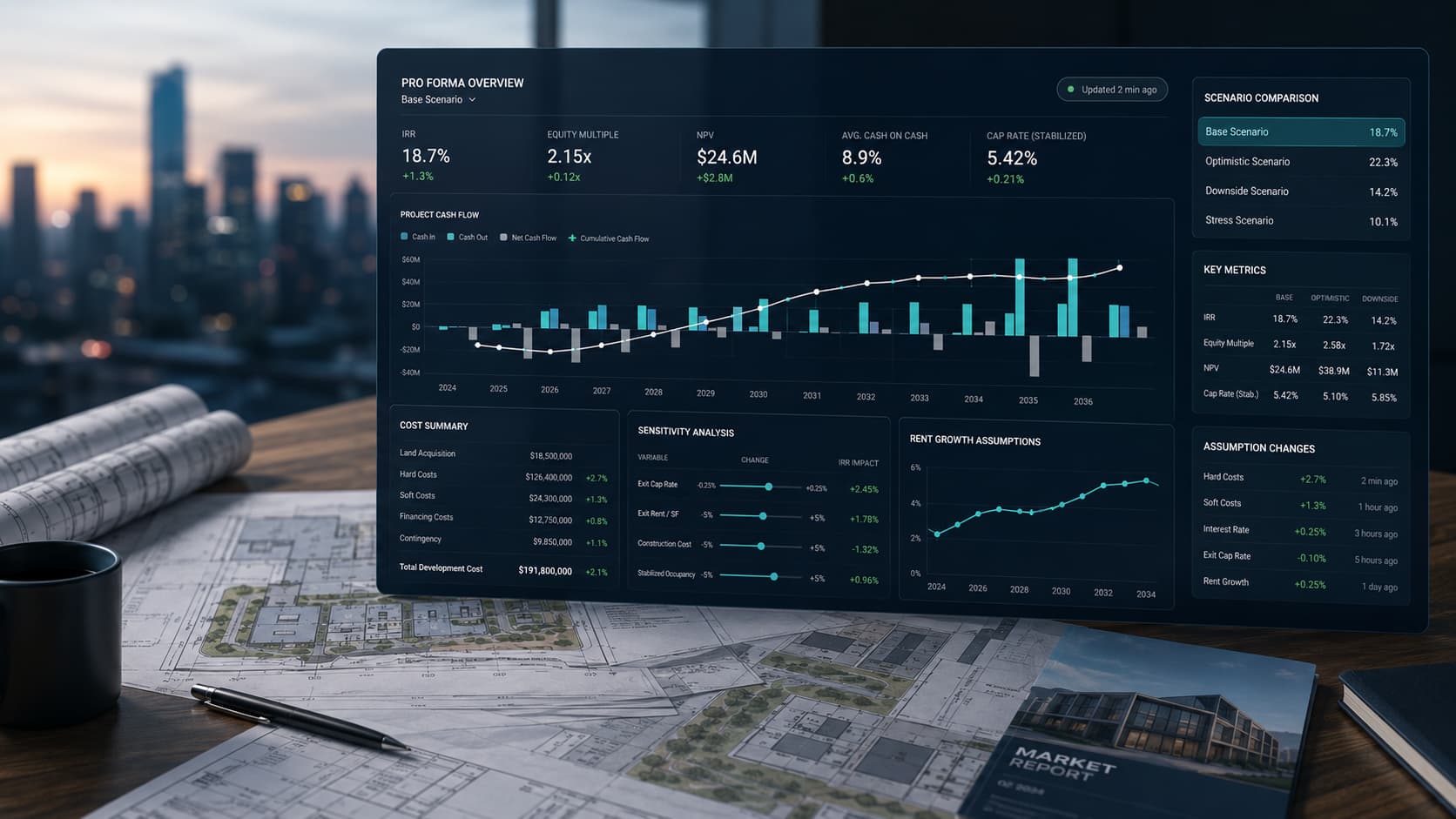
Developer Ground Truth #1: A GC’s Price Is Only a Snapshot - A conversation with a Bay Area multifamily developer on why the proforma never stops changing
A closer look at how Bay Area developers are constantly recalibrating proformas as capital tightens and construction costs shift—highlighting why short-term cost predictability is becoming essential to keeping deals viable.
real estate pro forma software - • quotr.ai
The State of AI in Preconstruction 2026: Adoption, ROI, and What Top GCs Are Learning
AI in preconstruction is moving from experimentation to measurable workflow impact. See what 2026 adoption, ROI, and ENR Top 400 contractors reveal about takeoff, estimating, procurement, and bid strategy.
Industry-Insights - • quotr.ai
Quotr.ai vs Excel: Why Estimators Are Leaving Spreadsheets
Quotr.ai vs Excel for construction estimating: honest comparison of speed, accuracy, cost, and when spreadsheets still make sense. Read before you decide.
Quotr.ai • Excel • Estimation