Best Electrical Estimating Software in 2026: Top Tools for Electricians
Electrical estimating lives and dies on counts. Receptacles, fixtures, home runs, panel schedules, and labor hours compound fast — and a single missed device type or a stale copper price can quietly turn a winning bid into a money-loser. The right electrical estimating software removes the counting grind, ties quantities to live material pricing, and lets your estimators spend their hours on labor strategy and scope instead of clicking symbols across 40 sheets.
The market in 2026 splits into two camps: the legacy desktop estimating systems electrical contractors have used for decades, and a new wave of cloud-native, AI-assisted platforms that read plan sets and extract quantities automatically. This guide compares the best electrical estimating software in 2026 — six tools worth your shortlist — with honest notes on who each one fits, what it costs, and where it falls short.
If you want the deeper “how to evaluate” framework before you shop, pair this list with our electrical estimating software buyer’s guide, which breaks down accuracy benchmarks, device classification, and the exact questions to ask any vendor. This article is the shortlist; that one is the scorecard.
What electrical estimating software actually does
Electrical estimating software automates the three most labor-intensive parts of pricing a job: quantity takeoff (pulling device, fixture, panel, and conduit counts off the drawings), material pricing (tying those quantities to current costs for wire, conduit, gear, and devices), and labor calculation (applying unit labor hours and loaded rates to produce a fully burdened number). The best platforms connect all three so a quantity change flows straight through to material and labor cost. The weakest are spreadsheets with a nicer interface.
For electrical work specifically, two capabilities separate real tools from generic ones: a symbol library trained on electrical symbology (GFCI vs. AFCI, fixture types, panel designations, switch types, emergency and exit fixtures), and the ability to calibrate labor units to your own crew productivity rather than relying on stock NECA labor units as a finish line.
How we picked these tools
We weighted electrical-specific accuracy, labor-unit flexibility, panel schedule handling, material pricing freshness, deployment model (cloud vs. desktop), and transparent pricing. We build Quotr.ai, an AI estimating platform used by electrical contractors, so we’re upfront about that — and we’ve tried to keep the comparisons fair and useful regardless of which tool you choose.
The 6 best electrical estimating software tools in 2026
1. Quotr.ai — Best overall for AI-assisted electrical takeoff and procurement
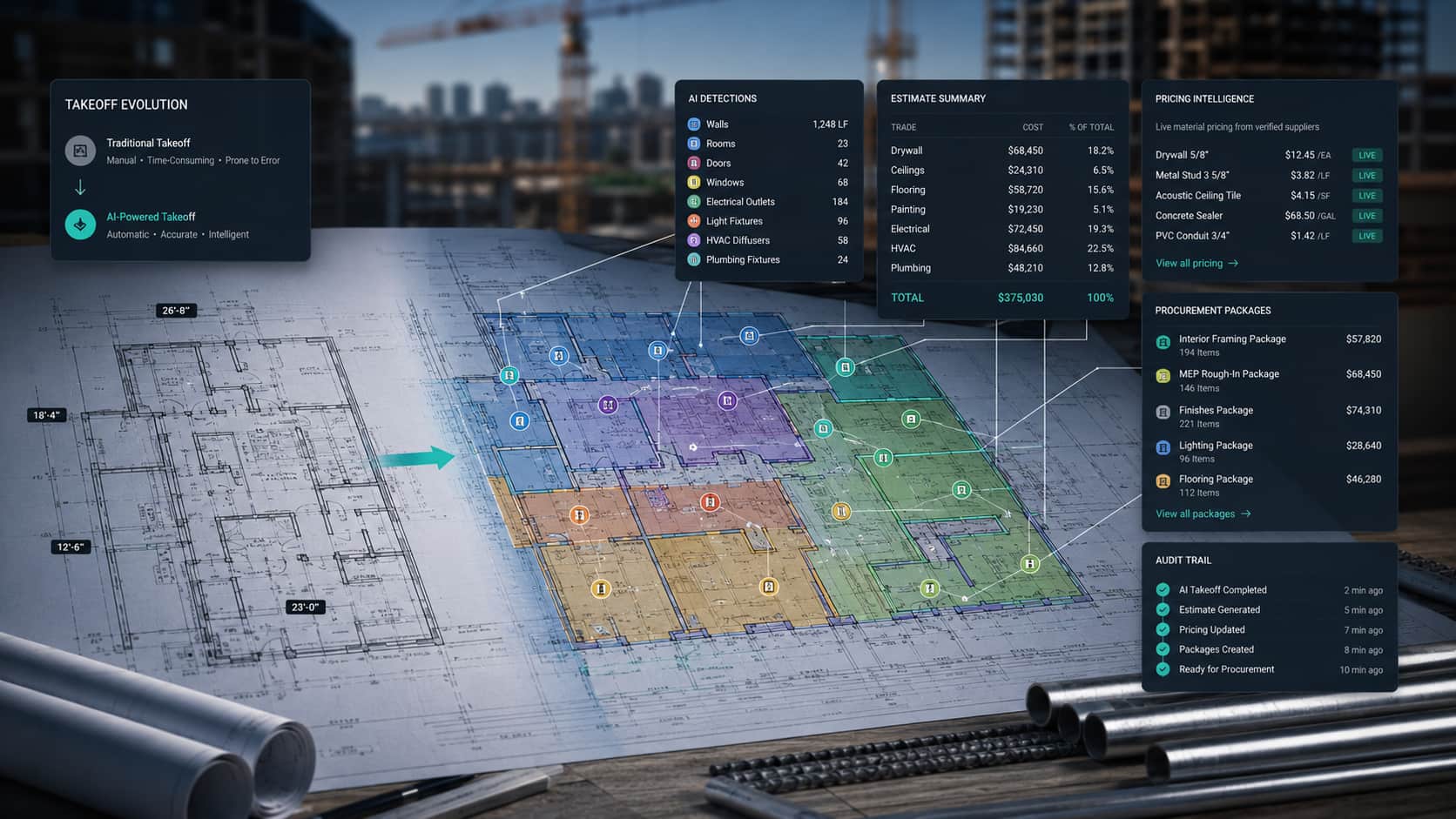
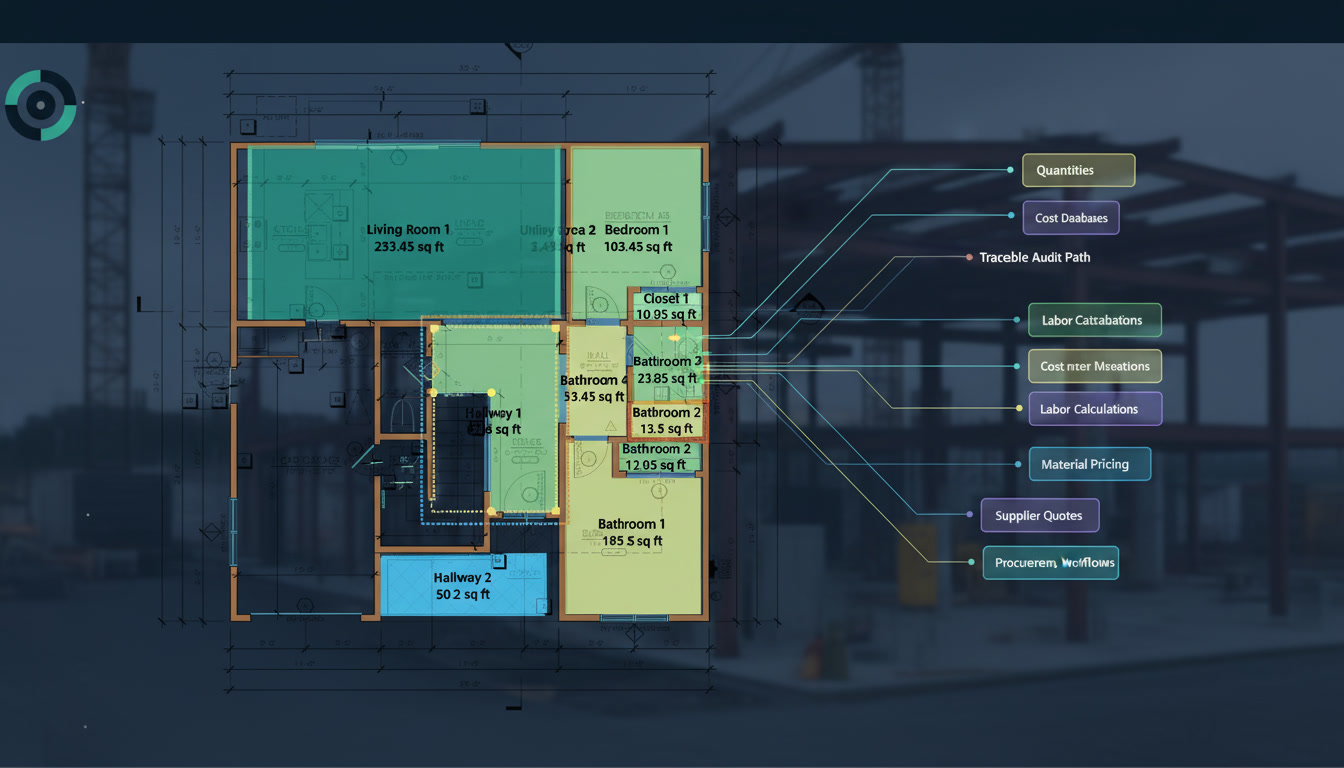
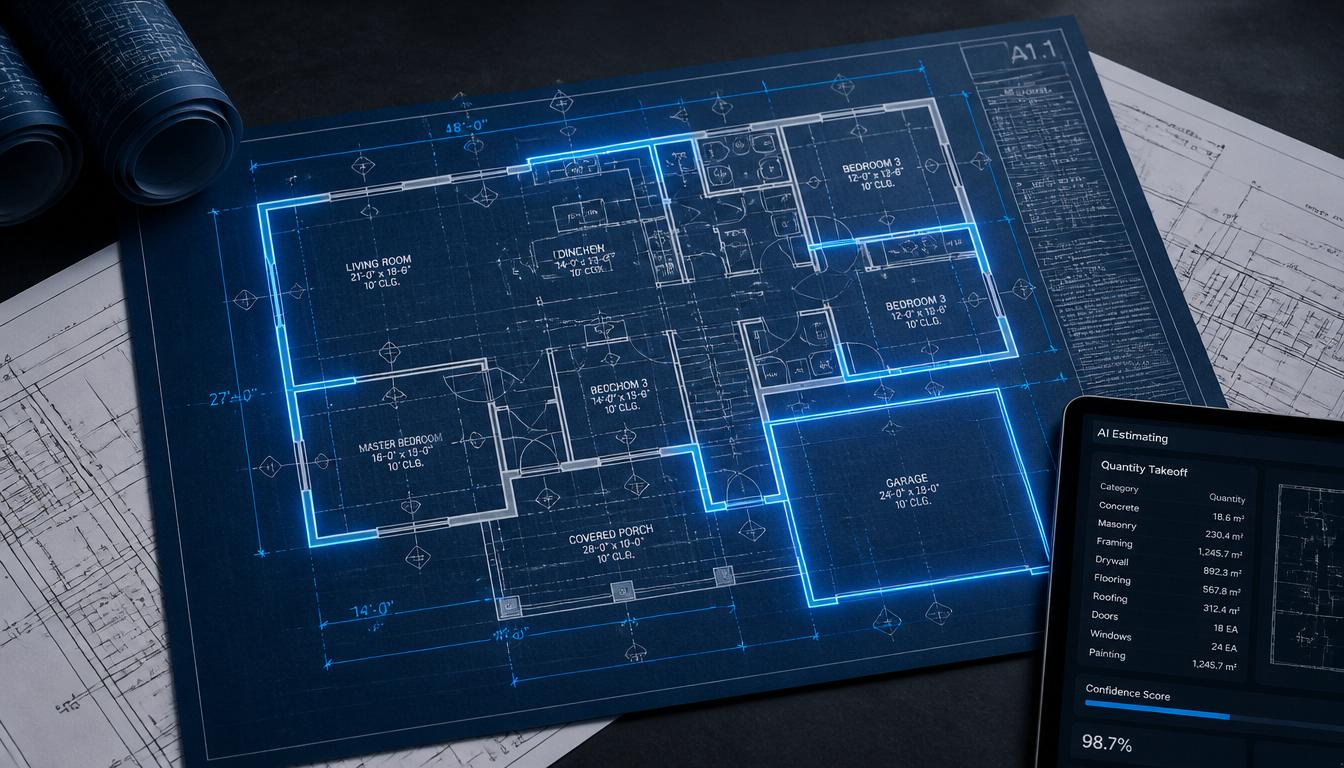
Quotr.ai is an all-in-one, cloud-native estimating platform that runs the full subcontractor workflow — takeoff, estimates, a pricing database, bids, and procurement — in one product. For electrical contractors, the differentiator is a model trained on electrical symbology, not just generic construction shapes: it classifies receptacles by type, identifies fixture classes, reads panel designations, and recognizes conduit callouts and switch types, then hands every count back with a per-item confidence score so you know exactly which lines to review before the bid leaves your desk.
The proof point is real, not theoretical. Maricruz at RL Electric, a working electrical contractor, reports that “takeoffs that used to take us 20 hours can now be completed in just 1–2 hours with Quotr.ai” — a workflow documented in our case study on how RL Electric cut estimating time with AI-powered takeoffs. On clean vector PDFs with standard symbology, Quotr’s internal benchmarking puts AI takeoff at 95–99% accuracy on device, fixture, and panel counts, with a short human review of flagged items closing the gap on lower-quality scans.
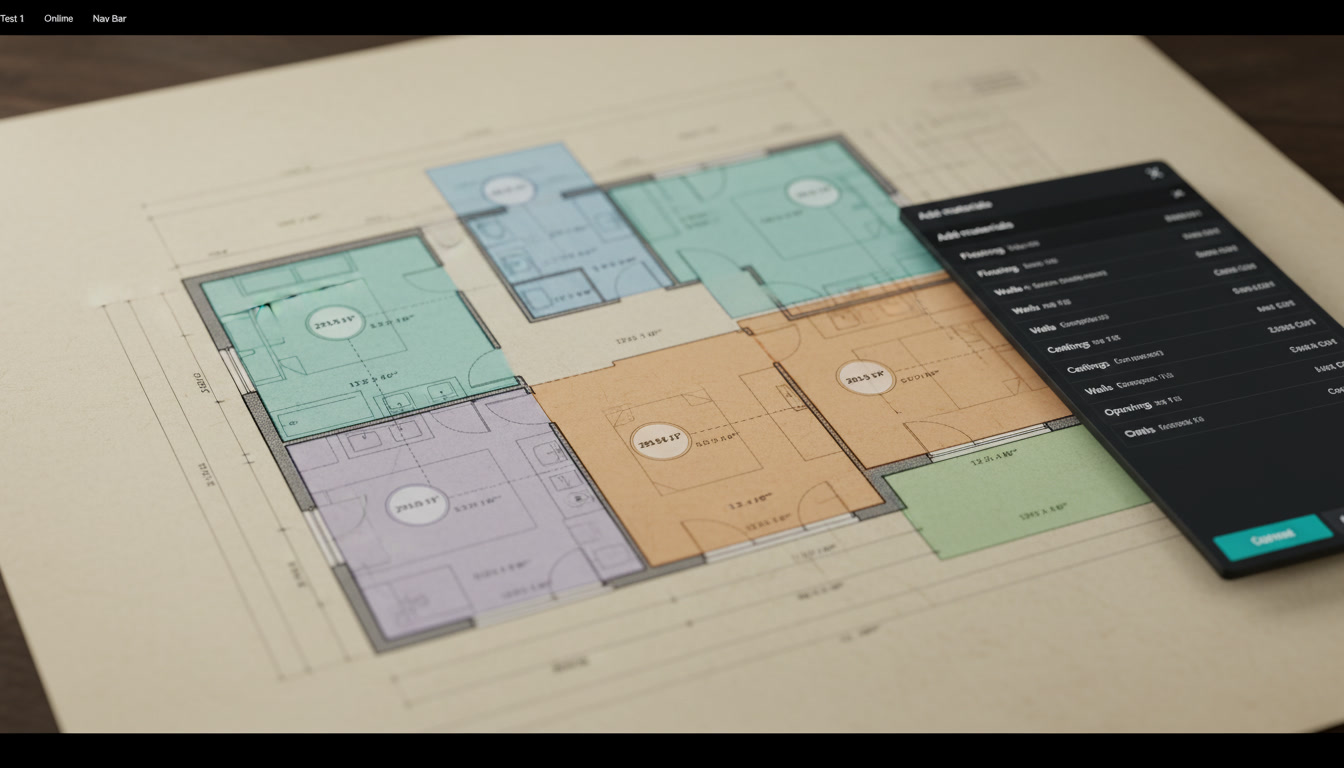
What rounds it out is what most estimating tools stop short of: procurement. Quotr lets you send quote requests to suppliers, compare bids side by side, and even source factory-direct — turning quantity accuracy into buyout accuracy. There’s also a Revit integration that pulls quantities straight from the model, and a proposal builder that exports client-ready PDFs synced to the live estimate.
- Best for: Electrical subs and MEP teams that want AI takeoff speed plus integrated bidding and procurement in one workspace.
- Pricing: Published and transparent — Solo from $299.90/month (from $249/seat/mo billed yearly), Team (2–6 seats) $499.90/month, Enterprise custom. Every plan includes a 7-day free trial.
- Watch-outs: Newer to market than the legacy desktop systems; schematic riser diagrams that show topology rather than scaled lengths still need estimator input, as they do across every AI tool.
Developer and owner-side teams who’d rather hand the work off entirely can use Quotr.ai Service, which delivers cost packages and underwriting-ready pro formas on an SLA.
2. Trimble Accubid — Best for large, complex commercial and industrial bids
Trimble’s Accubid line is the heavyweight incumbent in electrical estimating. Trimble Accubid Classic ships with access to more than 42,000 items and 13,000 assemblies, plus the LiveCount on-screen takeoff tool, and Accubid Anywhere extends the platform to a cloud-hosted environment for electrical and industrial mechanical contractors. For $1M-plus commercial and industrial work where assembly depth and BIM integration matter, Accubid remains a category standard.
- Best for: Large electrical and industrial contractors bidding complex projects who need deep assembly libraries.
- Pricing: Quote-based. Third-party aggregators estimate a single-user Accubid Classic license around $3,000 upfront; confirm current pricing directly with Trimble (ITQlick pricing notes).
- Watch-outs: Steeper learning curve and higher total cost of ownership; the depth that helps on mega-projects can be overkill for service shops and small TI work.
3. McCormick Estimating — Best for detailed labor costing and tracking
McCormick Systems is a long-standing electrical estimating platform known for its flexible labor costing and tracking, with pre-built labor units for the electrical trade that let you apply industry-standard rates quickly and then tune them to your operation. It’s a strong fit for larger shops that want granular labor control on complex jobs.
- Best for: Electrical contractors who prioritize detailed, calibrated labor tracking.
- Pricing: Quote-based; aggregator estimates start around $1,000/year for smaller teams and scale up (ITQlick category data). Verify with McCormick directly.
- Watch-outs: Traditional desktop-rooted workflow; less emphasis on automated AI symbol detection than the newer cloud platforms.
4. ConEst IntelliBid — Best for deep labor-database integration
ConEst IntelliBid is a comprehensive electrical estimating tool built around precision across application types, with strong capabilities for calculating labor units, adjusting material prices, and factoring waste. Contractors who want a tightly integrated material-and-labor database with mature electrical-specific logic gravitate to IntelliBid.
- Best for: Electrical contractors who want a deep, integrated labor and material database.
- Pricing: Quote-based; aggregator estimates start around $2,000/year for smaller teams (ITQlick category data). Confirm with ConEst.
- Watch-outs: Feature depth comes with setup and training overhead; primarily a desktop-lineage system.
5. Procore Estimating (formerly Esticom) — Best for cloud collaboration and Procore users
Esticom was acquired by Procore in October 2020 and now ships as Procore Estimating. It’s a cloud-based, browser-first tool with an MEP symbol database that lets estimators draw legends directly from plans, plus drag-and-drop takeoff, integrated quotes, and project templates. For teams already standardized on Procore — or any contractor that values real-time, multi-user collaboration — it’s a natural fit.
- Best for: Teams already in the Procore ecosystem and contractors who want cloud-based, collaborative takeoff.
- Pricing: Quote-based through Procore; legacy Esticom tiers were reported by aggregators starting around $1,200/year (Software Advice profile). Confirm current packaging with Procore.
- Watch-outs: As a broad MEP tool it isn’t electrical-only; depth of electrical-specific classification is lighter than the dedicated electrical systems.
6. Electrical Bid Manager (Vision InfoSoft) — Best dedicated desktop option for smaller shops
Electrical Bid Manager from Vision InfoSoft is a long-running, electrical-specific desktop estimating package. Reviewers describe it as feature-rich — sometimes to the point of overwhelming new users — but it remains a credible, electrical-focused choice for shops that prefer an installed system with established material and labor databases.
- Best for: Small-to-mid electrical contractors who want a dedicated desktop electrical estimator.
- Pricing: Quote-based; contact Vision InfoSoft for current licensing.
- Watch-outs: Desktop-bound workflow and a denser interface; lacks the automated AI takeoff of the newer cloud platforms.
Electrical estimating software comparison (2026)
| Tool | Best for | Deployment | AI takeoff | Procurement built in | Pricing model |
|---|---|---|---|---|---|
| Quotr.ai | AI takeoff + bidding + procurement | Cloud | Yes, electrical-trained + confidence scores | Yes | Published: from $299.90/mo |
| Trimble Accubid | Large complex commercial/industrial | Desktop + cloud (Anywhere) | On-screen LiveCount (manual-assisted) | Limited | Quote-based (~$3,000 license) |
| McCormick | Detailed labor costing | Desktop | Limited | No | Quote-based (~$1,000+/yr) |
| ConEst IntelliBid | Deep labor/material database | Desktop | Limited | No | Quote-based (~$2,000+/yr) |
| Procore Estimating | Cloud collaboration / Procore users | Cloud | MEP symbol-assisted | Via Procore suite | Quote-based |
| Electrical Bid Manager | Dedicated desktop for smaller shops | Desktop | No | No | Quote-based |
Pricing for the legacy vendors is largely quote-based and not published; figures above are third-party aggregator estimates and should be confirmed with each vendor. Quotr.ai pricing is published on the pricing page.
How to choose the right electrical estimating software
Match the tool to your work mix, not the longest feature list. If you bid high volumes of commercial device-and-fixture work and want to compress takeoff hours, prioritize a cloud platform with electrical-trained AI takeoff and per-item confidence scoring. If your portfolio is $1M-plus industrial work with heavy assembly needs, the depth of a legacy system like Accubid may earn its cost. If labor calibration is your obsession, weigh McCormick and ConEst on how precisely they let you tune units to your crews.
Three checks decide most shortlists: Can you test it on your own worst plan set before buying? Does it classify devices by type — not just count them? And does material pricing stay current with copper and conduit markets? A demo that only runs on the vendor’s clean sample sheet tells you nothing about your bids. Bring a completed job with known actuals and run the audit — that’s the point.
When you’re ready to pressure-test the shortlist, our electrical estimating software buyer’s guide has the full vendor question list, and Is AI Takeoff Actually Accurate Yet? gives the honest accuracy breakdown across plan types.
Frequently asked questions
What is the best electrical estimating software in 2026?
The best electrical estimating software depends on your work mix, but the non-negotiables are consistent: a model trained on electrical-specific symbology, per-item confidence scoring, a full audit trail to the drawing, live material pricing, and customizable labor units. Quotr.ai was built around those requirements for electrical contractors, while Trimble Accubid, McCormick, and ConEst remain strong legacy choices.
How much does electrical estimating software cost?
Pricing ranges widely. Cloud platforms like Quotr.ai publish transparent rates starting at $299.90/month, while legacy desktop systems such as Accubid, McCormick, and ConEst are typically quote-based, with aggregator estimates running from roughly $1,000 to over $6,000 per year depending on tier and seats. Always confirm current pricing directly with each vendor.
Is AI electrical takeoff accurate enough to bid from?
On clean vector PDFs with standard symbology, AI takeoff tools reach 95–99% accuracy on device, fixture, and panel counts in Quotr’s internal benchmarking. Accuracy drops to roughly 80–88% on low-resolution scans, which is why per-item confidence scoring and a short human review of flagged items matter before a bid goes out.
What’s the difference between electrical estimating and takeoff software?
Takeoff software extracts quantities — counts and measurements — from the drawings. Estimating software adds material pricing and labor calculation on top of those quantities to produce a fully burdened bid. The best platforms combine both so a quantity change flows automatically through to material and labor cost, rather than forcing a re-key between tools.
Can electrical estimating software handle panel schedules?
Not always. Panel schedules are structured tables, not plan graphics, so they require separate extraction from symbol takeoff. Many tools skip them entirely. If panel schedules are central to your estimating work, confirm native panel schedule extraction before buying.
The bottom line
The electrical contractors pulling ahead in 2026 aren’t the ones who replaced their estimators — they’re the ones who freed their estimators from counting fixtures and measuring conduit so they can focus on labor strategy, scope review, and the bids worth chasing. Any tool on this list can move you in that direction; the right one depends on your work mix, your deployment preference, and how much of the takeoff-to-buyout workflow you want in a single product.
If you want AI takeoff, integrated bidding, and procurement under one roof — with pricing you can see before you talk to sales — start a free trial of Quotr.ai or talk to our team and bring the hardest electrical plan set you’ve got. The audit is the point.
Related reading
- Electrical Estimating Software: 2026 Buyer’s Guide
- How RL Electric Cut Estimating Time with AI-Powered Takeoffs
- Commercial Electrical Takeoff: From Drawings to Proposal
- How to Estimate Electrical Work From Drawings: Conduit, Devices, Labor
- Is AI Takeoff Actually Accurate Yet? Honest 2026 Answer
- The Best AI Construction Estimating Software in 2026