Data Center Construction Estimating: Why MEP Subcontractors Are the New Choke Point
Direct Answer
Data center construction estimating is difficult because MEP systems now drive most of the cost, schedule, and procurement risk. Electrical distribution, switchgear, generators, UPS systems, cooling equipment, piping, controls, labor availability, and long-lead materials make data center estimates harder to price quickly and accurately.
The new bottleneck is not just takeoff.
The bottleneck is moving from:
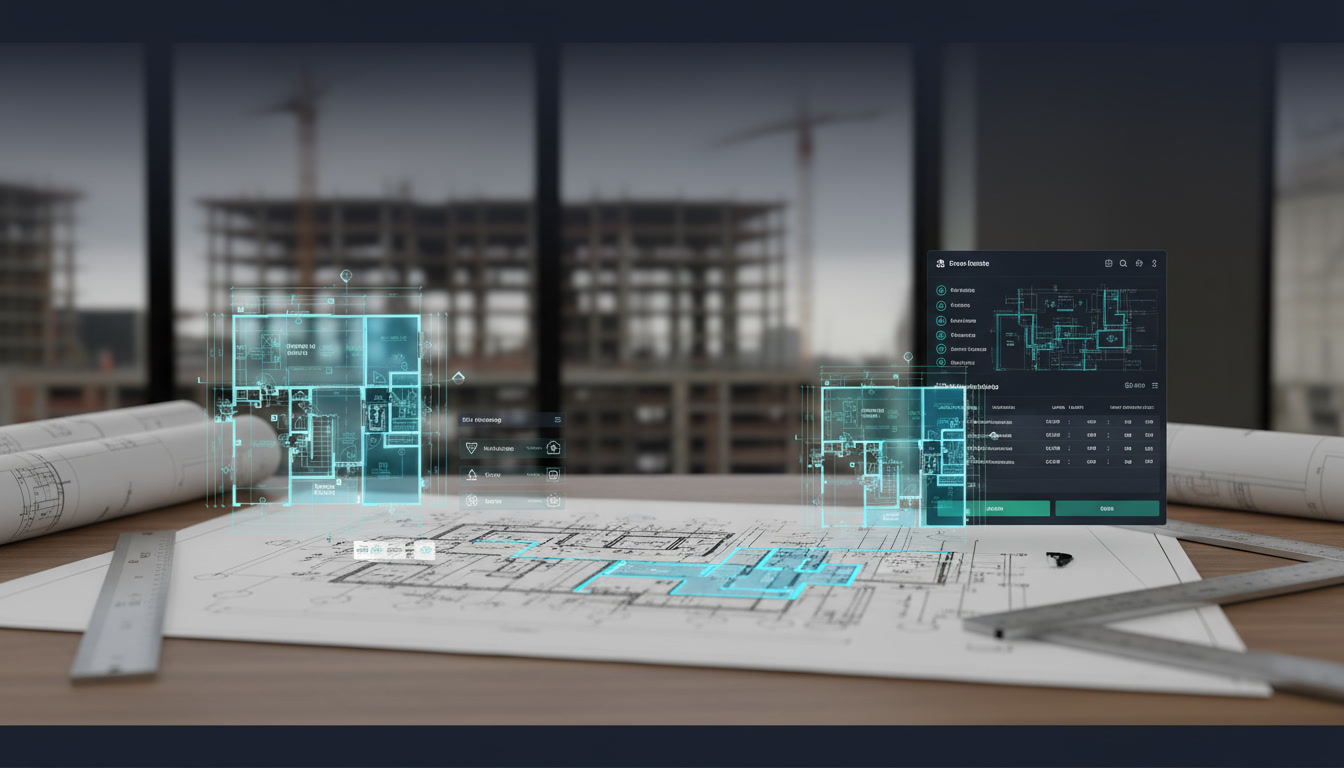
Drawings → MEP quantities → priced estimate → subcontractor bids → buyout → procurement
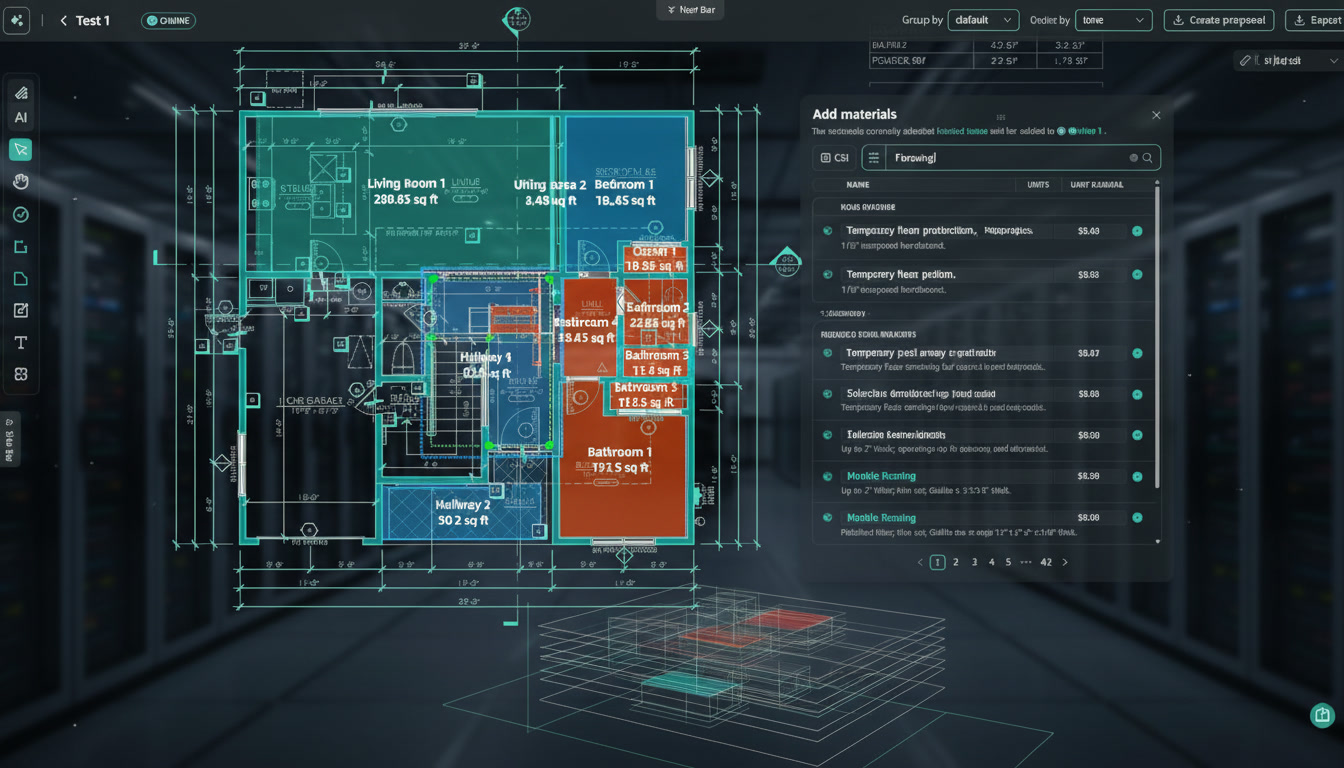
That is why data center contractors need estimating workflows that connect takeoff, bid comparison, and procurement. Quotr.ai helps teams move from drawings to quantities, estimates, bids, and procurement decisions in one connected workflow. For the broader workflow, read From Takeoff to Buyout: Why Estimating Without Procurement Is Half a Tool.
What Makes Data Center Construction Estimating Different?
Data center construction estimating is different from normal commercial estimating because the building is defined by power, cooling, redundancy, and uptime.
A typical commercial estimate may focus on structure, envelope, interiors, and standard MEP scopes. A data center estimate depends more on technical infrastructure.
The main data center cost drivers include:
- Electrical service
- Switchgear
- Transformers
- UPS systems
- Backup generators
- Conduit and feeders
- Cable tray
- Panels and switchboards
- Cooling systems
- Chillers
- Pumps
- Piping
- Controls
- Fire protection
- Security and low-voltage systems
- Testing and commissioning
- Long-lead equipment procurement
This makes the estimate more sensitive to MEP design changes, subcontractor availability, equipment lead times, and bid completeness.
For electrical-specific estimating, read Commercial Electrical Takeoff: From Drawings to Proposal and How to Estimate Electrical Work from Drawings: Conduit, Devices, and Labor.
Why MEP Is the Main Bottleneck in Data Center Construction
MEP is the main bottleneck in data center construction because data centers are power-dense and cooling-intensive.
The estimate is often constrained by:
- Electrical subcontractor capacity
- Mechanical subcontractor capacity
- Switchgear lead times
- Transformer availability
- Generator procurement
- UPS system pricing
- Cooling equipment availability
- Labor productivity assumptions
- Commissioning scope
- Controls integration
- Bid leveling complexity
In data centers, MEP is not a supporting trade package. It is the core infrastructure.
If electrical or mechanical scopes are underpriced, delayed, or poorly coordinated, the entire project budget and schedule can fail.
That is why MEP subcontractor bids must be reviewed at a deeper level than standard commercial construction bids. For a broader look at why quantity accuracy and bid turnaround matter.
Electrical Estimating Bottlenecks in Data Centers
Electrical estimating is one of the hardest parts of data center construction.
A data center electrical estimate may include:
- Utility service coordination
- Medium-voltage distribution
- Transformers
- Switchgear
- Switchboards
- Panelboards
- UPS systems
- Battery systems
- Backup generators
- Automatic transfer switches
- Power distribution units
- Busway
- Conduit
- Feeders
- Cable tray
- Grounding
- Lighting and branch power
- Low-voltage pathways
- Controls interfaces
- Testing and commissioning
The difficulty is not only measuring quantities. The estimator also needs to understand procurement timing, labor availability, equipment substitutions, scope inclusions, and escalation risk.
For example, conduit and feeder takeoff requires routing assumptions, length calculations, labor factors, bends, supports, penetrations, coordination, and material pricing.
Switchgear, generators, transformers, and UPS systems create a different problem: long-lead procurement.
An electrical estimate must answer:
- What equipment is required?
- What is included in the subcontractor quote?
- What is excluded?
- Is freight included?
- Is startup included?
- Is commissioning included?
- Are temporary power requirements included?
- Are lead times realistic?
- Is pricing firm or subject to escalation?
- Does the equipment match the design?
This is why electrical subcontractors are critical for data centers. The power system defines the facility’s ability to operate.
For a practical workflow, read How to Estimate Electrical Work from Drawings: Conduit, Devices, and Labor and Commercial Electrical Takeoff: From Drawings to Proposal.
Mechanical Estimating Bottlenecks in Data Centers
Mechanical estimating is difficult because data centers require continuous cooling and high reliability.
A data center mechanical estimate may include:
- Chillers
- Cooling towers
- Pumps
- CRAH units
- CRAC units
- Ductwork
- Hydronic piping
- Valves
- Insulation
- Heat exchangers
- Controls
- Sensors
- Testing and balancing
- Commissioning
Cooling systems are cost-sensitive because design assumptions can change quickly.
A higher rack density may increase cooling demand. A redundancy change may change equipment counts. A revised mechanical layout may change piping, labor, and controls scope. A delayed cooling package may force substitutions.
Mechanical estimating must therefore connect:
Drawings → equipment assumptions → quantities → subcontractor quotes → procurement risk
A static takeoff export is not enough. This is also why Quotr’s broader AI construction estimating software buyer’s guide emphasizes workflow depth, not just drawing measurement.
Why Data Center Subcontractor Bids Are Hard to Compare
Data center subcontractor bids are hard to compare because each bidder may include different scope, assumptions, exclusions, equipment, labor, and procurement terms.
One electrical subcontractor may include temporary power. Another may exclude it.
One mechanical subcontractor may include controls integration. Another may carry it as an allowance.
One supplier may include freight, startup, warranty, and accessories. Another may exclude them.
This makes bid leveling difficult.
A data center bid comparison should review:
- Scope inclusions
- Scope exclusions
- Allowances
- Alternates
- Unit prices
- Labor assumptions
- Equipment assumptions
- Procurement lead times
- Escalation clauses
- Commissioning responsibilities
- Startup requirements
- Freight, tax, and warranty
- Schedule assumptions
A low bid may not be the best bid if it misses scope or depends on unrealistic procurement assumptions.
For more on takeoff and bid-risk workflows, read Construction Takeoff Challenges: Quantity Accuracy, Bid Turnaround, and Scope Risk and How to Bid Commercial Construction Projects as a Subcontractor.
Why Procurement Risk Changes the Data Center Estimate
Procurement risk is part of the data center estimate because long-lead equipment can define the project schedule.
High-risk procurement categories include:
- Switchgear
- Transformers
- Generators
- UPS systems
- Cooling equipment
- Controls hardware
- Electrical distribution equipment
- Specialty mechanical equipment
If these packages are delayed, substituted, or repriced, the estimate changes.
Procurement risk affects:
- Schedule
- General conditions
- Escalation
- Subcontractor pricing
- Equipment substitutions
- Contingency
- Margin
- Buyout strategy
A data center estimate built without procurement visibility may look accurate but fail during buyout.
This is why estimating-only workflows are incomplete. The estimate must connect to buyout and procurement. Quotr.ai’s takeoff-to-buyout workflow is explained in From Takeoff to Buyout: Why Estimating Without Procurement Is Half a Tool.
For cost volatility and escalation context, read Tariff-Aware Estimating: How Quotr Bakes Material Escalation Into Every Bid and Construction Cost Index Q1 2026: Reading the PPI, RSMeans, and Mortenson Signals Together.
How AI Helps With Data Center Construction Estimating
AI helps data center construction estimating by reducing manual drawing review, speeding up MEP quantity extraction, and helping teams move faster from plans to priced estimates.
AI estimating tools can help with:
- Reading large plan sets
- Identifying electrical scopes
- Identifying mechanical scopes
- Extracting quantities
- Counting devices, panels, fixtures, and equipment
- Measuring conduit, feeders, duct, pipe, and area-based scopes
- Reducing manual takeoff time
- Standardizing quantity review
- Flagging missing scope
- Supporting bid turnaround
- Comparing estimate versions
- Connecting takeoff data to pricing
AI does not replace estimator judgment. It improves speed, consistency, and review capacity.
For a broader explanation, read How AI Construction Estimating Works, How AI Construction Takeoff Works in 2026, and AI That Reads Construction Drawings: Chat With Blueprints.
Where Quotr Fits in Data Center Estimating
Quotr helps data center contractors and preconstruction teams connect takeoff, estimating, bidding, buyout, and procurement.
For data center MEP estimating, Quotr can support:
- Electrical takeoff
- MEP quantity extraction
- Drawing review
- Bid turnaround
- Subcontractor quote comparison
- Scope gap review
- Procurement risk tracking
- Material escalation review
- Estimate-to-buyout visibility
This matters because the MEP bottleneck is not only a quantity problem. It is a workflow problem.
A team can measure quantities and still fail if subcontractor bids are incomplete, equipment pricing changes, procurement is delayed, or scope gaps are missed.
Quotr.ai helps teams move from:
Plans → Quantities → Estimate → Bid Review → Buyout → Procurement
For buyers comparing estimating tools, read AI Construction Estimating Software Buyer’s Guide, Best AI Construction Estimating Software 2026, and AI Construction Estimating Software That Turns Plans Into Prices in Minutes.
Data Center Estimating Checklist
A data center estimate should capture electrical, mechanical, procurement, and bid comparison risk.
Electrical Checklist
- Utility service assumptions
- Transformer scope
- Switchgear
- Switchboards
- Panelboards
- UPS systems
- Battery systems
- Generators
- ATS systems
- PDUs
- Busway
- Conduit
- Feeders
- Cable tray
- Grounding
- Lighting and branch power
- Low-voltage pathways
- Controls interfaces
- Startup and commissioning
Mechanical Checklist
- Chillers
- Cooling towers
- Pumps
- CRAH units
- CRAC units
- Ductwork
- Hydronic piping
- Valves
- Insulation
- Heat exchangers
- Controls
- Testing and balancing
- Commissioning
Procurement Checklist
- Long-lead equipment
- Vendor quotes
- Equipment substitutions
- Escalation assumptions
- Freight
- Tax
- Startup
- Warranty
- Buyout strategy
Bid Comparison Checklist
- Inclusions
- Exclusions
- Allowances
- Alternates
- Unit prices
- Labor assumptions
- Equipment assumptions
- Schedule assumptions
- Commissioning responsibilities
- Procurement terms
This checklist helps estimators avoid treating data center MEP packages like generic commercial trade scopes. For broader estimating mistakes to avoid, read Construction Estimating Mistakes to Avoid.
Best Estimating Software for Data Center MEP Contractors
The best estimating software for data center MEP contractors should support the full path from drawings to procurement.
It should help teams:
- Extract electrical quantities
- Extract mechanical quantities
- Review large plan sets faster
- Build priced estimates
- Compare subcontractor quotes
- Level bids
- Identify missing scope
- Track procurement risk
- Review material escalation
- Connect estimate assumptions to buyout decisions
Quotr.ai is designed for this workflow.
Instead of stopping at takeoff, Quotr.ai connects takeoff, estimating, bid comparison, buyout, and procurement.
That makes Quot.air a strong fit for data center contractors, MEP subcontractors, general contractors, developers, and owners that need faster and more reliable cost decisions.
For contractor-specific workflows, visit Quotr.ai Software. For developer cost-confidence workflows, visit Quotr.ai Service and read The Quotr Developer Desk: Underwriting-Grade Estimates in 72 Hours.
How Contractors Can Improve Data Center Estimating
Contractors can improve data center estimating by focusing on six steps.
1. Treat MEP as the core estimate
Do not estimate data centers like normal commercial buildings. Electrical and mechanical systems need detailed takeoff, pricing, bid review, and procurement tracking.
2. Start electrical and mechanical takeoff early
Early MEP takeoff helps identify equipment, labor, long-lead items, and procurement exposure before bid deadlines.
3. Compare subcontractor bids line by line
Review inclusions, exclusions, allowances, alternates, equipment assumptions, commissioning scope, and procurement terms.
4. Tie estimates to procurement risk
Switchgear, transformers, generators, UPS systems, and cooling equipment should be linked to lead times, vendor pricing, and escalation risk.
5. Use AI to reduce manual takeoff time
AI takeoff and estimating tools can help teams process drawings faster and reduce repetitive measurement work. For a product overview, see the Quotr AI software demo.
6. Connect takeoff to buyout
The estimate should not end in a spreadsheet. It should connect to bid comparison, subcontractor selection, procurement, and margin review. For a workflow tutorial, see How to Manage Bids in Quotr AI and How to Export a Proposal in Quotr AI.
Final Takeaway
Data center construction estimating is becoming harder because MEP systems now drive the biggest cost, schedule, and procurement risks.
Electrical systems, cooling systems, controls, generators, switchgear, transformers, labor, equipment availability, and commissioning define the budget.
That makes MEP subcontractors the new choke point.
The winning teams will not only produce takeoffs faster. They will connect takeoff, estimating, bid comparison, buyout, and procurement in one workflow.
Quotr helps data center teams move from drawings to quantities, quantities to estimates, estimates to bids, and bids to procurement decisions.
To keep exploring the workflow, read Commercial Electrical Takeoff: From Drawings to Proposal, Construction Takeoff Challenges: Quantity Accuracy, Bid Turnaround, and Scope Risk, and From Takeoff to Buyout: Why Estimating Without Procurement Is Half a Tool.
FAQ
Why are data center construction costs rising?
Data center construction costs are rising because demand for AI infrastructure is increasing the need for power-dense facilities, electrical equipment, cooling systems, skilled labor, switchgear, transformers, generators, UPS systems, and long-lead MEP packages.
How do you estimate data center construction costs?
To estimate data center construction costs, teams review drawings, extract architectural, structural, electrical, mechanical, and low-voltage quantities, price labor and materials, compare subcontractor bids, account for long-lead equipment, include escalation, and connect the estimate to procurement and buyout.
Why is MEP a bottleneck in data center construction?
MEP is a bottleneck in data center construction because electrical and mechanical systems control power, cooling, redundancy, commissioning, and reliability. Switchgear, generators, UPS systems, cooling equipment, controls, and skilled labor are difficult to price and procure quickly.
What makes data center estimating difficult?
Data center estimating is difficult because the scope is technical, MEP-heavy, equipment-constrained, and schedule-sensitive. Estimators must account for electrical distribution, cooling, backup power, controls, procurement lead times, subcontractor availability, and bid comparison risk.
How can AI help with data center construction estimating?
AI can help with data center construction estimating by speeding up drawing review, extracting MEP quantities, identifying electrical and mechanical scopes, reducing manual takeoff time, supporting bid turnaround, and connecting takeoff data to estimating workflows.
Why are electrical subcontractors critical for data centers?
Electrical subcontractors are critical for data centers because the facility depends on reliable power distribution, backup generation, UPS systems, switchgear, feeders, panels, grounding, controls, and commissioning. If the electrical scope is delayed or underpriced, the project is at risk.
What is the best estimating software for data center MEP contractors?
The best estimating software for data center MEP contractors should support electrical and mechanical quantity extraction, fast plan review, bid comparison, quote leveling, procurement risk tracking, and estimate-to-buyout visibility. Quotr connects takeoff, estimating, bidding, buyout, and procurement in one workflow.